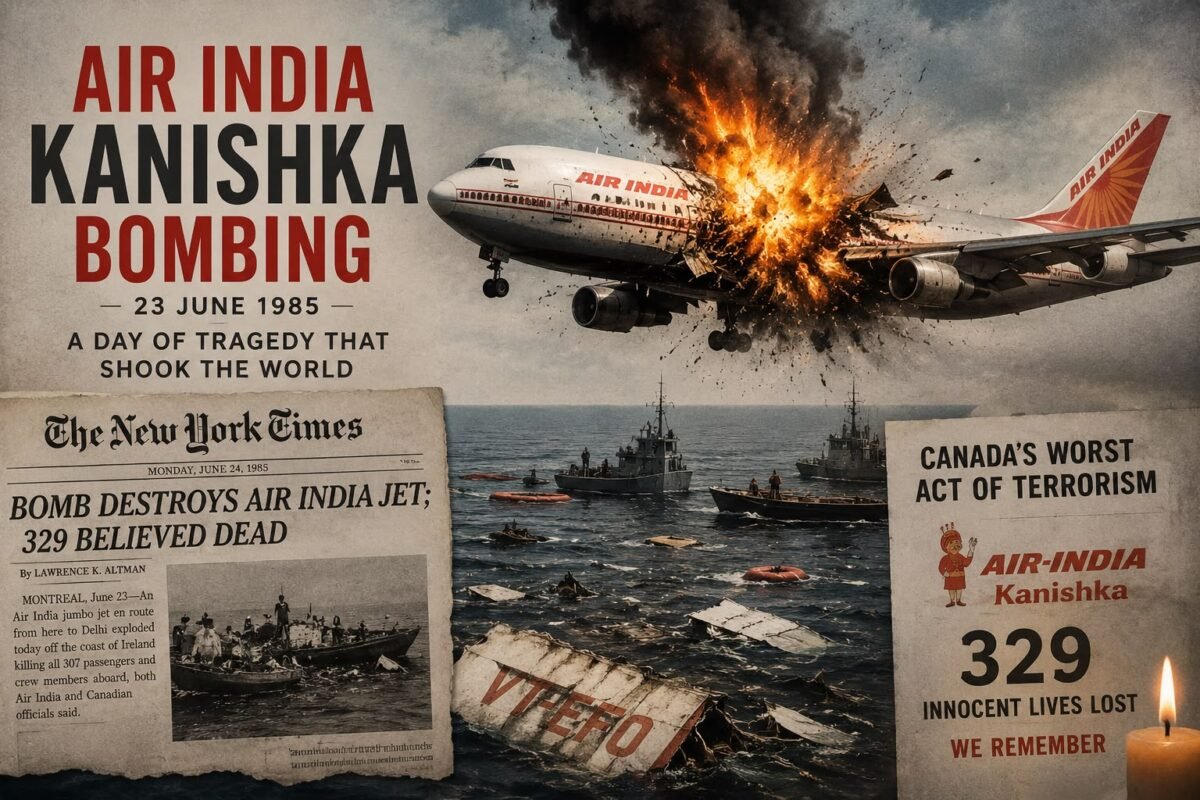
 In 30 Seconds




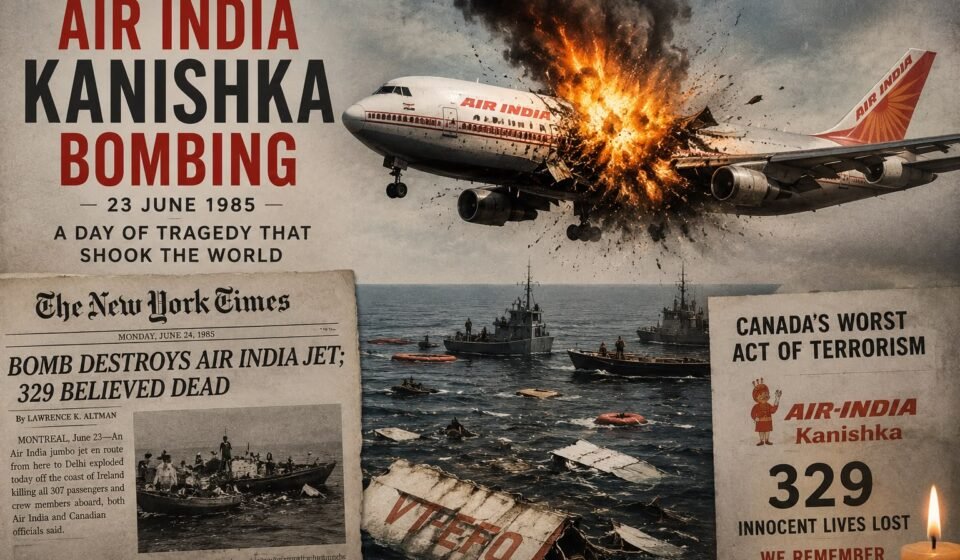
On June 23, 1985, Air India Flight 182, a Boeing 747 named Emperor Kanishka flying from Montreal to Delhi via London, disintegrated over the Atlantic off the Irish coast. All 329 people aboard died, most of them Canadian citizens of Indian origin, 86 of them children. Less than an hour earlier, a bomb intended for a second Air India flight had exploded at Tokyo’s Narita airport, killing two baggage handlers. It was the deadliest act of aviation terrorism the world had seen, and would remain so until September 2001. It was planned, built, and loaded in Canada, and its story belongs to Punjab’s tragedy because its authors claimed to act in Punjab’s name.
The Plot
The Canadian investigation, spanning a quarter century of police work, trials, and a landmark public inquiry, established the outline beyond serious dispute. The conspiracy centred on Babbar Khalsa figures in British Columbia, with Talwinder Singh Parmar, the group’s Canada based chief, named by the inquiry as its leader. Bombs concealed in luggage were checked onto flights feeding Air India’s network by conspirators who did not board. Inderjit Singh Reyat, an electrician, was convicted of manslaughter for building the devices and later of perjury, the only person ever found criminally responsible. The two principal accused tried in Vancouver were acquitted in 2005, a verdict the trial judge accompanied with scathing findings about witness credibility, and which the victims’ families received as a second catastrophe.
The Failures
The 2010 report of the Major Commission of Inquiry in Canada described the bombing as the result of a cascading series of errors by Canadian institutions. Warnings from Indian agencies about threats to Air India had accumulated for months. Canadian intelligence had Parmar under surveillance and had recorded activities later understood to be a test blast, and tapes relevant to the case were erased. Agencies failed to share what they knew; airport security failed to match bags to passengers. The Canadian government of a later era formally apologised, and the inquiry’s phrase, that the families had been treated for years as adversaries rather than victims, entered the country’s political vocabulary. For Punjab watchers the episode carries an additional weight: it demonstrated how safely the militancy’s international wing could operate from Western democracies whose institutions had not yet learned to take it seriously, a theme this series returns to in its article on the diaspora.
The Victims and the Long Grief
The dead of Flight 182 were overwhelmingly ordinary families, teachers, doctors, students, children flying to grandparents for the summer holidays. Irish coastal communities at Ahakista in Cork, where the recovery operation was based, built a memorial and have held the families in a decades long embrace that is one of the story’s few graces; anniversary gatherings continue there each June. In Canada the bombing forced, slowly, a reckoning with the fact that the worst terrorist attack in the country’s history had been directed at citizens whose deaths were long treated as a foreign affair.
What Kanishka Meant for the Movement
Within the Khalistan movement’s own history, the bombing marks the moment the cause crossed a moral frontier from which no communique could retrieve it. Whatever case the movement made about 1984’s injustices, and this series has recorded those injustices fully, the deliberate destruction of a planeload of civilians, most of them Sikh and Hindu families of the very diaspora the movement claimed to represent, identified the cause in the world’s eyes with mass murder. Moderate diaspora opinion recoiled; Western governments hardened; and the designation regimes under which Babbar Khalsa and allied groups remain proscribed to this day trace directly to that June morning over the Atlantic.
The Kanishka’s victims belong in Punjab’s ledger of the dead alongside the villagers of the bus massacres and the disappeared of the counterinsurgency, because they were killed by the same conflict and the same logic, that a cause can be served by the murder of the uninvolved. Three hundred and twenty nine names, and two more at Narita, stand as the refutation.
Related Reading
- The Killing Fields of Majha: Tarn Taran and Amritsar in the Late 1980s
- The Bus Massacres: When the Militancy Turned Its Guns on Passengers
- Operation Black Thunder: The Siege That Went Differently
Official context: Readers can compare this story with public information from India.gov.in.
The Descent
Part 8 of 10 in this chapter.