 In 30 Seconds




Four years after Operation Blue Star, the Indian state faced the same problem in the same place: armed militants entrenched inside the Golden Temple complex. In May 1988 it chose a different answer, and the contrast between the two operations has served ever since as a case study in how much of the 1984 catastrophe was a matter of method rather than necessity.
The Complex Recaptured by the Gun
After 1986, as the Barnala government collapsed and President’s rule returned, militants of various factions reoccupied the complex, rebuilt positions, and once again ran operations, courts, and executions from the shrine’s buildings. Pilgrim offerings were reported to be taxed, rivals were tortured and killed within the sarais, and bodies were recovered from the complex’s drains in the aftermath, findings that did lasting damage to the militancy’s standing among devout Sikhs. By early 1988 the situation resembled early 1984 in miniature, and the memory of what the army’s answer had cost hung over every discussion in Delhi.
A Different Method
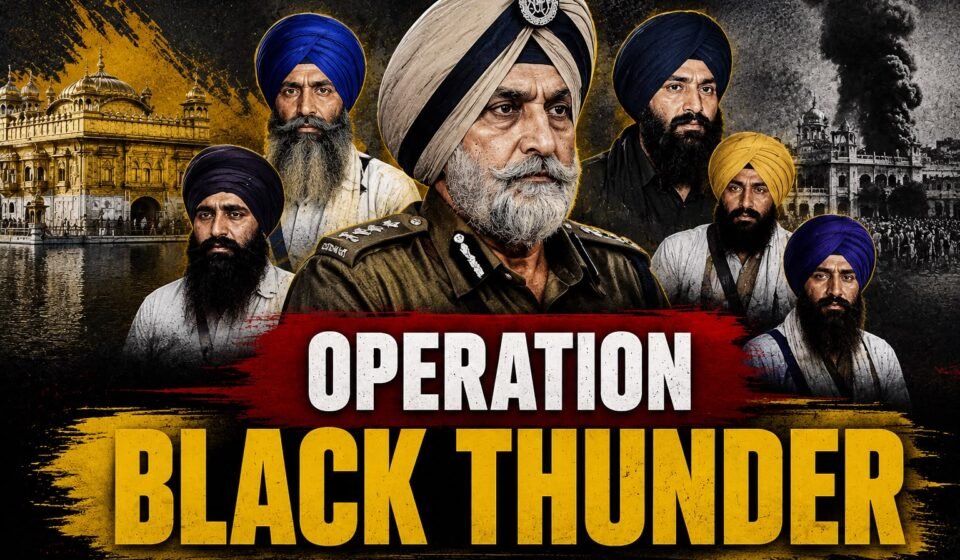
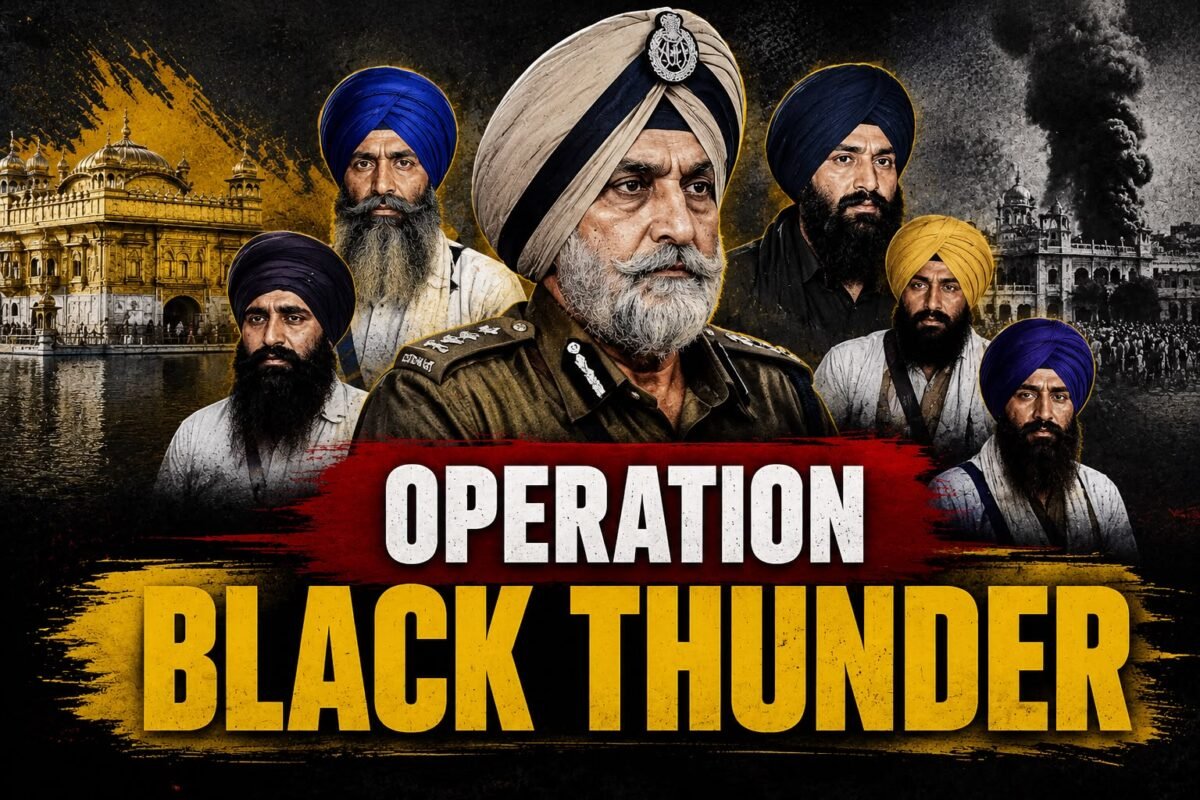
Operation Black Thunder, launched in May 1988 after the shooting of a senior police officer near the complex, inverted nearly every choice of 1984. It was led by police and the National Security Guard rather than the army in frontal assault. There was no press blackout; journalists were positioned where they could watch, a decision attributed to the police leadership’s understanding that transparency was itself a weapon. There was no storming of the sanctum; instead the complex was sealed, water and food were cut, snipers dominated the towers, and time was allowed to do the work artillery had done in 1984. And the operation’s planners waited out the religious calendar rather than colliding with it.
Over ten days the besieged militants’ position dissolved. Small groups surrendered in stages, and the surrenders were photographed and broadcast, images of feared gunmen filing out with raised hands that punctured the movement’s mystique more effectively than any communique. Around two hundred militants gave themselves up; a few dozen died in exchanges of fire. The shrine’s principal structures were essentially undamaged, and no pilgrims were caught in a battle. Casualties, in total, ran to a fraction of one percent of Blue Star’s contested toll.
What the Comparison Proves and What It Does Not
The temptation is to read Black Thunder as simple proof that 1984 was needless, and critics of Blue Star, including police officers of the era, have argued substantially that. The honest comparison is more qualified. The 1988 defenders were fewer, less fortified, and led by no Shabeg Singh; there was no risk in 1988 of a Punjab wide rising timed to a martyrdom anniversary; and the besiegers of 1988 had four years of hard learning behind them. Yet even with those allowances the lesson stands. Patience, transparency, and respect for the shrine achieved in 1988 what haste, secrecy, and tanks could not in 1984: the objective secured without handing the adversary a martyrdom. Scholars of counterinsurgency have treated the pairing as a controlled experiment ever since.
Aftermath
Black Thunder marked a turning point in the war for legitimacy. The revelations of torture and killing within the sarais, publicised precisely because the press had been let in, cost the militancy dearly among the devout. The SGPC and clergy regained a measure of custody over the complex, which was never again militarised on the earlier scale. The insurgency itself, however, was far from finished; its bloodiest years in the countryside, chronicled in the following articles on the massacres and the killing fields of Majha, still lay ahead. The state had learned how to retake a shrine. It had not yet decided what methods it would permit itself in the villages, and that story, running through Ribeiro’s bullet for bullet years to the Gill era, is where this series turns next.
Operation Black Thunder deserves its place in this record for an uncomfortable reason: it proves that the Indian state was capable, when it chose, of force under law and in daylight. That capability makes the era’s darker chapters, the disappearances and the staged encounters, harder to excuse as necessity. The state showed Punjab its best face in May 1988. Punjab is entitled to judge it by that standard everywhere else.
Related Reading
- The Killing Fields of Majha: Tarn Taran and Amritsar in the Late 1980s
- The Bus Massacres: When the Militancy Turned Its Guns on Passengers
- The Air India Kanishka Bombing: Terror Crosses the Ocean
Official context: Readers can compare this story with public information from India.gov.in.
The Descent
Part 7 of 10 in this chapter.