 In 30 Seconds




Story
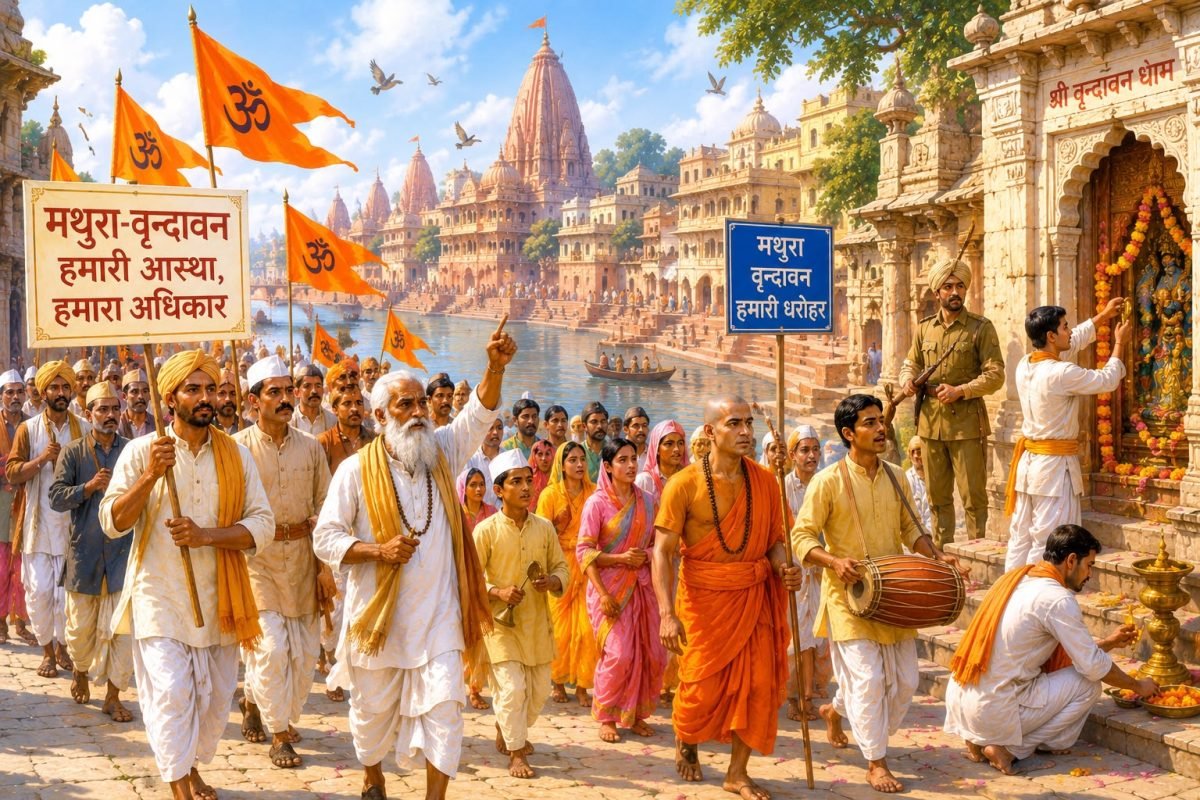
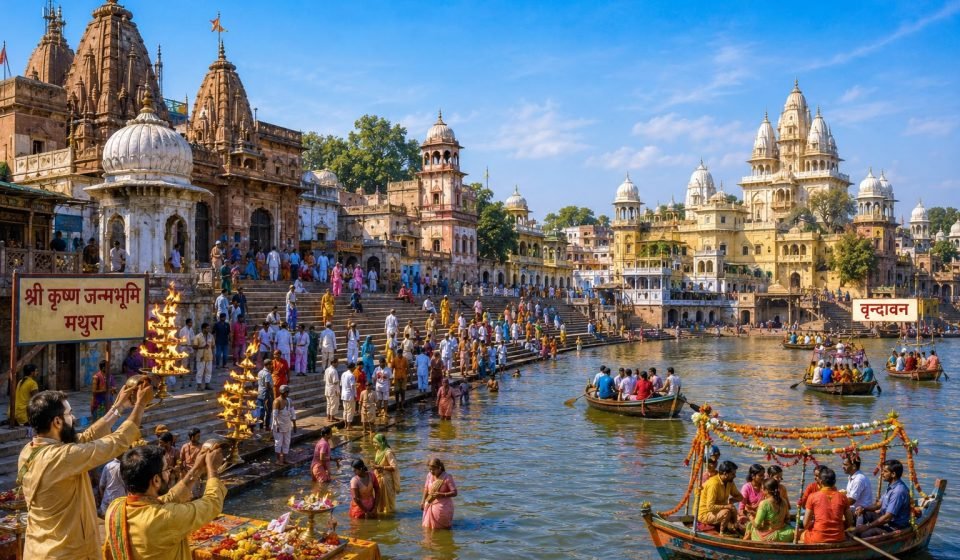
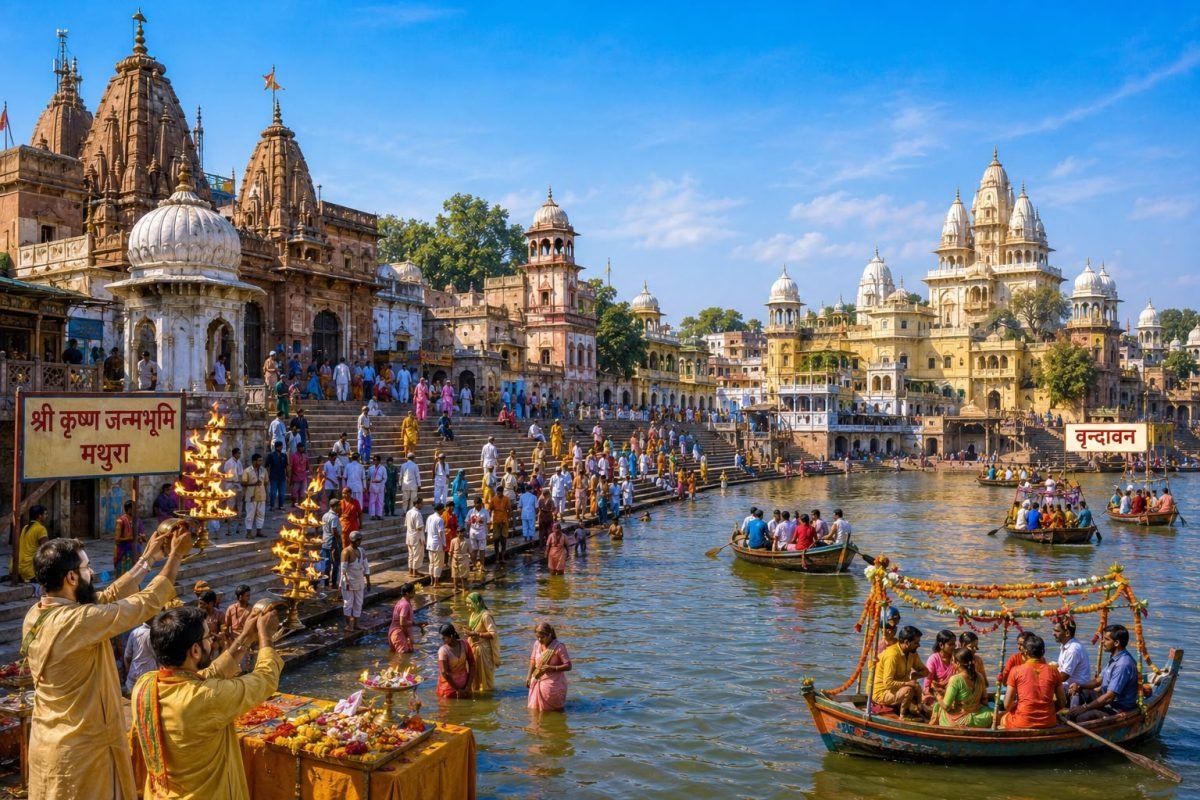
Between Delhi and Agra, along a stretch of the Yamuna that the highway traveller crosses in an hour, lies a country that devotion has mapped more densely than any surveyor could. This is Braj, the land of Krishna, and its twin capitals of Mathura and Vrindavan anchor a sacred geography in which every grove, ghat, hill, and pond is an address in the biography of God. Mathura is where he was born, in a prison cell at midnight. Gokul, across the river, is where he was smuggled to safety. Vrindavan is where he grew, herded cattle, stole butter, subdued the serpent in the river, lifted Govardhan hill on one finger, and danced the ras with the gopis on nights the tradition holds are still continuing, somewhere, for those with eyes to see.
The historical Mathura beneath the sacred one is formidable in its own right. Capital of the Shurasena mahajanapada in the Buddha’s age, the city grew into one of the great urban centres of ancient India, a crossroads of the routes joining the Gangetic plain to the northwest. Under the Kushan emperors it served as a southern capital, and its workshops produced the Mathura school of sculpture, whose red sandstone figures, Buddhas, tirthankaras, yakshis, and the earliest majestic images of the Hindu gods, furnished the entire subcontinent’s iconography. For a millennium Mathura was, simultaneously, a major Buddhist and Jain centre and the seat of the growing Bhagavata devotion to Krishna, a layered inheritance the region’s soil still yields to the archaeologist’s trowel.
The Vrindavan the pilgrim knows today is, by contrast, a creation of a single extraordinary century. By the medieval period the sites of Krishna’s pastoral life had faded into forest and memory, and their recovery was the work of the bhakti movement at its highest tide. Chaitanya Mahaprabhu, the ecstatic saint of Bengal, travelled to Braj early in the sixteenth century and, tradition records, identified the lost lilasthalis, the places of the divine play, in a state of rapture. He dispatched his followers, the six goswamis, to settle there, and these scholar ascetics, writing in Sanskrit while living as mendicants, built the theological architecture of Braj devotion and raised its first great temples, Madan Mohan, Govind Dev, whose colossal red sandstone hall the Amber kings financed, and the rest. In the same era Vallabhacharya’s pushti marga established its own seats, and Swami Haridas, the musician saint, is honoured as the founder of the shrine that became Banke Bihari, today the most thronged temple in Vrindavan.
What Braj gave Indian civilisation thereafter is difficult to overstate. Its dialect, Braj bhasha, became for centuries the language of North Indian poetry and song, the tongue of Surdas, the blind singer whose verses on the child Krishna every Hindi speaker inherits, and the default idiom of the classical vocal repertoire. Its theology, centred on Radha, elevated the divine feminine to the very summit, so that in Braj the common greeting is her name, Radhe Radhe, and Krishna is worshipped as her beloved. Its festival calendar, above all the Holi of Barsana and Nandgaon, which this series celebrates in a later article, became the most famous in India.
The country has its shadows, and the ledger records them. Vrindavan became, from the nineteenth century, a city of widows, thousands of Bengali and other women, discarded by families, living out their years in ashrams and bhajanashrams in conditions that reformers and courts have repeatedly found distressing, a standing rebuke beside the songs of divine love. The Yamuna, the river of the lilas, arrives from Delhi carrying that city’s effluent, and the struggle to clean her is a running story. And Mathura holds the region’s unresolved question, the Krishna Janmabhoomi and the adjacent mosque, a dispute in slow motion through the courts, which this series examines separately and this article, like the city’s daily life, sets respectfully to one side.
Modernity has amplified Braj rather than dimming it. ISKCON carried the worship of Vrindavan’s deity to every continent and built its own great temple in the town, the corridors and expressways bring tens of millions of pilgrims a year, and the weekend darshan queues at Banke Bihari now generate the crowd management debates of a major airport. The cowherd’s country has become one of the busiest sacred destinations on earth, and yet, in the walled groves of Nidhivan and Seva Kunj at dusk, when the temples close and the monkeys take the rooftops, the old whisper of Braj persists, that the dance never ended and the visitor is standing inside it.