 In 30 Seconds




In September 1920, at a special session in Calcutta, the Indian National Congress voted to do what no colonised people had attempted on such a scale, to withdraw, peacefully and progressively, the cooperation on which alien rule silently depended. The Non Cooperation movement of 1920 to 1922, launched over the triple wrong of the Punjab, the Khilafat and the denial of swaraj, was the first campaign in which the Indian masses entered history as actors, and though it ended short of the swaraj within one year its author had rashly promised, it changed permanently what Indian politics was and who it belonged to.
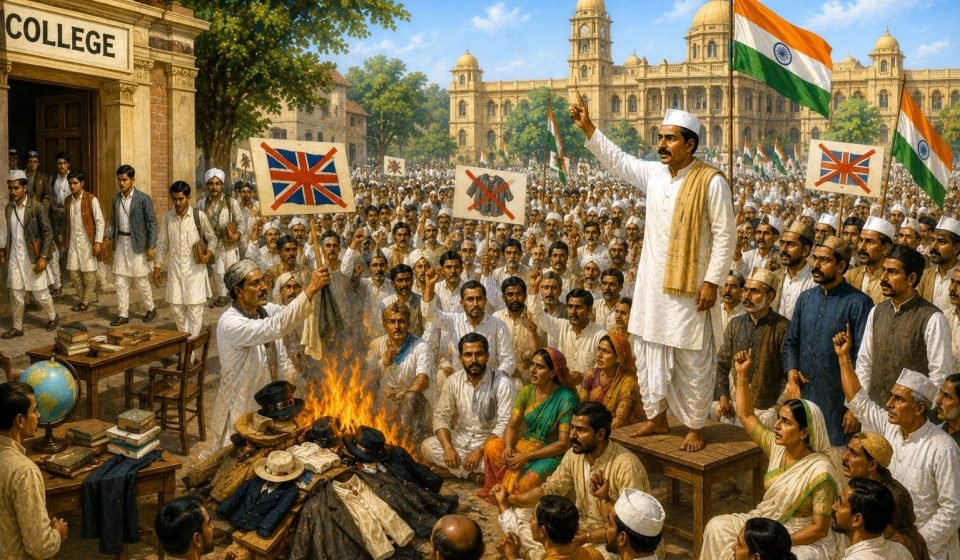
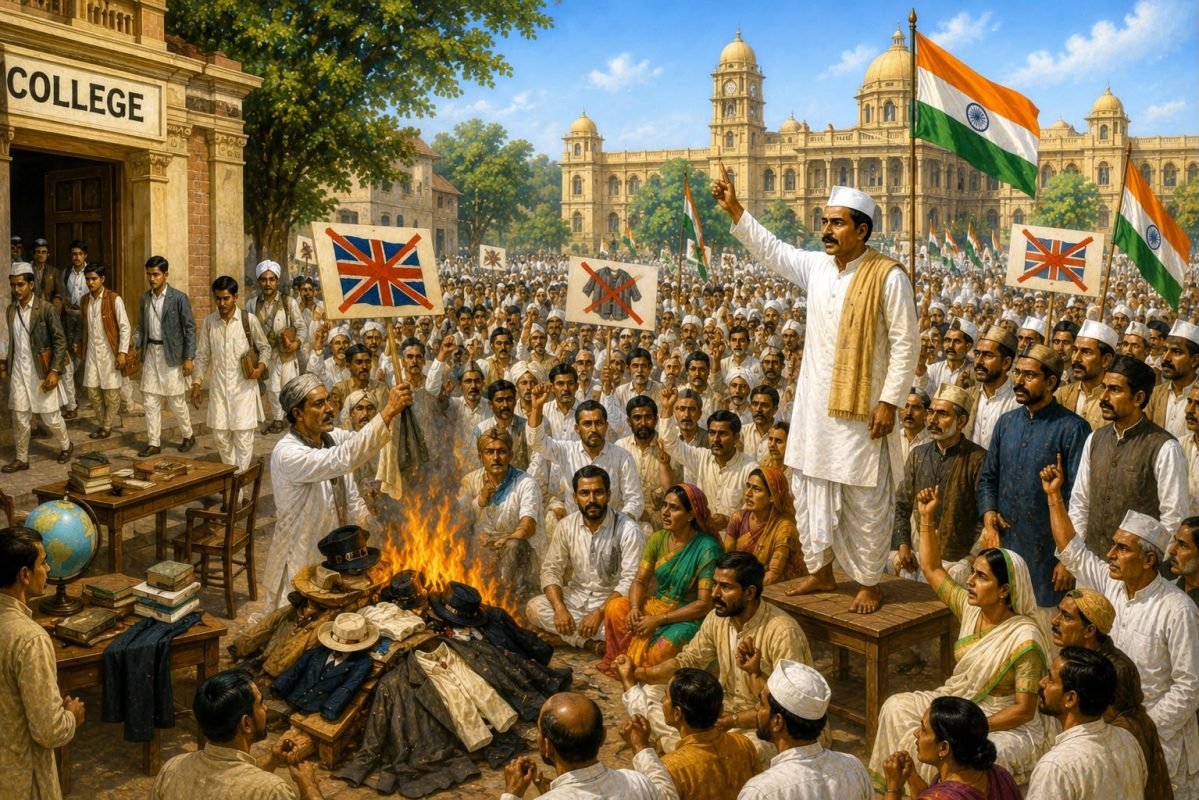
The program was Gandhi’s ladder of renunciations. Titles and honorary offices were to be returned, and thousands were, Gandhi himself surrendering his war medals. Lawyers were to leave the courts, and the roll of those who did reads like the cabinet of the future republic, Motilal Nehru and C R Das abandoning princely practices, with Rajendra Prasad, Vallabhbhai Patel, Rajagopalachari and the young Jawaharlal behind them. Students were to quit government schools and colleges, and tens of thousands did, into the new national institutions founded in a single winter, the Jamia Millia Islamia born at Aligarh, the Kashi Vidyapith, the Gujarat Vidyapith, the Bihar Vidyapith. Voters boycotted the first elections of the 1919 reforms, foreign cloth fed the bonfires while the charkha, distributed in lakhs, became the movement’s machine and sacrament, and the Tilak Swaraj Fund, launched to the dead Lokmanya’s memory, gathered its crore of rupees from merchants and mill hands alike. The Congress itself, reconstituted at Nagpur, became for the first time an organisation the poor could join for four annas.
The country’s response exceeded every precedent and escaped every plan. Through 1921 the movement rolled in waves, hartals greeting the Duke of Connaught in February and, in the campaign’s climax, the empire’s own heir, the Prince of Wales, landing at Bombay in November to silent, shuttered cities. The jails received the movement’s answer to repression, some thirty thousand prisoners by the year’s end, the Ali brothers convicted for calling soldiers’ service sinful, and in December, C R Das and Motilal Nehru among the thousands swept up as the government banned the volunteer corps. Beyond the program’s text, the awakening ran into channels of its own, the Assam Bengal railway and steamer strikes rising from the exodus of Assam’s tea garden coolies, the Akali struggle in the Punjab, peasant movements in Awadh under Baba Ramchandra pressing against the talukdars until the Congress leadership, alarmed, reined them from class war back to the national frame. It was the movement’s paradox in action, a discipline preaching limitation atop an energy that limitation had summoned.
The Raj wavered as it had never done. The Viceroy, Reading, negotiated through intermediaries in December 1921 over a round table conference, the talks failing on the release of the Khilafat prisoners, and the government’s own councils divided over whether the empire was watching agitation or dissolution. The answer came from the movement’s own edge. At Bardoli in Gujarat, Gandhi prepared at last the ladder’s final rung, mass civil disobedience with refusal of taxes, and the country braced. Then, on 5 February 1922, at Chauri Chaura in the United Provinces, a nationalist procession, fired on by police, burned the thana with its constables inside, and Gandhi, against the anguished protest of his jailed lieutenants, stopped everything, the Bardoli resolution of 12 February suspending mass civil disobedience across India. The movement did not survive the halt, the government took its author a month later, and the great wave receded, into council politics, constructive work and communal storm.
The audit of Non Cooperation begins with what did not happen, swaraj in one year, and cannot end there. In eighteen months the movement destroyed forever the psychological foundation of the Raj, the assumption of Indian acquiescence, created the mass Congress that fought the remaining battles, trained the entire leadership of the independence generation in its first imprisonments, and made of a London trained barrister’s method, renunciation, discipline, suffering accepted, a national language. India had refused, once, together, and having learned that the refusal was possible, needed thereafter only occasions.
1919 to 1929 - The Gandhian Storm
Part 2 of 10 in this chapter.