 In 30 Seconds




The swadeshi movement that rose from the partition of Bengal was the freedom struggle’s first experiment in mass politics, and nearly everything the later movement became was tried first in those years, boycott and national schools, indigenous enterprise and political song, volunteer corps and revolutionary cells, the enthusiasm and the exhaustion alike. Between 1905 and roughly 1908 Bengal, with echoes across India, rehearsed the future.
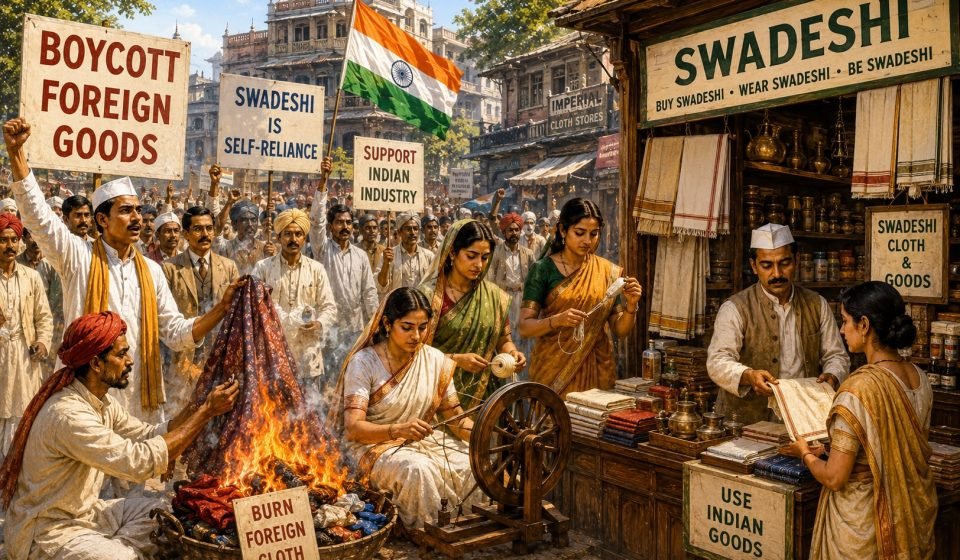
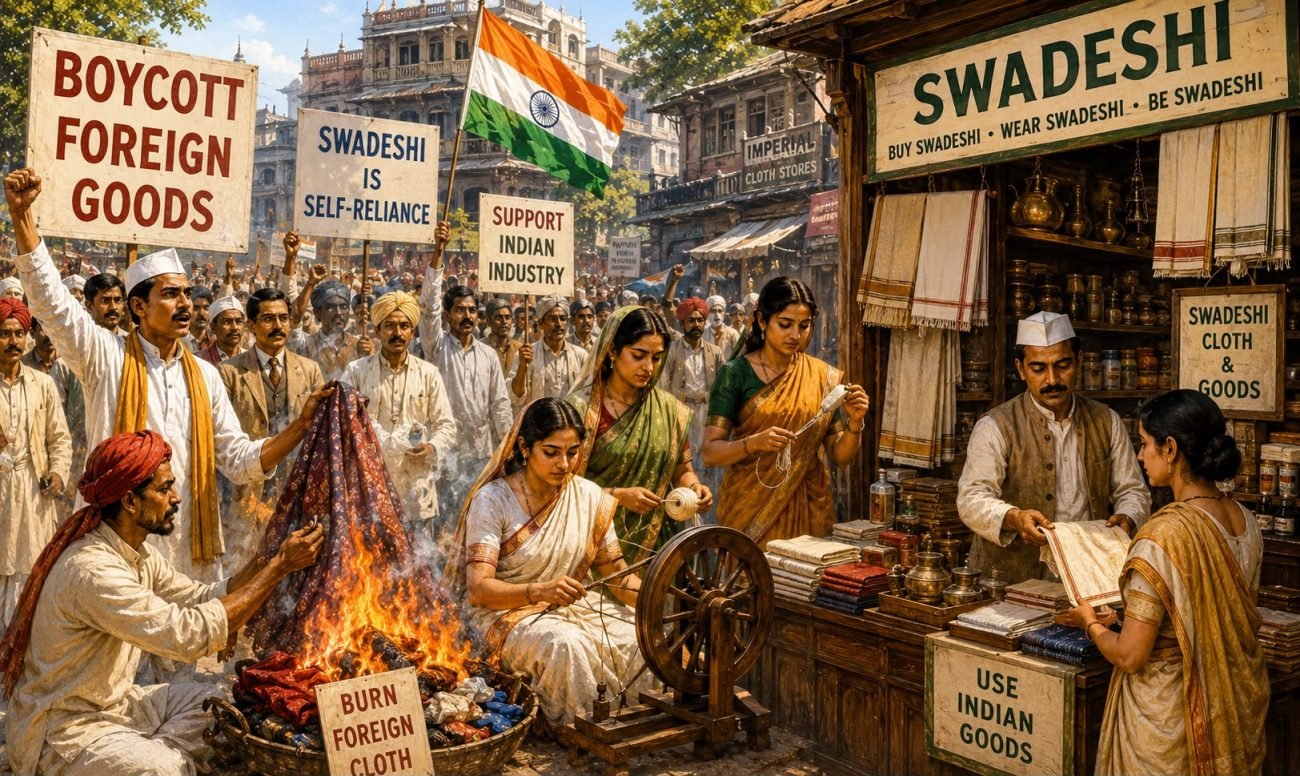
The movement’s twin engines were named in its first resolutions. Boycott was the negative arm, the refusal of British goods, above all Manchester cloth and Liverpool salt, enforced by picketing, by the public burning of foreign fabrics, and by the social sanction of caste and neighbourhood, priests refusing rites performed in foreign cloth, washermen refusing to wash it. Its economic bite was real while it lasted, the sea customs returns showing imports of cotton piece goods into Bengal falling by figures the government could not explain away, and its political bite was deeper, for boycott was a weapon the poorest could wield and the rulers could not easily punish. Swadeshi was the affirmative arm, the vow of own country, and it set out to build what it refused to buy. The years after 1905 saw a founding fever, textile mills and handloom revivals, the Banga Lakshmi cotton mill, match and soap works, tanneries and potteries, Acharya Prafulla Chandra Ray’s Bengal Chemical works expanded as the movement’s industrial showpiece, swadeshi shops and hawking brigades of respectable youth, the Bengal National Bank and insurance ventures, and in 1906 the steamship line of Chidambaram Pillai at Tuticorin, which carried the movement, and its punishment, to the far south.
The movement built parallel institutions wherever the state’s institutions punished participation. When government threatened schools and colleges whose students joined the agitation, the reply was national education, the National Council of Education of 1906 and the Bengal National College with Aurobindo Ghosh as principal, teaching in the mother tongue, honouring Indian learning beside modern science, a lineage that runs to Jadavpur University today. The samitis, volunteer associations that drilled youth, taught lathi and swimming, organised famine and flood relief and spread the message into districts, were the movement’s limbs, Barisal’s Swadesh Bandhab Samiti under Aswini Kumar Dutta the model, until the government proscribed them. And the movement sang. Tagore’s songs of the season, Rajanikanta’s, Mukunda Das’s jatra performances in the east Bengal countryside, made the movement’s deepest penetration, further, the police admitted, than any pamphlet.
Its limits were as instructive as its reach. The leadership debated its own extent, moderates confining boycott to Bengal and to British goods, extremists, Aurobindo and Bipin Chandra Pal in the van, expanding it toward full non cooperation with the foreign state, a doctrine of passive resistance published years before Gandhi’s return. The movement never solved the peasant question, its social base remaining the bhadralok and the towns, and its Hindu idiom, the vows before Kali, the Bande Mataram cry, gave the government material to work with among Muslims, whose masses in the east, tenants facing Hindu landlords and traders, were courted by the new province’s patronage and by preachers of separation, the riots of 1906 and 1907 in Comilla and Jamalpur marking the first communal price of national politics. Repression completed the education, Regulation lathi charges on schoolboys, the banning of Bande Mataram as a cry, the Barisal conference broken up by police in 1906, editors jailed, and by 1908, with Tilak transported and Aurobindo in the dock, the open movement was beaten down, its energy flowing into the secret societies whose story is the next chapter’s.
Yet the seed stock survived everything. Boycott and swadeshi returned, nationalised and disciplined, as the core of Gandhi’s non cooperation, khadi descending directly from the charkha revival of these years. National education returned in 1921. The songs never left. And the movement’s economics entered the national creed, protection, industrialisation, self reliance, a line running from the swadeshi mills of 1906 through the Bombay Plan to the republic’s own policies. Bengal’s failed rehearsal, as it seemed in the tired years after 1908, proved to be the first full script of the freedom struggle, waiting only for a producer who could cast the whole nation.
1905 to 1911 - Swadeshi, Revolutionaries and Reform
Part 2 of 10 in this chapter.