

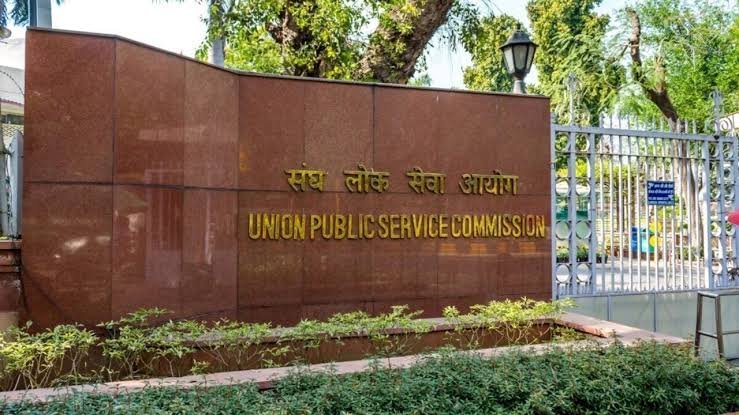
 In 30 Seconds




For anyone preparing for the UPSC Civil Services Examination, the last week of June and the start of July 2026 delivered an unusually dense stretch of news, the kind that tends to show up not just as a passing prelims fact but as material genuinely useful for Mains answers and even the interview stage. Here is a roundup of what happened and, more importantly, why it matters for the exam.
Governance And Digital Infrastructure
Digital India completed eleven years on July 1 2026, and this is easily the most Mains relevant story of the week for anyone in the GS2 governance space. Aadhaar enrolments have crossed 144 crore, UPI now handles nearly 49 percent of the entire world's real time digital payment transactions, and direct benefit transfers have moved more than 51 lakh crore rupees straight into citizens' bank accounts since the programme began. What makes this genuinely useful for an answer, rather than just a fact to memorise, is the JAM trinity concept, Jan Dhan accounts, Aadhaar identity and mobile connectivity working together, which examiners frequently expect candidates to explain in the context of financial inclusion and leakage reduction in welfare delivery. India has also signed cooperation agreements with 24 countries on exporting this digital public infrastructure model, a point worth remembering for any question touching on India's soft power or its role as a template for the Global South.
Environment And Urban Policy
Delhi's Cabinet approved a new EV Policy effective from July 1 2026, moving the city from a purely incentive based approach toward mandatory phased electrification. From January 2027, only electric auto rickshaws and small goods carriers can be newly registered in the city, extending to two wheelers from April 2028. This ties directly into GS3 questions on environmental pollution and urban policy, and it also offers a useful case study for essay papers on the tension between environmental urgency and economic feasibility, since the opposition has already raised legitimate concerns about battery disposal infrastructure that the policy does not yet fully address.
Economy And Monetary Policy
On the economic front, the Reserve Bank of India held its policy repo rate steady at 5.25 percent at its June 5 meeting, a unanimous decision, while trimming its GDP growth forecast to 6.6 percent citing headwinds from the West Asia conflict and crude oil price volatility. Through the rest of June, the RBI also ran a series of Variable Rate Repo auctions to manage a temporary banking system liquidity squeeze caused by advance tax and GST collections. This is a reliable source of GS3 economy questions, particularly around monetary policy tools, the distinction between repo rate and reverse repo rate, and the mechanics of liquidity adjustment facilities. Separately, India's manufacturing PMI slipped to a three month low of 54.5 in June, a useful data point for any answer discussing industrial growth trends or the health of India's export competitiveness.
International Relations
The most significant global story of the week came from outside India entirely, the United States Supreme Court's 6 to 3 ruling upholding birthright citizenship and striking down an executive order that had sought to restrict it. While this is a domestic American legal matter, it is worth understanding for GS2 questions on comparative constitutional law, since it offers a useful contrast to how India's own citizenship framework under the Citizenship Act has evolved, particularly given ongoing domestic debates around the National Register of Citizens and the Citizenship Amendment Act.
Closer to home, the Stockholm International Peace Research Institute's 2026 report classified twelve of India's estimated 190 nuclear warheads as operationally deployed for the first time, a detail relevant to GS3 questions on nuclear doctrine and India's traditional No First Use policy. The Global Report on Food Crises 2026 also found that more than 266 million people across 47 countries are facing high levels of acute food insecurity, a statistic worth keeping in reserve for essay and GS2 answers on global hunger and India's role in international food security discussions.
How To Actually Use This For Mains
The mistake many aspirants make with current affairs is treating it as a separate subject to memorise in isolation. The more effective approach is linking each of these stories back to a static syllabus topic you already know, using Digital India as a live example when writing about financial inclusion, using the Delhi EV Policy as a case study when writing about sustainable development trade offs, and using the RBI's liquidity operations to demonstrate you understand monetary policy tools beyond just the textbook definitions. Examiners consistently reward answers that blend static concepts with a well chosen, recent, real world example over answers that simply list facts without context, and this week's news offers more than enough raw material to build several of those examples into your answer writing practice.
Related Reading
- What Is Cybercrime? Common Threats and How India Responds
- The Kilvenmani Massacre: Forty Four Lives and the Price of a Wage Dispute
- The Assassination of Lalit Narayan Mishra: A Minister Dies, Questions Remain
Official context: Readers can compare this story with public information from National Crime Records Bureau.




Nicely written.