 In 30 Seconds




Between January 1976 and March 1977, the city of Pune, then a genteel town of retirees, students and old Maharashtrian families, lived through a fear it had never known. Ten people were murdered in a series of home invasions of escalating brutality, entire households wiped out behind their own front doors. The victims came to be identified by two family names, Joshi and Abhyankar, and the case that followed became one of the first in India to attach the word serial to murder in the public imagination.
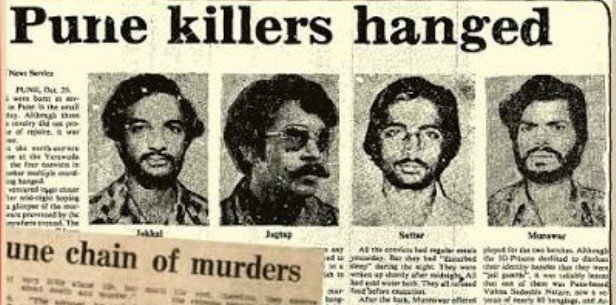
What made the case uniquely disturbing was the identity of the killers. They were four students of a commercial art college: Rajendra Jakkal, Dilip Sutar, Shantaram Jagtap and Munawar Shah. Young men from ordinary backgrounds, they had drifted from petty crime into robbery, and from robbery into a method that treated murder not as a risk of the enterprise but as its foundation. Their first known killing was of a fellow student, whose body was placed in a barrel and sunk. The disappearance was treated as just that, a disappearance, and the group learned the lesson that bodies that are not found do not become cases.
In October 1976 they entered the home of the Joshi family. The household was bound, robbed and strangled, including the elderly. Months later the Abhyankar household met the same fate, five members killed in a single evening, and it emerged that the takings from these slaughters were often shockingly small. The disproportion between the violence and its rewards is what fixed the case in criminological memory: these were murders committed with the casualness of a burglary, by men who had concluded that witnesses were simply an inefficiency.
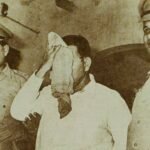
Pune convulsed. Families slept in shifts, hardware shops sold out of bolts and grilles, and the police faced a public losing faith in the ordinary protections of urban life. The breakthrough came through patient work on the earlier disappearance and on physical evidence connecting the group to the crime scenes, and the four were arrested in 1977. The trial at the Pune sessions court reconstructed the murders in detail, and in 1979 all four were sentenced to death. The Bombay High Court and the Supreme Court confirmed the sentences, the judges placing the crimes in the category that would soon afterwards be given a name by the Supreme Court: the rarest of the rare. In November 1983, the four were hanged together at Yerwada Central Jail, one of the very few multiple executions for a single case in the history of the republic.
The Joshi Abhyankar murders left marks well beyond Pune. They forced Indian policing to reckon with the reality that multiple murders could be the work of organised, educated young men rather than the wandering madmen of folklore, and they entered Marathi memory through books, plays and films as the moment a safe city learned it was not. Nearly half a century later, elderly Punekars still refer to the case by the two family names alone, and everyone knows what is meant.
Related Reading
- What Is Cybercrime? Common Threats and How India Responds
- The Kilvenmani Massacre: Forty Four Lives and the Price of a Wage Dispute
- The Assassination of Lalit Narayan Mishra: A Minister Dies, Questions Remain
Official context: Readers can compare this story with public information from National Crime Records Bureau.
The Foundational Era - Batch 1
Part 8 of 10 in this chapter.