 In 30 Seconds




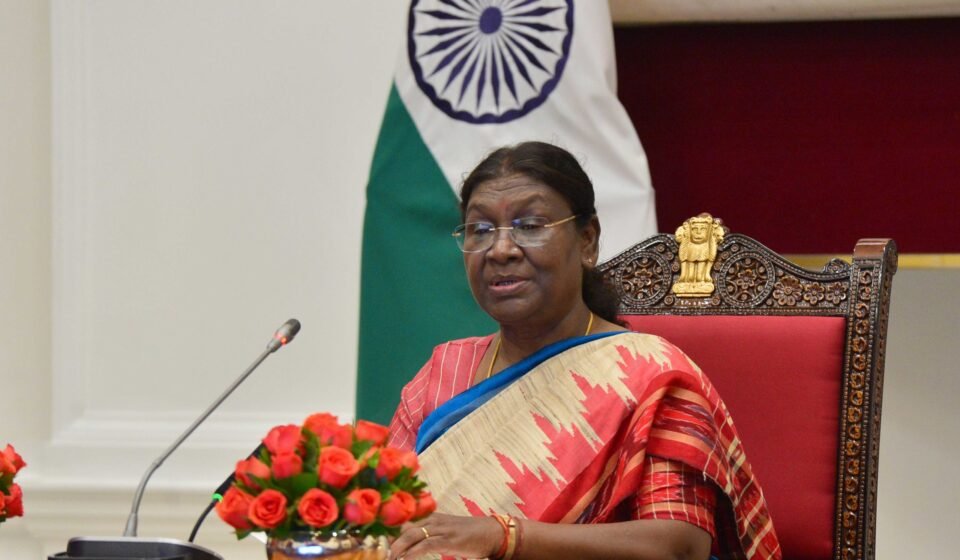
The President of India holds the formal title of head of state and is constitutionally the highest authority in the country, yet understanding what the President actually does requires distinguishing carefully between ceremonial authority and genuinely exercised power. India follows a parliamentary system in which real, day to day executive decision making rests with the Prime Minister and the Council of Ministers, while the President’s role is largely, though not entirely, constitutional and ceremonial.
The President is elected not by direct popular vote but through an electoral college consisting of elected members of both houses of Parliament and elected members of state and union territory legislative assemblies, serving a term of five years with no constitutional limit on the number of terms an individual can serve.
Formal Executive Powers
On paper, the Constitution vests all executive power in the President, who formally appoints the Prime Minister, the Council of Ministers, the Chief Justice of India and other judges of the Supreme Court and High Courts, the Governors of states, and numerous other constitutional functionaries. In practice, nearly all of these appointments are made on the binding advice of the Prime Minister and Council of Ministers, meaning the President’s role is to formally execute rather than independently decide these appointments under ordinary political circumstances.
This formal but largely ceremonial executive role extends to the President being the Supreme Commander of India’s Armed Forces, though actual military command and strategic decision making rest with the elected government through the Ministry of Defence rather than with the President personally.
Legislative Powers
The President’s role in the legislative process is more substantively significant. Every bill passed by Parliament requires the President’s assent before becoming law, and while the President is generally expected to grant this assent, the Constitution does provide some discretion, particularly the ability to return a non Money Bill to Parliament for reconsideration once. If Parliament passes the bill again, however, the President is constitutionally bound to grant assent on the second occasion, limiting this power to a delaying rather than an absolute veto.
The President also has the authority to promulgate an Ordinance when Parliament is not in session and immediate legislative action is deemed necessary, a power that carries the same force as an Act of Parliament but must be approved by Parliament within six weeks of reassembling or it lapses. This Ordinance making power has occasionally become politically contentious when governments have used it extensively rather than waiting for Parliament to convene.
Discretionary Powers in Exceptional Situations
The President’s genuine independent judgment becomes most relevant in situations of political uncertainty, particularly when no single party or coalition has a clear majority after a general election. In such circumstances, the President exercises real discretion in deciding which party leader to invite to form the government and demonstrate majority support, a decision that has occasionally proven politically consequential in India’s electoral history.
The President also holds emergency powers under the Constitution, including the ability to declare a National Emergency under Article 352, President’s Rule in a state under Article 356, or a Financial Emergency under Article 360, though in each case these powers are exercised on the advice of the Council of Ministers and remain subject to parliamentary approval and, in some cases, judicial review.
Ceremonial and Symbolic Functions
Beyond formal constitutional powers, the President performs significant ceremonial functions, including addressing the first session of Parliament after each general election and at the start of each year, outlining the government’s policy priorities in a speech that, while delivered by the President, is drafted by the government of the day. The President also represents India in receiving foreign dignitaries during state visits and performs various honorary functions tied to the dignity of the office.
Why the President’s Role Still Matters
Despite holding limited independent executive power under normal political circumstances, the President’s office remains constitutionally significant precisely because of the discretionary powers that become relevant during moments of political instability or crisis. A hung Parliament, a constitutional crisis, or a dispute over the use of emergency powers are exactly the situations in which the President’s judgment, rather than the Prime Minister’s, becomes the deciding factor in how India’s government functions. For more on the discretionary legislative tool available to the executive branch, see our explainer on what an Ordinance is, and for official addresses and updates from Rashtrapati Bhavan, visit the President of India’s official website.