
 In 30 Seconds




On the afternoon of 27 April 1959, Commander Kawas Manekshaw Nanavati, a decorated officer of the Indian Navy, drove his wife Sylvia and their children to a Bombay cinema, dropped them off, and went to his ship, where he signed out a revolver and six cartridges on a pretext. He then drove to the office of Prem Ahuja, a Sindhi businessman, did not find him, and continued to Ahuja’s flat. Minutes after Nanavati entered the bedroom, three shots were fired. Ahuja was dead. Nanavati drove to a police station and turned himself in. Sylvia had confessed that morning to an affair with Ahuja, and the question that would grip the nation for the next three years was deceptively simple: was this murder, or was it the tragedy of a wronged husband?
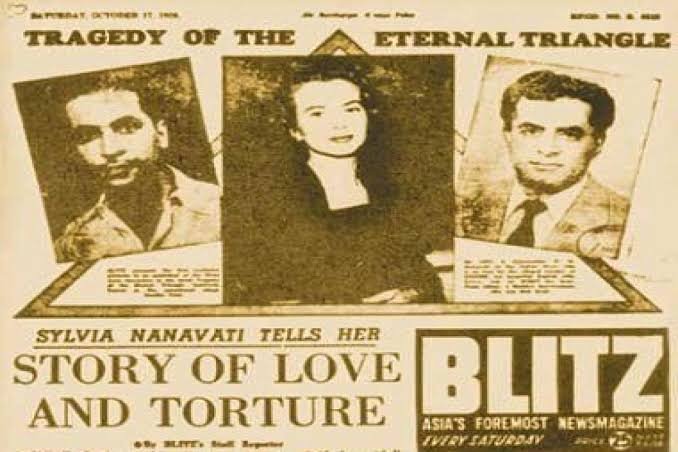
No Indian trial before it had ever been consumed by the press the way this one was. Russi Karanjia’s tabloid Blitz took up Nanavati’s cause with unabashed fervour, printing special editions that sold out within hours and framing the commander as an upright officer betrayed by a playboy. Crowds thronged the courtroom. Peddlers outside sold toy Nanavati revolvers and Ahuja towels, a mocking reference to the defence suggestion and prosecution rebuttal about whether Ahuja had just emerged from a bath. The Parsi community rallied behind one of its own, and the Navy stood visibly by its officer.
The defence argued that Nanavati had gone to ask Ahuja whether he intended to marry Sylvia and look after the children, that Ahuja had answered with contempt, and that a struggle over the revolver had ended in accidental death. The prosecution argued premeditation: the pretext at the naval base, the loaded weapon, the drive to the flat. The jury, by a verdict of eight to one, found Nanavati not guilty. The sessions judge, in an extraordinary move, held the verdict perverse and referred the case to the Bombay High Court, which was empowered in those days to review a jury’s decision. The High Court agreed with the judge, set the verdict aside, convicted Nanavati of murder and sentenced him to life imprisonment. In 1961 the Supreme Court upheld the conviction, ruling that the sequence of Nanavati’s actions showed deliberation, not the sudden loss of self control that the defence of grave and sudden provocation requires.
Then came the final act, as political as the trial had been theatrical. In 1964, after Nanavati had served around three years, the Governor of Maharashtra, Vijayalakshmi Pandit, pardoned him. On the same day, a pardon was also granted to Bhai Pratap, a Sindhi businessman convicted in an import licence case, a pairing widely read as a gesture of balance between the two communities the case had set against each other. Ahuja’s sister Mamie gave her written consent to the pardon. Nanavati, Sylvia and their children later emigrated to Canada, where he lived quietly until his death in 2003.
The case’s legacy is structural. The spectacle of a jury swayed by press campaigns and public sympathy convinced the legal establishment that ordinary citizens could not be insulated from sentiment, and jury trials were phased out, disappearing entirely with the new Code of Criminal Procedure in 1973. Every murder trial in India since has been decided by judges alone, which means every Indian verdict of the past half century carries, somewhere in its ancestry, the three shots fired in a Bombay bedroom in April 1959.
Related Reading
- What Is Cybercrime? Common Threats and How India Responds
- The Kilvenmani Massacre: Forty Four Lives and the Price of a Wage Dispute
- The Assassination of Lalit Narayan Mishra: A Minister Dies, Questions Remain
Official context: Readers can compare this story with public information from National Crime Records Bureau.
The Foundational Era - Batch 1
Part 5 of 10 in this chapter.