
 In 30 Seconds




On the morning of 24 May 1971, the chief cashier of the State Bank of India’s Parliament Street branch in New Delhi, Ved Prakash Malhotra, received a telephone call. The voice on the line, he would later swear, was that of Prime Minister Indira Gandhi. The voice told him that sixty lakh rupees in cash were needed urgently for a secret mission connected with Bangladesh, that a courier would identify himself with a code phrase, and that Malhotra should deliver the money and then come to the Prime Minister’s house for a receipt. Malhotra withdrew the money, packed it into a trunk, drove to a rendezvous, and handed sixty lakh rupees of the bank’s cash to a man he had never met. When he presented himself at the Prime Minister’s residence for his receipt, he discovered that no one there knew anything about any of it.
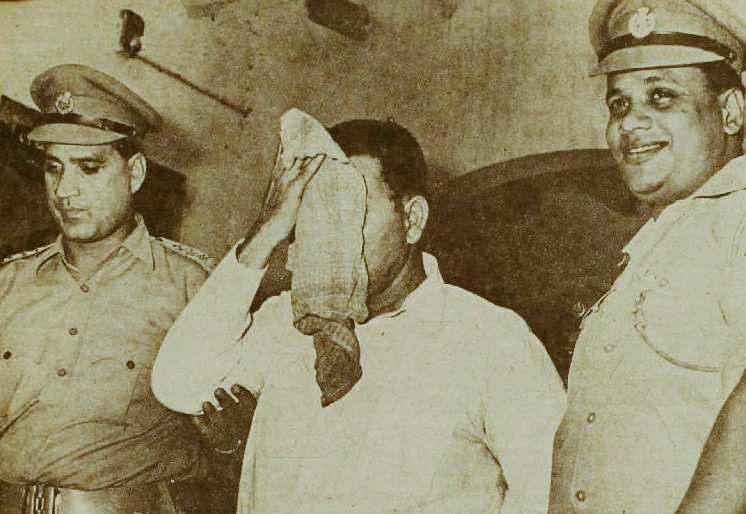
The police arrested the courier within hours. He was Rustom Sohrab Nagarwala, a former army captain who had once had links with intelligence work. Most of the money was recovered swiftly. Nagarwala confessed, saying he had mimicked the Prime Minister’s voice himself, and what followed remains the fastest major trial in Indian criminal history. Within ten days of the crime, on the basis of his confession, Nagarwala was convicted and sentenced to four years. No detailed investigation preceded the conviction, no forensic examination of the possibility of one man convincingly imitating a voice the cashier knew, no serious probing of why a chief cashier would hand over a fortune on the strength of a phone call.
Then the story turned darker. Nagarwala recanted, said his confession had been given in haste, and asked for a retrial, telling a magistrate and later a journalist that the truth was different from what the record showed. Before any retrial could be considered, he died of a heart attack in jail custody in March 1972. The police officer who had investigated the case, D K Kashyap, died in a road accident. The coincidences, each explainable on its own, assembled themselves in the public mind into something less innocent, and the Nagarwala case became independent India’s favourite conspiracy, whispered about in Parliament and print for years.
The questions were obvious and remain unanswered. If Nagarwala acted alone, how did he know the code phrases and the internal procedures that made the cashier comply? Why did the cashier, who spoke to the Prime Minister’s household with apparent familiarity, behave as though such calls were not unprecedented? Was the sixty lakh a mimic’s audacious theft, or a covert transaction that went wrong and needed a story?
After the Emergency ended, the Janata government appointed the Jaganmohan Reddy Commission in 1977 to re examine the affair. The commission worked with a cold trail and dead witnesses, criticised the indecent haste of the original trial and the investigation’s failures, and found no conclusive evidence to establish the conspiracy theories. Its report satisfied no one, which by then was the only outcome possible. The Nagarwala case endures as a parable about the Indian state at its most opaque: a crime with a confession, a conviction, a corpse, and no answer.
Related Reading
- What Is Cybercrime? Common Threats and How India Responds
- The Kilvenmani Massacre: Forty Four Lives and the Price of a Wage Dispute
- The Assassination of Lalit Narayan Mishra: A Minister Dies, Questions Remain
Official context: Readers can compare this story with public information from National Crime Records Bureau.
The Foundational Era - Batch 1
Part 7 of 10 in this chapter.