 In 30 Seconds




Story
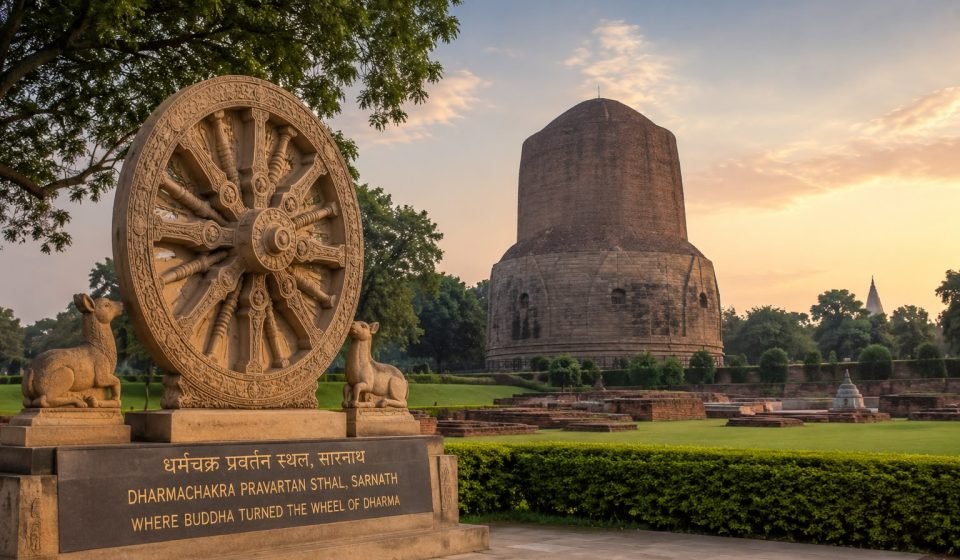
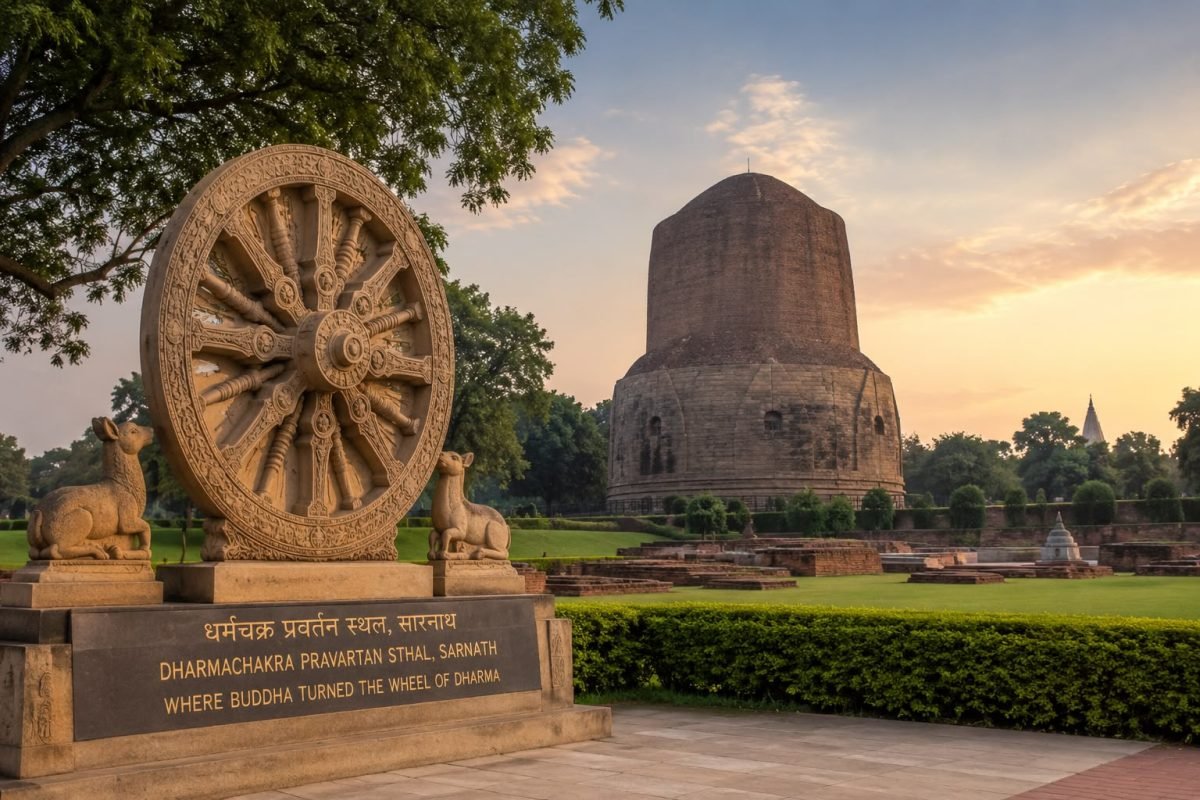
A few kilometres north of the oldest city in the world lies the field where one of the world’s great religions was spoken into existence. Sarnath, the deer park the ancient texts call Rishipatana or Isipatana, is where Siddhartha Gautama, weeks after his awakening at Bodh Gaya, walked to find the five ascetics who had once been his companions and delivered to them the discourse the tradition calls the turning of the wheel of dharma. On that afternoon, by the tradition’s own accounting, Buddhism acquired everything that makes a religion, a teacher, a teaching, and a community, for when the first of the five understood, the sangha was born.
The teaching itself, the Dhammacakkappavattana Sutta, is among the most consequential short texts in human history. It proposed a middle way between indulgence and mortification, and it laid out the four noble truths, that suffering exists, that it has a cause, that it can cease, and that a path leads to its cessation, the eightfold path of right view, intention, speech, action, livelihood, effort, mindfulness, and concentration. The choice of audience made a statement in itself. The Buddha crossed half of North India on foot to teach not kings or priests but five dusty seekers in a deer park, and the deer park has been holy ground ever since, one of the four great sites of the Buddhist world alongside Lumbini, Bodh Gaya, and Kushinagar.
Empire arrived two centuries later in the person of Ashoka, the Mauryan emperor whose remorse after Kalinga turned him into the faith’s greatest patron. At Sarnath he raised a polished sandstone pillar crowned with four lions standing back to back above a frieze of wheel and animals. The pillar’s shaft still stands broken at the site, and the lion capital, recovered by excavators and housed in the Sarnath museum, was chosen by the new Indian republic as its state emblem, with the wheel from its abacus set in the centre of the national flag. It is worth pausing on what this means. The official face of modern India, on every banknote, passport, and government letterhead, is a sculpture from a Buddhist monastery in Uttar Pradesh.
Around the pillar grew one of the great monastic complexes of Asia. The Dharmarajika stupa held relics of the Buddha himself, and the colossal cylindrical Dhamek stupa, rebuilt in the Gupta centuries and standing to this day, marks by tradition the very spot of the first discourse. Xuanzang, visiting in the seventh century, counted some fifteen hundred monks in residence and described towers and shrines whose splendour he recorded in detail. Sarnath’s workshops, an extension of Mathura’s and then a school in their own right, produced some of the most serene Buddha images ever carved, the preaching Buddha of the Gupta era among them, the figure seated with fingers turning the invisible wheel.
Then came the long silence. The complex was damaged in the twelfth century amid the Ghurid conquests, patronage collapsed, the monks dispersed, and the deer park returned to grass and grazing. For six hundred years one of the holiest places on earth was a mound of brick quarried by local builders, its stones carried off for the markets and bridges of Banaras. The rediscovery began by accident in 1798, when workmen dismantling a stupa for building material found a relic casket, and continued through the nineteenth century as Alexander Cunningham and the new Archaeological Survey cut trenches into the mounds and the site’s identity was recovered from the Pali texts.
The twentieth century brought resurrection rather than mere excavation. Anagarika Dharmapala of the Maha Bodhi Society raised the Mulagandha Kuti Vihara beside the ruins in 1931, its walls painted with the Buddha’s life by a Japanese master, and the world’s Buddhist nations followed with monasteries of their own, Tibetan, Thai, Burmese, Japanese, Chinese, and Korean, so that the deer park now hosts a permanent parliament of Buddhist Asia. In 1956, Ambedkar’s conversion movement gave the site a new Indian constituency, and Dalit pilgrims are today among its most devoted visitors, a thread this series picks up in its caste and politics batches.
Sarnath now sits inside the orbit of resurgent Kashi, its lawns filled with schoolchildren and its museum with scholars, the wheel turned here twenty six centuries ago still spinning at the centre of the republic’s flag. Uttar Pradesh holds many beginnings, but none travelled further than this one, an afternoon’s teaching in a deer park that became the faith of a third of Asia.