 In 30 Seconds




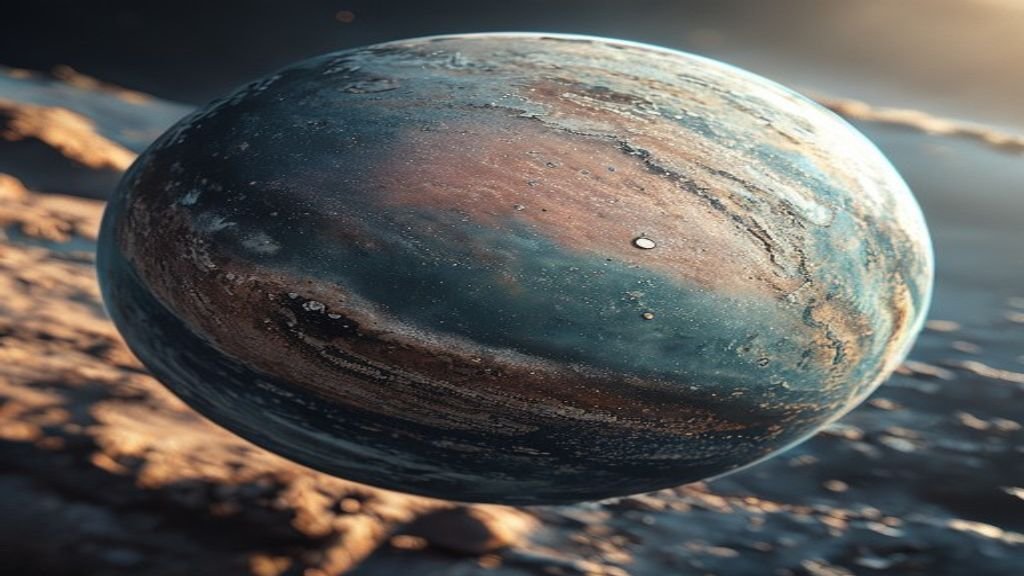
Astronomers have announced a truly monumental discovery that promises to reshape humanity’s understanding of our place in the cosmos. For the first time, an atmosphere has been detected on an exoplanet residing within a distant star’s habitable zone. This momentous finding on a world described as akin to Earth marks a significant leap in the enduring quest to find life beyond our solar system, according to recent reports.
The detection of an atmosphere on an exoplanet considered rocky and situated in a region where liquid water could potentially exist on its surface is a pivotal moment in astronomy. It signifies that the conditions necessary for life as we comprehend it might be more prevalent across the galaxy than previously confirmed. This groundbreaking observation moves the scientific community closer to answering one of humanity’s most profound questions: Are we alone?
Background
For decades, the idea of planets orbiting stars other than our Sun was confined to the realm of science fiction. The actual detection of exoplanets began in the 1990s, slowly at first, then accelerating into a torrent of discoveries thanks to advanced telescopes and sophisticated observational techniques. Thousands of exoplanets have now been cataloged, ranging from gas giants far larger than Jupiter to super Earths and even worlds smaller than Mars.
Among this vast array of distant worlds, scientists have diligently sought out those that share crucial characteristics with our home planet. The term “habitable zone” denotes the orbital region around a star where temperatures are just right for liquid water to exist on a planet’s surface. Water is, of course, a fundamental ingredient for all known life forms. However, merely being in the habitable zone is not enough. A planet must also possess other vital attributes, such as being primarily rocky rather than gaseous, to be considered a true candidate for supporting life.
The next critical piece of the puzzle, one that has remained elusive until now, is the presence of an atmosphere. An atmosphere plays a multifaceted role in shaping a planet’s environment. It regulates temperature, shielding the surface from extreme heat or cold. It can protect against harmful stellar radiation and meteoroid impacts. Crucially, it facilitates the hydrological cycle, allowing water to evaporate, condense, and fall as rain or snow. Without an atmosphere, even a rocky world in a habitable zone would struggle to maintain liquid water and a stable environment conducive to the long term development of complex life.
This recent discovery therefore represents the culmination of years of dedicated research and technological innovation, bringing together the detection of a rocky world within a habitable zone with the crucial confirmation of an atmospheric veil. It is a milestone that ushers in a new era for astrobiology and the broader field of space exploration.
Timeline of Events
The pivotal moment in this unfolding scientific narrative was marked on July 17, 2026. On this date, reports first emerged detailing the extraordinary discovery. Astronomers confirmed the presence of an atmosphere on a distant world, identified as an exoplanet similar to Earth and located squarely within its star’s habitable zone. This initial announcement launched the global scientific community into a new phase of inquiry regarding extraterrestrial environments and the search for life beyond our solar system.
Why It Matters
The detection of an atmosphere on a planet residing in another star’s habitable zone carries profound implications across multiple scientific disciplines and for humanity’s collective perspective. Primarily, it marks a significant validation of the long held hypothesis that planets capable of sustaining life might be common throughout the universe. Prior to this, while exoplanets in habitable zones were known, the direct observation of an atmosphere on such a world was the missing empirical evidence.
From an astrobiological standpoint, this discovery immediately elevates the planet to a prime target for future study in the search for life. An atmosphere is not merely an incidental feature; it is an active component that helps create and maintain the delicate balance required for biological processes. It provides protection, distributes heat, and can host the chemical reactions necessary for life’s emergence and evolution. This finding strengthens the scientific case that if life exists elsewhere, planets like this one are the most likely places to find it.
Technologically, the ability to detect an atmosphere on a distant exoplanet underscores the incredible advancements in astronomical instrumentation and data analysis. It hints at the potential for even more sophisticated observations in the future, perhaps even the ability to analyze atmospheric compositions for biosignatures, chemical indicators that might suggest the presence of living organisms. This discovery will undoubtedly spur further investment and innovation in next generation telescopes and observational techniques.
Furthermore, this news resonates deeply with the human spirit of exploration and wonder. It expands our cosmic neighborhood, offering tangible evidence that our solar system may not be unique in harboring such a world. It fuels philosophical contemplation about the vastness of the universe and our place within it, potentially inspiring a new generation of scientists, engineers, and dreamers to push the boundaries of knowledge and exploration. The thought that another world, far across the void, possesses a sky, perhaps even clouds and weather, just like Earth, is a powerful motivator for continued scientific endeavor.
What Could Happen Next
The immediate aftermath of such a groundbreaking discovery will undoubtedly involve intense follow up observations and analyses. Astronomers will meticulously scrutinize the exoplanet using every available and future instrument. The paramount goal will be to characterize the detected atmosphere in greater detail. This could involve spectroscopic studies to determine its chemical composition, searching for gases like oxygen, methane, or water vapor, which are key indicators for habitability and potential biological activity.
Researchers will also aim to measure the planet’s temperature variations, atmospheric pressure, and even the presence of weather patterns, if current or forthcoming technologies permit. Understanding these properties will provide invaluable insights into the planet’s climate and its true potential to support life. The scientific community will also work to refine models of planetary formation and atmospheric evolution based on this empirical data, enhancing our ability to predict which exoplanets might be the best candidates for life.
This discovery will almost certainly act as a powerful catalyst for the development of new, more sensitive telescopes and space missions. Future observatories, both ground based and orbital, will be designed with enhanced capabilities specifically tailored to probe exoplanet atmospheres for increasingly subtle biosignatures. The ultimate ambition is to directly image such worlds and conduct detailed atmospheric analyses that could provide definitive proof of extraterrestrial life. The confirmation of an atmosphere on an Earth like world in a habitable zone marks the beginning of a new chapter, not an end, in the search for life beyond Earth, promising decades of thrilling scientific exploration and discovery.
Frequently Asked Questions
What exactly is a habitable zone?
A habitable zone, sometimes called the Goldilocks zone, refers to the region around a star where conditions are just right for liquid water to exist on the surface of an orbiting planet. It is not too hot for water to evaporate entirely, nor too cold for it to freeze solid. The size and distance of this zone vary depending on the star’s size and brightness.
Why is an atmosphere considered so important for life?
An atmosphere is crucial for life as we know it because it performs several vital functions. It helps regulate a planet’s surface temperature, creating a more stable and moderate climate. It also provides protection from harmful stellar radiation and meteoroid impacts. Moreover, an atmosphere facilitates the hydrological cycle, allowing water to exist in liquid form and move across the planet’s surface, which is essential for biological processes.
Does finding an atmosphere in a habitable zone mean there is life on this exoplanet?
While the detection of an atmosphere on a world similar to Earth within a habitable zone is an incredibly exciting development, it does not automatically confirm the presence of life. It signifies that the fundamental conditions required for life are met, making it a prime candidate for further investigation. Future observations will focus on analyzing the atmosphere for specific chemical signatures that might indicate biological activity, which would provide stronger evidence for the existence of life.