 In 30 Seconds




Story
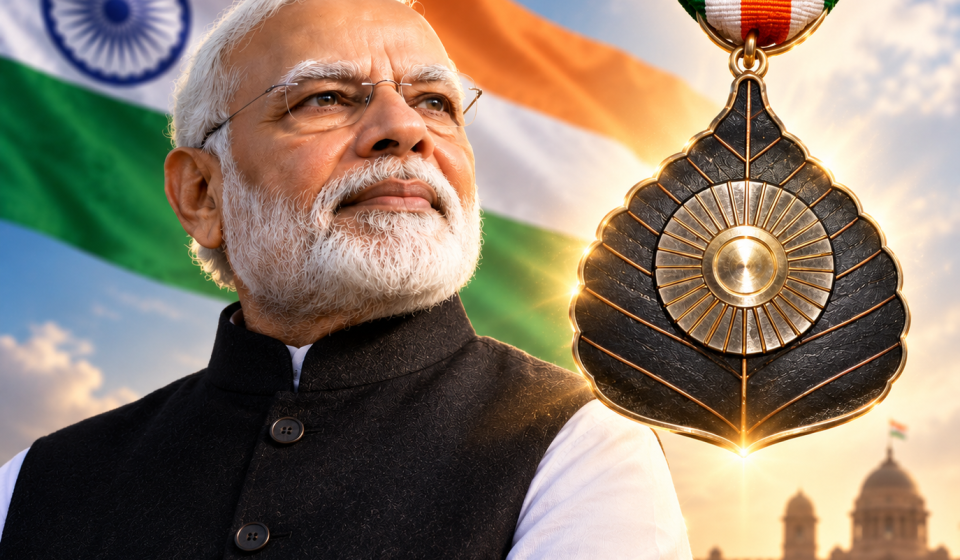
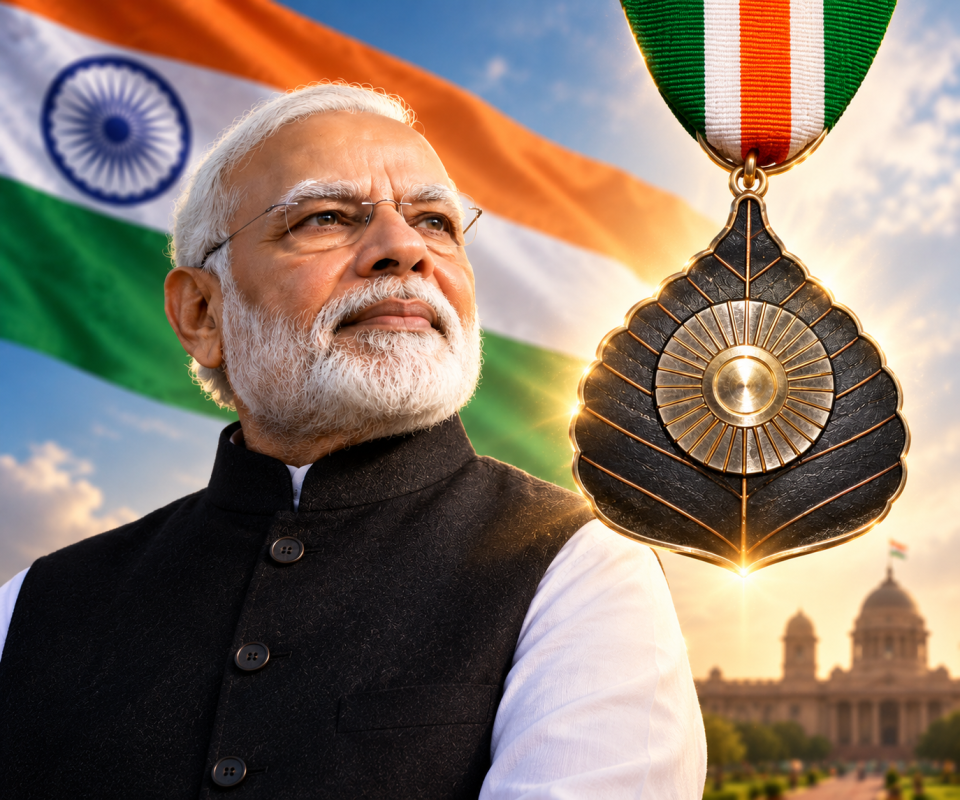
Why the Timing Is Right for a Bharat Ratna to Narendra Modi
The Bharat Ratna, instituted in 1954, is reserved for “exceptional service or performance of the highest order,” and its conferral is as much an act of national self-understanding as it is a tribute to an individual. Debates about Prime Minister Narendra Modi’s eligibility inevitably attract two objections: first, that his record is still being written, and second, that honouring a sitting leader risks politicising an apolitical institution. Both objections deserve to be taken seriously. Yet a closer look at precedent, the structure of the award’s selection criteria, and the nature of Modi’s contribution suggests that waiting for the “safety” of retirement or death is neither required by tradition nor obviously wiser than recognising achievement while it is unfolding. If the substantive case for Modi’s candidacy is strong, deferral for its own sake is not a neutral act; it is itself a choice with costs.
Precedent Undermines the “Wait for Retirement” Rule
Critics often assume that the Bharat Ratna is, by convention, reserved for those whose careers have concluded. The historical record does not support this as an inviolable rule. Morarji Desai received the award in 1991 while still politically active in public life, and several Bharat Ratna laureates, including sitting or recently serving leaders, were honoured without a lengthy interval of retrospective distance built into the process. The award’s guidelines themselves impose no statutory waiting period; they speak of exceptional achievement, not of a cooling-off requirement. If custom rather than rule is driving the caution around Modi’s case, then that custom is negotiable, particularly if the achievements being recognised are already substantial, documented, and unlikely to be substantially reversed or reassessed by the passage of a few more years.
The Scale and Documentation of the Contribution
A second pillar of the case for immediate recognition is that Modi’s record is not thin or speculative; it is unusually well documented for a sitting leader. More than two decades in executive office, first as Chief Minister of Gujarat and then across three consecutive terms as Prime Minister since 2014, have produced a body of governance outcomes that can already be measured rather than merely projected. The rollout of the Jan Dhan Yojana brought hundreds of millions of previously unbanked citizens into the formal financial system. The Goods and Services Tax (GST), whatever its implementation difficulties, represented the most significant restructuring of India’s indirect tax architecture since independence. The Unified Payments Interface and the broader India Stack have made India a global reference case for digital public infrastructure, a fact acknowledged by international institutions and foreign governments studying the model for their own use. These are not promises awaiting fulfilment; they are operating systems that already touch the daily lives of over a billion people. Waiting for more time to pass does not make this record more real; it is already real.
India’s Changed International Standing
The argument for timeliness also rests on the diplomatic and strategic dimension of Modi’s tenure. India’s successful presidency and hosting of the G20 summit in 2023 and the recent BRICS Summit in 2026, its increasingly central role in the Quad, and its balancing act between Western partners and long-standing relationships with Russia and the Global South, together reflect a foreign policy repositioning that observers across the ideological spectrum have described as consequential. If part of the Bharat Ratna’s purpose is to mark moments when India’s place in the world visibly changed, then this is a live, ongoing achievement whose significance is arguably best captured while its author is still shaping it, not filtered decades later through the inevitable revisionism of memory and politics.
Symbolic Coherence with Recent Awards
The 2024 conferrals of the Bharat Ratna on P. V. Narasimha Rao, Chaudhary Charan Singh, Karpoori Thakur, and M. S. Swaminathan demonstrate that the award’s custodians are already willing to use it expansively: recognising economic reformers, agrarian leaders, and scientists alike, often decades after their principal contributions. This suggests the honour is currently being deployed as a tool of active historical narrative-building, not held in reserve for some distant, depoliticised future. If the state is already engaged in shaping the story of modern India through these awards, excluding the country’s longest-serving Prime Minister since Nehru from that narrative, solely because he remains in office, creates an odd asymmetry rather than a principled consistency.
Addressing the Politicisation Concern Directly
None of this dissolves the legitimate worry that honouring a sitting Prime Minister blurs the line between state recognition and political endorsement. But this concern applies, in principle, to any award given to any active public figure, and India’s institutions have navigated it before through transparent selection processes and multi-source recommendations. The remedy for the politicisation risk is procedural rigour, clear criteria, public reasoning, and consistency of standard, not indefinite postponement. An honour delayed until every controversy of an era has faded is not more credible; it is simply awarded after the public has stopped paying close attention to how the decision was made.
The Case for Judging the Record Now
The strongest version of the case for now is not that timing is irrelevant, but that the substantive record, measured in institutions built, systems operating, and international standing achieved, is already sufficiently mature to be judged. Precedent does not mandate delay, and the documented scale of the contribution does not depend on further years elapsing. It should be acknowledged, however, that this remains a contested question: many observers argue the opposite, that historical distance is precisely what allows controversies to be weighed fairly against achievements, and that a Bharat Ratna for a sitting leader inevitably invites the charge of political timing, whatever the underlying merits. The debate, ultimately, turns on whether one believes achievement should be certified as it happens or only once its full consequences, positive and negative, have played out.