
 In 30 Seconds




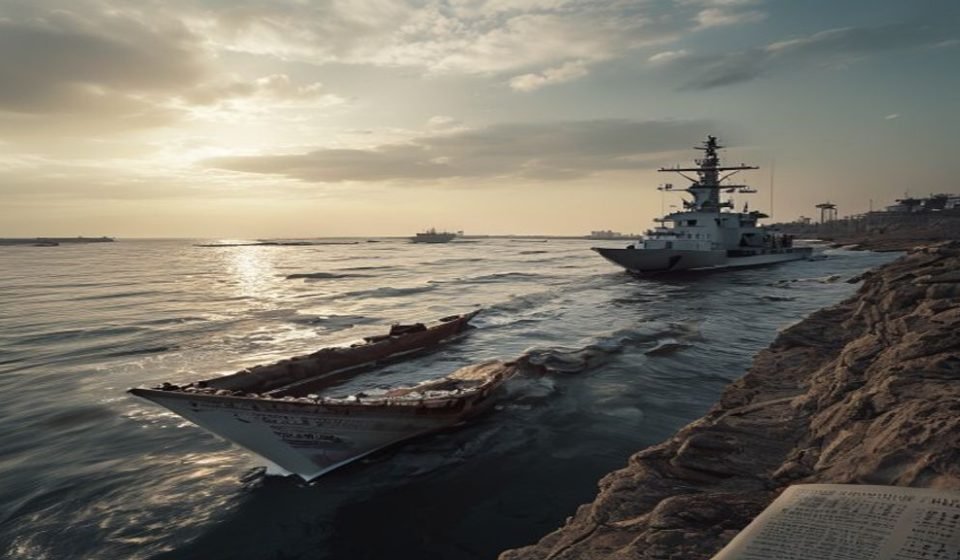
Recent reports from the U.S. Navy suggest a significant escalation in maritime tensions within the strategically vital Strait of Hormuz. The American naval command asserts that Iran has been deploying naval mines in the waterway, an action purportedly intended to manipulate the flow of international shipping traffic through one of the world’s most critical energy transit points. This development raises immediate concerns across global security and economic circles, particularly given the strait’s indispensable role in international commerce and energy supplies.
The allegations, which emerged on July 14, 2026, describe a deliberate strategy by Tehran to steer vessels closer to its own shores. Such an act could significantly alter established maritime routes, potentially increasing risks for commercial and military vessels alike. Observers note that any attempt to unilaterally control or influence navigation in an international strait constitutes a serious challenge to freedom of navigation, a principle upheld by numerous international conventions and maritime laws. The nature of these alleged deployments and their intended operational impact remain subjects of intense scrutiny by international naval powers and shipping authorities.
Background
The Strait of Hormuz stands as a narrow seaway connecting the Persian Gulf with the Arabian Sea and the broader Indian Ocean. It is arguably the world’s most critical oil transit chokepoint, with a substantial portion of the globe’s seaborne petroleum passing through its waters daily. Its strategic significance extends beyond energy, encompassing a wide array of global trade. The strait is flanked by Iran to the north and Oman and the United Arab Emirates to the south, making it a geopolitical hotspot. Any disruption to traffic in this passage carries profound implications for global energy markets and the stability of international supply chains.
Naval mines are explosive devices that are self contained, designed to damage or sink ships. They can be deployed in various forms, from contact mines that explode upon impact to more sophisticated influence mines that detect a vessel’s magnetic or acoustic signature. The deployment of such devices in international waters, particularly in an area experiencing significant maritime traffic like the Strait of Hormuz, introduces an unpredictable element of danger. It necessitates extensive mine countermeasures operations and significantly elevates the risk profile for all maritime activity. Historically, the presence of mines has been a potent tool for naval powers seeking to assert control or deter adversaries in strategic waterways, often with severe consequences for neutral shipping.
Timeline of Events
The unfolding situation in the Strait of Hormuz saw a pivotal development on July 14, 2026. On this date, the U.S. Navy issued a public statement alleging that Iran was actively engaged in deploying naval mines within the strait’s waters. This assertion directly accused Tehran of employing these devices with the express purpose of manipulating shipping traffic, effectively aiming to funnel vessels into areas closer to the Iranian coastline. This specific claim marked the initial formal report of this particular Iranian naval strategy, drawing immediate international attention to the critical maritime passage.
Why It Matters
The reported deployment of mines by Iran in the Strait of Hormuz carries immense significance for several interconnected reasons, impacting global economics, international law, and regional security. Firstly, its most immediate and palpable effect would be on global energy markets. A substantial volume of the world’s crude oil and liquefied natural gas transits this strait. Any perceived or actual threat to this flow can trigger sharp spikes in energy prices, destabilizing economies worldwide and increasing the cost of living for consumers. Global supply chains, already under pressure from various geopolitical factors, would face renewed strain, potentially leading to delays and increased freight costs for a multitude of goods.
Secondly, the alleged actions directly challenge the fundamental principle of freedom of navigation in international waters. The Strait of Hormuz, while geographically constrained, is an international waterway crucial for unimpeded passage. Attempts by any nation to unilaterally manipulate or restrict traffic through such a passage are viewed as violations of international maritime law and norms. This could set a dangerous precedent for other strategic chokepoints around the globe, encouraging similar assertions of control.
Furthermore, this development significantly escalates regional tensions. The Persian Gulf is already a volatile area, characterized by complex geopolitical rivalries. The introduction of naval mines by one regional player, particularly with the stated intent to manipulate traffic, introduces an additional layer of unpredictability and risk. It raises the specter of accidental engagements, miscalculations, or deliberate acts that could rapidly spiral into broader conflict. International naval forces operating in the region to ensure maritime security would face an increased threat, necessitating enhanced surveillance and potentially defensive measures. The long term implications for shipping insurance premiums, trade routes, and the willingness of commercial entities to navigate these waters freely also remain a considerable concern, potentially shifting global trade patterns and increasing operational costs for shipping companies.
What Could Happen Next
The aftermath of the U.S. Navy’s accusations regarding Iranian mine deployments in the Strait of Hormuz could unfold along several possible trajectories, each carrying significant implications for regional and global stability. One immediate consequence might be a heightened state of alert and increased surveillance by international naval forces, particularly those from the United States and its allies. These forces may intensify their mine detection and clearance operations, effectively neutralizing the threat while simultaneously monitoring Iranian naval activities more closely. Such a response would aim to provide reassurance for shipping companies and maintain the free flow of commerce.
Diplomatically, the international community is likely to condemn any actions that threaten freedom of navigation. Calls for de escalation and adherence to international maritime law would likely intensify, potentially leading to discussions within the United Nations Security Council or other relevant international bodies. Iran could face increased diplomatic pressure and potentially new sanctions, depending on the substantiation of these claims and the nature of its response. Tehran, for its part, may either deny the allegations outright or justify its actions as a defensive measure within its territorial waters, depending on its strategic calculus.
Economically, should the perception of risk in the Strait of Hormuz persist or increase, shipping companies might opt for longer, more expensive alternative routes, though such options are limited for vessels originating from or destined for the Persian Gulf. This would inevitably drive up insurance costs and freight charges, passing the burden onto consumers globally. Ultimately, the situation presents a test of international resolve to uphold maritime security and prevent unilateral actions that could destabilize crucial global trade arteries. The immediate focus will be on verification of the claims and the coordinated response of the international community to ensure continued safe passage through this vital waterway.
Frequently Asked Questions
What are naval mines?
Naval mines are explosive devices that are self contained, deployed in water to damage or sink ships. They can be anchored to the seabed, float freely, or lie on the bottom, triggered by contact with a vessel or by a ship’s magnetic, acoustic, or pressure signature. Their primary purpose is to deny access to an area or channel.
Why is the Strait of Hormuz considered so important?
The Strait of Hormuz is critically important because it is the world’s most significant chokepoint for global oil transit. A substantial percentage of the world’s seaborne oil passes through this narrow waterway daily, making it indispensable for global energy security and international trade. Any disruption there impacts global economies directly.
What does ‘manipulating shipping traffic’ mean in this context?
‘Manipulating shipping traffic’ in this context refers to actions taken by Iran, allegedly through the deployment of mines, to alter the established routes of international vessels. This could involve forcing ships to navigate closer to Iran’s coastline, potentially for surveillance purposes, or to assert control over specific areas of the strait, thereby affecting the free and unimpeded movement of global commerce.