
 In 30 Seconds




Before the Mauryan Empire rose to prominence in the fourth century BCE, the Indian subcontinent had never known political unification on such a massive scale. Dozens of kingdoms, republics and tribal confederations, collectively known as the Mahajanapadas, had long competed for territory and resources across the northern plains. It took the ambition of one dynasty, founded by Chandragupta Maurya around 321 BCE, to weave this fragmented political landscape into a single, centrally administered empire stretching from present day Afghanistan to Bengal, and from the Himalayas deep into the southern reaches of the peninsula.
The Mauryan Empire’s rise began with Chandragupta’s conquest of the wealthy and powerful kingdom of Magadha, overthrowing the unpopular Nanda dynasty with the strategic guidance of his brilliant advisor Chanakya. From this foundation in the fertile Gangetic plains, Chandragupta expanded westward, eventually confronting the successors of Alexander the Great and securing vast territories in the northwest through a combination of military pressure and diplomatic negotiation, most notably his treaty with the Hellenistic ruler Seleucus Nicator.
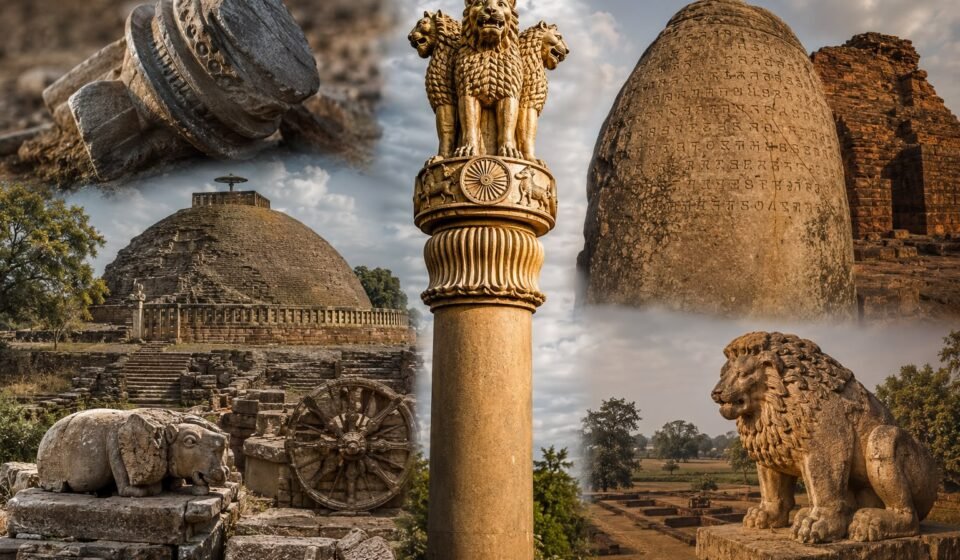
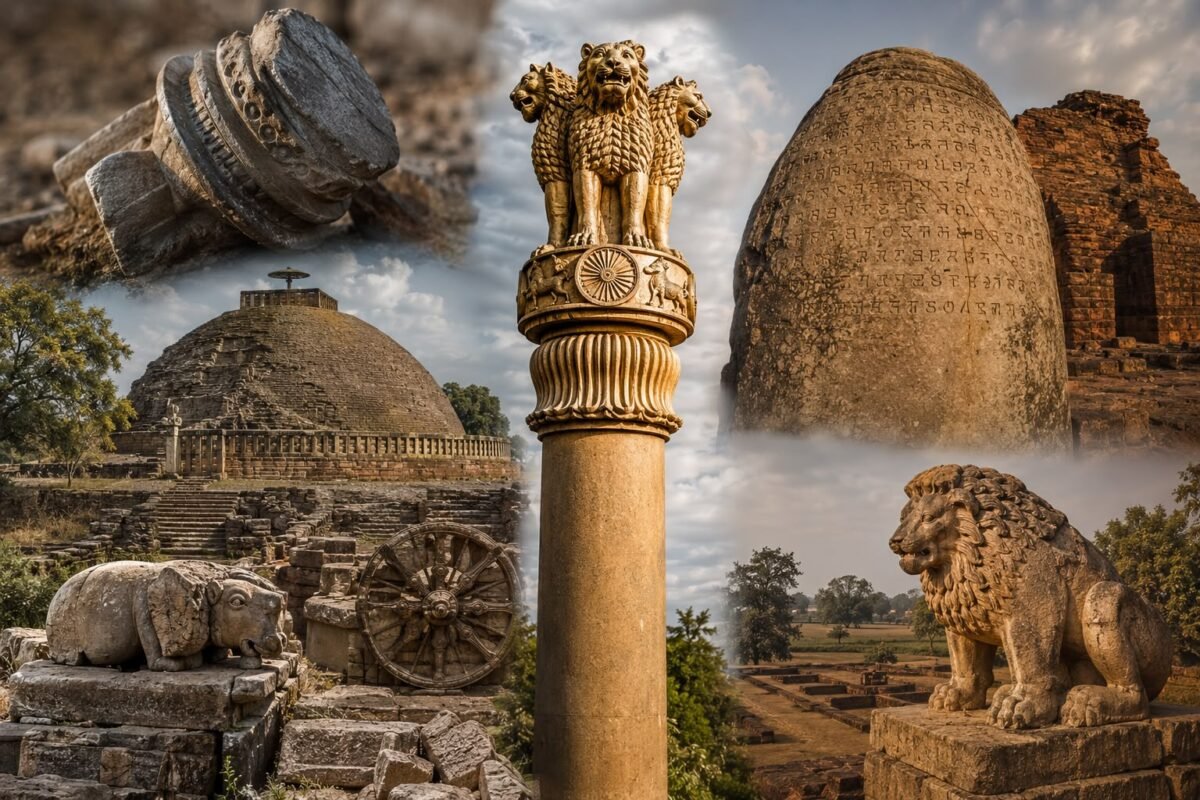
Chandragupta’s son Bindusara continued this expansion, extending Mauryan authority further into the Deccan plateau in central and southern India, earning him the title Amitraghata, or slayer of enemies, in some ancient sources, though relatively little else is documented about the specifics of his reign compared to his father and famous son. It was under Bindusara’s son, Ashoka, that the empire reached its greatest territorial extent, encompassing nearly the entire Indian subcontinent with the notable exception of the far southern tip, following Ashoka’s brutal but ultimately conclusive conquest of Kalinga.
What truly distinguished the Mauryan Empire from earlier and even many later Indian political formations was the sophistication of its administrative machinery. Drawing heavily upon principles articulated in Chanakya’s Arthashastra, the Mauryan state developed an elaborate centralized bureaucracy responsible for taxation, agriculture, trade regulation, public works and justice. The empire was divided into provinces, each governed by officials often drawn from the royal family or closely trusted appointees, with further subdivisions down to village level administration, creating channels of authority and information that connected the imperial capital at Pataliputra to even remote corners of the realm.
Espionage and information gathering played a critical role in maintaining this vast empire’s cohesion. A network of spies, disguised as merchants, ascetics, and ordinary travelers, reported directly to the emperor on the conduct of officials, the mood of the populace and potential threats to stability, reflecting the Arthashastra’s deep emphasis on intelligence as an essential tool of statecraft. Standardized weights, measures and coinage facilitated trade across the empire’s diverse regions, while an extensive network of roads, including a major route connecting the northwest frontier to the eastern capital, supported both military movement and commercial exchange.
Economic prosperity flourished under Mauryan administration. State controlled industries managed mining operations, textile production and forest resources, while agricultural taxation, carefully assessed based on land quality and crop yield, provided the substantial revenue needed to sustain the empire’s vast bureaucracy and military forces. Greek ambassador Megasthenes, who resided at the Mauryan court under Chandragupta, left written accounts describing a highly organized society with dedicated officials overseeing everything from irrigation to foreign trade, offering rare outside confirmation of the empire’s remarkable administrative sophistication.
The Mauryan Empire began to decline following Ashoka’s death around 232 BCE, as the vast territory proved increasingly difficult for his successors to hold together, eventually fragmenting under the pressures of regional rebellion and external invasion by the early second century BCE. Yet the historical significance of this first great unification cannot be overstated. The Mauryan Empire demonstrated that the enormous diversity of languages, cultures and traditions across the Indian subcontinent could be governed under a single coherent political system, establishing administrative and cultural precedents that would echo through subsequent Indian empires for the next two thousand years.
Related Reading
- After Ashoka: The Slow Twilight of the Mauryan Dynasty
- The Aryan Question: What Genetics Now Tells Us
- Vedic Society: Caste, Family and Faith in Early India
Official context: Readers can compare this story with public information from Archaeological Survey of India.
Ancient India - Batch 1
Part 12 of 20 in this chapter.