 In 30 Seconds




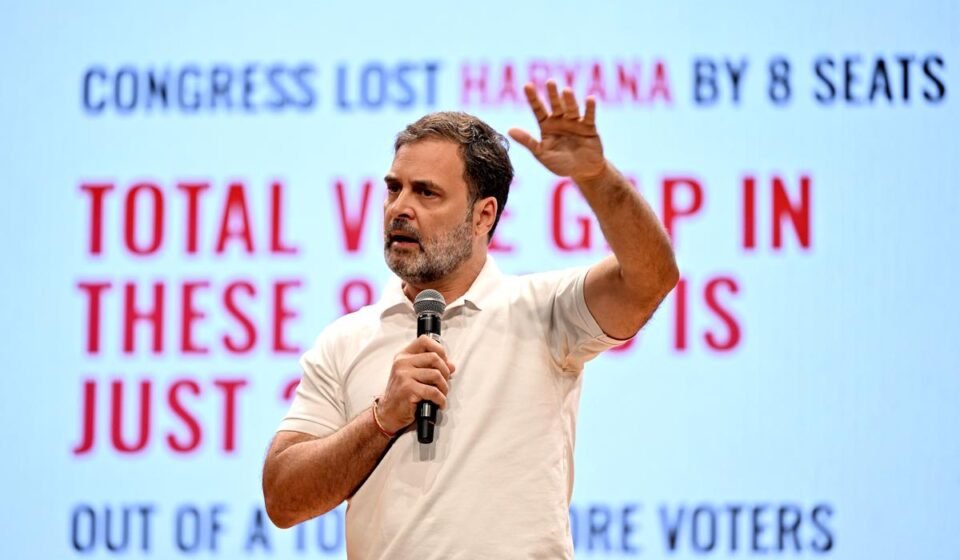
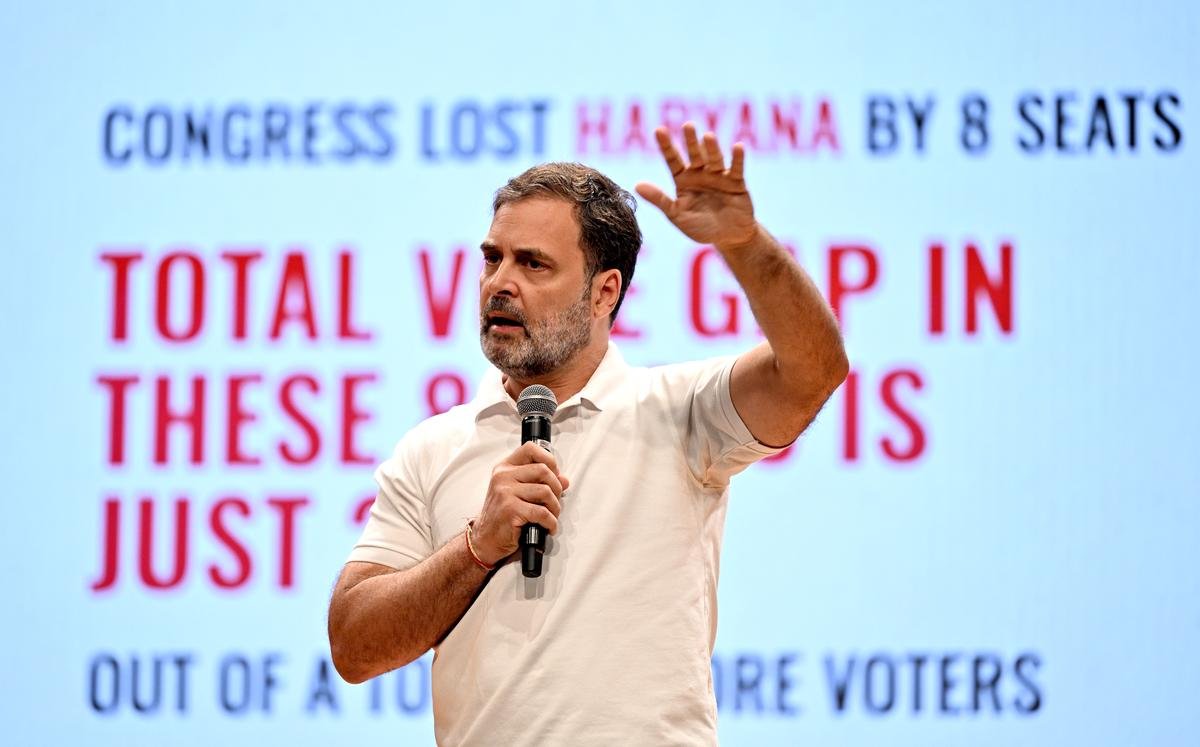
The phrase vote chori has become almost inseparable from Rahul Gandhi’s public messaging over the past several months. As Leader of Opposition in the Lok Sabha, Gandhi has used the term repeatedly to describe what he alleges is a systematic pattern of electoral irregularities benefiting the BJP, and the Rahul Gandhi vote chori campaign has moved from social media posts to detailed claims backed by specific numbers.
The core allegation is straightforward to state even if the underlying detail is not. Gandhi and the Congress party have pointed to what they describe as over one lakh voter irregularities in a single assembly segment of Bangalore Central, irregularities they say helped the BJP secure a Lok Sabha seat. Gandhi has extended the claim further, suggesting that roughly one in six BJP members elected from the party’s two hundred and forty strong Lok Sabha contingent owe their seats to similar discrepancies.
How the Vote Chori Allegation Developed
This is not a claim that emerged overnight. Congress and its allies within the INDIA bloc have raised concerns about electoral irregularities in previous instances, including in Maharashtra, well before the term vote chori entered common political vocabulary. What changed is the specificity. Rather than general accusations about election integrity, Gandhi’s recent statements have leaned on granular, segment level data, the kind of detail that is harder to dismiss as rhetorical flourish even for those who remain sceptical of the broader claim.
Gandhi has framed the issue as an attack on the foundation of Indian democracy itself, arguing that if the pattern he describes in Bangalore Central were replicated across seventy to one hundred constituencies nationally, it would represent a serious threat to the credibility of free elections. He has also directed criticism at the Election Commission, suggesting the institution has been complicit rather than neutral in addressing these concerns.
The Political Context Behind the Timing
It would be incomplete to discuss the Rahul Gandhi vote chori narrative without acknowledging the political moment it sits within. Congress suffered a significant setback in the Assam legislative assembly elections this year, and the party’s state leadership took responsibility for that defeat. Against that backdrop, a national narrative centred on electoral integrity gives Congress a unifying theme that does not depend on state level performance, and one that keeps pressure on the ruling party regardless of which state is in focus.
Gandhi’s position as Leader of Opposition itself reflects a structural shift. The post had remained vacant for a decade because no single opposition party had crossed the threshold of ten percent of total Lok Sabha seats required to claim it. Congress crossing that threshold restored the role, and with it, a institutional platform from which Gandhi can raise allegations like vote chori with greater visibility than an ordinary backbench MP would command.
What the BJP and Election Commission Have Said
The BJP has dismissed the vote chori allegations as an attempt to delegitimise its electoral mandate without credible substantiation. Government figures have repeatedly pointed to the layered verification processes built into India’s electoral rolls and the presence of opposition agents during counting as evidence against the kind of large scale manipulation Gandhi alleges. The Election Commission, for its part, has maintained that its procedures are transparent and subject to scrutiny from all parties, rather than responding directly to each individual claim raised by Congress.
What remains unresolved is independent verification of the Bangalore Central figures at the centre of Gandhi’s claim. Until that data is examined by a neutral body or tested in a forum with the authority to adjudicate it, the vote chori controversy is likely to remain exactly what it is today, a serious allegation contested along familiar political lines, believed strongly by Congress supporters and dismissed just as strongly by the BJP.
Where This Goes From Here
The durability of the vote chori narrative will depend on whether Congress can produce evidence that extends convincingly beyond the original Bangalore Central case. Political allegations that rely on a single illustrative example tend to lose momentum unless they are followed by additional corroborating instances. Gandhi’s claim that the pattern repeats across dozens of seats will be tested in exactly that way, through whether further specific cases emerge in the months ahead or whether the campaign settles into a recurring talking point without fresh evidentiary support.
For now, the Rahul Gandhi vote chori campaign has succeeded in keeping electoral integrity in the news cycle, which on its own is a meaningful achievement for an opposition working to stay relevant between election cycles.
How Other Opposition Parties Have Responded
The vote chori narrative has not remained confined to Congress alone. Several constituents of the INDIA bloc have echoed Gandhi’s framing to varying degrees, though the intensity and specificity of their support has differed considerably from state to state. Some regional parties, particularly those that have themselves narrowly lost closely contested seats in recent elections, have found the vote chori language useful for their own local grievances, even where their underlying complaints differ in substance from the Bangalore Central case that anchors Gandhi’s national claim.
This pattern is not unusual in Indian opposition politics. A nationally resonant phrase coined by one party leader often gets adopted and reshaped by allies to fit local circumstances, which can broaden a narrative’s reach while simultaneously diluting its evidentiary precision. Commentators tracking the issue have noted that this is already happening with vote chori, as the term increasingly gets applied to a wider range of electoral grievances beyond the specific Bangalore Central allegations that originally generated it.
The Role of the Election Commission in the Dispute
Much of the unresolved tension in this story centres on the Election Commission’s institutional position. The Commission has consistently maintained that its electoral roll verification procedures, including door to door verification drives and the presence of political party representatives during roll preparation, provide sufficient safeguards against the kind of large scale manipulation Gandhi alleges.
Congress has pushed back on this framing, arguing that procedural safeguards on paper do not guarantee accurate implementation on the ground, particularly in densely populated urban constituencies like Bangalore Central where voter movement and address changes are frequent. The party has called for an independent audit of the specific assembly segment at the heart of its claim, a request the Commission has not granted in the form Congress has demanded. This standoff over methodology, rather than outright denial of any irregularity at all, is in many ways the real crux of the dispute, and it is unlikely to resolve cleanly without either a court intervention or a change in how the Commission chooses to engage with the allegation.
Why This Story Will Keep Resurfacing
Election integrity disputes rarely disappear once raised, even when they fail to produce immediate institutional consequences. Voters retain a long memory for unresolved claims, particularly ones framed in language as evocative as vote chori, and opposition parties have every incentive to revive the narrative ahead of future state elections where similar dynamics might be alleged.
Congress strategists are almost certainly aware of this and are likely treating the current phase of the campaign as foundational groundwork rather than a finished argument. Expect the vote chori framing to resurface with renewed intensity closer to the next major state election cycle, particularly in any contest decided by a narrow margin where the same kind of granular, segment level scrutiny Gandhi applied to Bangalore Central could plausibly be repeated elsewhere.
Related Reading
- Iran Rejects Trump’s ‘One Shot’ Threat Amid Funeral Rites
- Chandrima Bhattacharya Resigns from TMC Posts in West Bengal
- Open Channels FM: Open Source as Foundation, Not Final Answer
Official context: Readers can compare this story with public information from Election Commission of India.