 In 30 Seconds




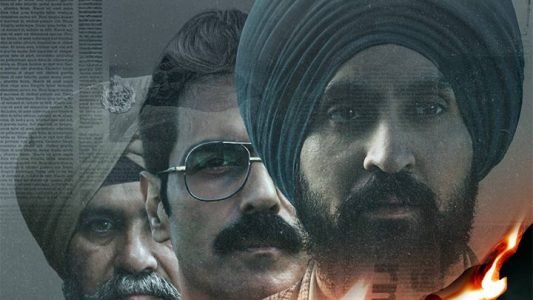
Some films arrive in theatres. Others arrive like verdicts, long delayed, heavily contested, and carrying the weight of everything that was done to keep them from being seen. Satluj belongs to the second category. On July 3, 2026, the Honey Trehan directed drama starring Diljit Dosanjh finally began streaming on ZEE5, more than three years after it first ran into trouble with the Central Board of Film Certification. The version now available globally is reported to be complete and uncut, a small miracle for a film that was once asked to make 21 cuts before it could be shown to anyone at all.
The river in the title flows through the story in more ways than one. The Satluj winds through the Punjab that the film depicts, a Punjab of the early and mid 1990s, exhausted by a decade of militancy and crushed under a police apparatus that had stopped distinguishing between the guilty, the suspected, and the merely inconvenient.
A Film With Three Names
The journey of the film’s title is itself a short history of what it is up against. The project was originally called Ghallughara, a word from Sikh memory that names the great massacres of 1746, 1762, and, in the reckoning of many within the community, 1984. When the producers sought certification in late 2022, the censor board reportedly cleared the film only on the condition of 21 cuts and a change of name. It became Punjab 95. The producers appealed in the Bombay High Court, the film was pulled from the Toronto International Film Festival in 2023, and for three years it existed mostly as a rumour, a trailer glimpse, and a cause. Now, under its third name, Satluj, it has finally reached audiences, and reviewers have described it as one of the most searing and essential Indian films in recent memory.
The Man at the Centre: Jaswant Singh Khalra
Dosanjh plays Jaswant Singh Khalra, and it is difficult to imagine a more consequential figure in the modern history of Indian human rights work. Khalra was not a lawyer, a journalist, or a politician. He was a soft spoken bank employee from Amritsar, a family man, the kind of person history usually flows past without stopping. What pulled him in was personal. A friend was killed, and then people connected to that loss began to vanish. A simple attempt to file a missing person report opened a door into something far larger.
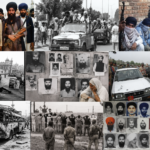
What Khalra found, working with municipal cremation ground records in Amritsar district, was evidence that Punjab Police had been picking up young men, killing them in custody or in staged encounters, and cremating the bodies as unclaimed and unidentified. His investigation documented over two thousand such cremations in Tarn Taran alone, and he estimated that across Punjab the number of people who had disappeared into this machinery ran into the tens of thousands. The figure most often cited, and the one the film itself invokes, is more than 25,000 disappeared during the insurgency era crackdowns.
Khalra took his findings public in 1995, including in a now famous address delivered in Canada, where he spoke of a lamp that keeps burning against the darkness. On September 6, 1995, he was abducted from outside his home in Amritsar. He was never seen alive again. A decade later, in 2005, six Punjab Police personnel were convicted for his abduction and murder, and in 2007 the Punjab and Haryana High Court enhanced the sentences of several of them to life imprisonment. The man who documented the disappeared had himself been disappeared, and it took the courts twelve years to say so.
The Insurgency and the Machinery of Disappearance
To understand why the film unsettles people, one has to understand the period it depicts. Punjab in the 1980s and early 1990s was consumed by a violent separatist militancy and an equally violent state response. Thousands of civilians, police personnel, and militants died. By the early 1990s the state had largely crushed the insurgency, and the police leadership of that era was celebrated in much of the national press for restoring order.
Khalra’s work forced a darker accounting of how that order was purchased. Families of the disappeared described a pattern in which young men were detained without record, tortured, killed, and erased, while relatives were passed from one police station to another and, in many accounts, subjected to extortion in exchange for information that never came. The Supreme Court handed Khalra’s evidence to the CBI, whose inquiry confirmed thousands of illegal cremations, and the matter passed to the National Human Rights Commission, which ultimately confined its examination to cremations within a limited set of districts. Rights groups have argued for decades that this narrow scope meant the full scale of the disappearances across Punjab was never judicially established, and that most perpetrators were never held to account.
This is the unfinished business the film steps into. Satluj does not present the militancy as innocent, and reviewers note that it situates the police terror within a longer cycle of violence that began with 1984. But its gaze rests on the ordinary families caught between the gun of the militant and the gun of the state, and on the one man who insisted on counting the dead when the state preferred round silence.
Why It Matters Now
There is a reason a film about events three decades old spent three years fighting for release. The disappearances of Punjab remain one of the least reckoned with chapters of independent India’s history, discussed in human rights literature and Sikh memory but largely absent from mainstream cinema and school textbooks. Satluj drags the subject into the widest possible arena, streaming into homes with one of Punjab’s biggest global stars carrying it.
Dosanjh has said that Khalra’s martyrdom and his service to humanity were his reasons for taking the role, and critics have singled out both his quiet moral steadiness and a formidably menacing turn by Suvinder Vicky as a police officer. The cast also includes Arjun Rampal, Kanwaljit Singh, and Geetika Vidya Ohlyan.
Khalra once said that even if truth is heavy, someone must carry it. The film that bears his story has now, after three names and three years, been allowed to carry it to the public. Whether India chooses to sit with what it shows is a different question, and one no censor board can answer.
Sources for this article include reporting by Variety, PTI, and Outlook India on the film’s release, and the public record of the Khalra case, including the CBI inquiry and the 2005 and 2007 court verdicts.
Official context: Readers can compare this story with public information from Ministry of Information and Broadcasting.