 In 30 Seconds




Story
For most of the world, the name Ayodhya now summons a single dispute and a single date. But the city on the Sarayu carried three thousand years of meaning before December 1992, and this series will not understand the dispute, which it examines fully in a later batch, without first recovering the city that the dispute was about. This article is a portrait of Ayodhya before, the Ayodhya of text, memory, and pilgrimage.
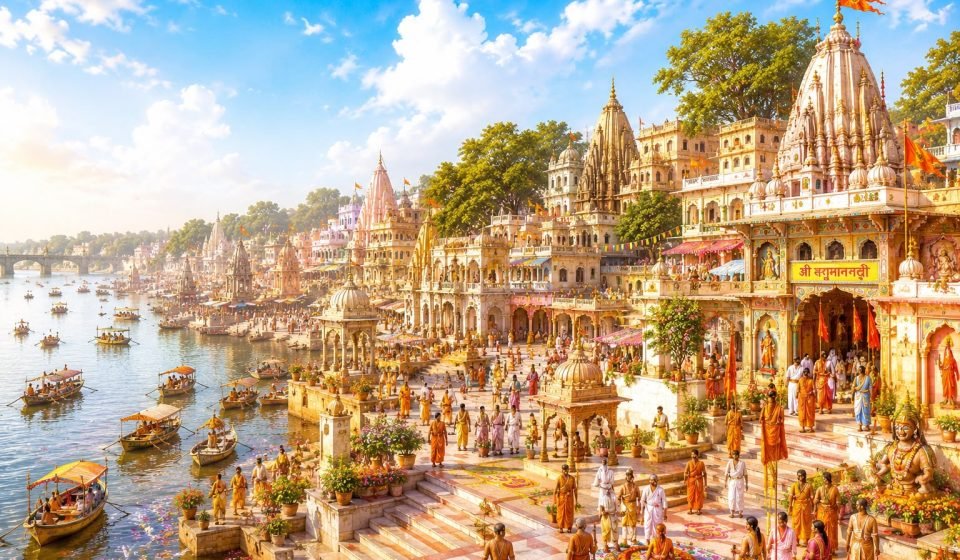
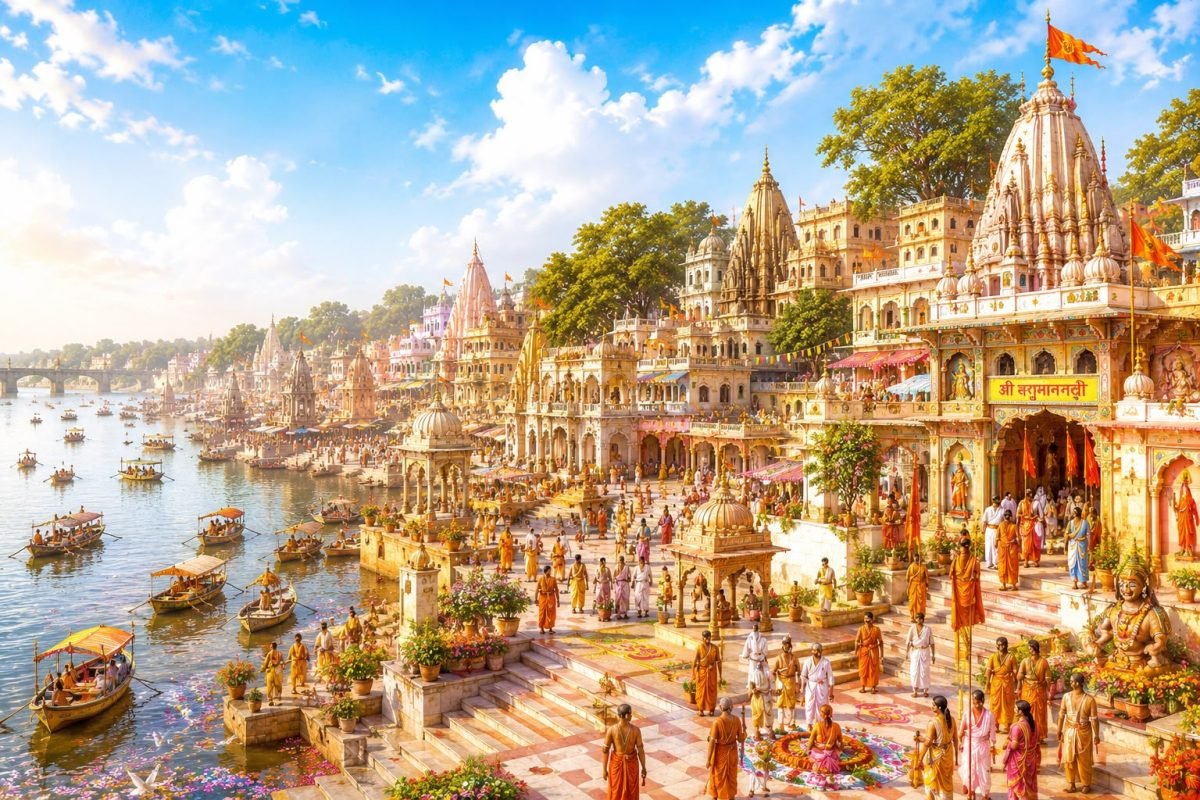
The textual Ayodhya is the most famous city in Indian literature. Valmiki’s Ramayana opens with an extended description of it, the capital of Kosala on the Sarayu, twelve yojanas long, laid out in great avenues, wealthy, moated, and unconquerable, which is what the name itself means, the city that cannot be warred against. It is the city of Dasharatha’s court, of Rama’s birth and youth, of the heartbreak of exile, and of the return that Diwali commemorates, when the returning prince found every house lit with lamps. In the imagination of the Hindi world, shaped above all by Tulsidas’s retelling, Ayodhya became less a place than the very image of the ideal realm, Ram Rajya, the standard against which all government is measured, a phrase Gandhi himself carried into modern politics.
The historical city beneath the poetry is generally identified with Saketa, a substantial town of the age of the Buddha, who is recorded in the Pali canon as having stayed and taught in its vicinity. Jain tradition holds the city in extraordinary reverence as the birthplace of Rishabhanatha, the first tirthankara, and of several others, making it among the oldest sacred sites of that faith. Under the Guptas, whose kings took the title of devotees of the lord, the identification of Saketa with the Ayodhya of the epic was consolidated, and tradition credits a king Vikramaditya with formally rediscovering and marking the holy sites. By the time the Puranas listed the seven cities that grant liberation, the moksha dayini sapta puri, Ayodhya stood first in the verse.
The city’s devotional life as we know it took shape in the medieval centuries through the Ramanandi sampradaya, the great Vaishnava order whose sadhus made Ayodhya their capital. Their akharas and temples multiplied along the Sarayu, and Hanuman Garhi, the fortress temple of the monkey god that commands the town, grew into its most powerful institution. The pilgrimage calendar thickened, with the Ram Navami birth festival and the parikrama circuits drawing lakhs long before modern transport, and the city settled into its enduring character, a small town whose permanent population was dwarfed by its floating population of pilgrims and renunciants, a place that existed to be visited.
It is worth recording that the Nawabs of Awadh, whose dynasty took its very name from the region and began its rule from nearby Faizabad, presided over this Ayodhya for a century, and that the town’s sacred economy grew under their administration, with grants and lands recorded to temples and akharas. The first Nawab’s court included Hindu officials who patronised the shrines, and the composite fabric of Awadh, examined elsewhere in this series, wove itself here as everywhere. The same centuries also planted the seed of the modern dispute, with the mosque built in the sixteenth century under Babur’s commander standing on the site tradition venerated as the janmasthan, the birthplace itself, and recorded friction over the spot appearing in the colonial archive from the nineteenth century onward. This article leaves that thread here, at its origin, for the Mandir batch to take up in full.
What should be carried forward is the scale of what Ayodhya meant. For the devotee, it was not a contested property but the axis of the moral universe, the birthplace of God as king, the place where kingship itself was perfected. Millions who never saw a court document made the journey, bathed in the Sarayu, took darshan at Hanuman Garhi and Kanak Bhavan, and went home with the city’s dust as blessing.
Ayodhya before the dispute was, in short, one of the oldest continuously venerated places on earth, sacred to three religions, sung in the subcontinent’s greatest poem, and woven into the everyday moral vocabulary of hundreds of millions. Whatever one’s reading of everything that came after, that city existed, and it is the necessary starting point for every honest account of what followed.