 In 30 Seconds




On the morning of 6 February 1965, a car carrying Pratap Singh Kairon, until recently the most powerful man in Punjab, was travelling down the Grand Trunk Road from Delhi towards home. Near the village of Rasoi, not far from Sonipat, another vehicle overtook it and forced it to a halt. Men with weapons surrounded the car. Within moments, Kairon and three of his companions were shot dead on the highway in daylight. Independent India had witnessed the assassination of the Mahatma, but this was something new: the gunning down of a former chief minister on an open road, an act that blurred the line between political violence and personal vendetta.
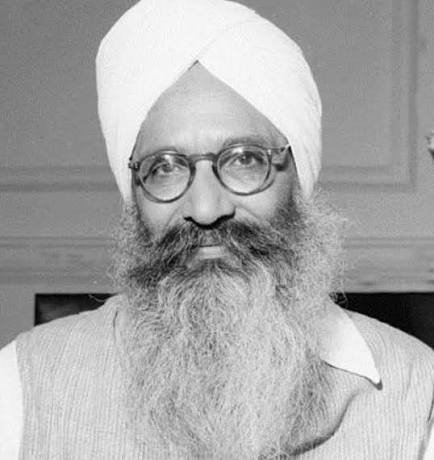
Kairon was among the most consequential and most controversial politicians of his generation. An American educated Akali turned Congressman, he had ruled Punjab as chief minister from 1956 to 1964 with a firm hand, driving the agricultural modernisation that would later flower into the Green Revolution, and crushing agitations with equal energy. His critics accused him and his sons of corruption on a grand scale, and the charges eventually reached a formal inquiry. The Das Commission, headed by former Chief Justice of India S R Das, examined the allegations and its 1964 report found against him on several counts involving his sons’ dealings. Kairon resigned in June 1964. Eight months later he was dead.
The investigation moved quickly. The man behind the killing was Sucha Singh, who had a long and bitter personal history with Kairon’s regime. Sucha Singh’s enmity traced back to a murder case in his village in which he held Kairon’s side responsible for the destruction of his family’s fortunes, and he had nursed the grievance across years, including time spent abroad. With accomplices, he had tracked Kairon’s movements from Delhi, where the former chief minister had been attending to legal matters, and chosen the highway for the ambush.
The trial was held with unusual speed for a case of such magnitude. Sucha Singh and his associates were prosecuted for the four murders, convicted, and sentenced to death. The appeals failed, and Sucha Singh went to the gallows, insisting to the end that his act was retribution rather than crime. The courts, then as now, recognised no such category.
The Kairon assassination unsettled the political class in a way that is hard to recapture today, before security details and convoys became the furniture of public life. A man who had governed one of India’s most important states had been killed on the country’s most famous road, by an enemy his own career had made. The case foreshadowed themes that would recur through the decades in Punjab and beyond: the intimacy of political violence, the long memory of rural feuds, and the vulnerability of even the mightiest once the office and its protections fall away. In the catalogue of Indian political assassinations, Kairon’s murder stands as the grim first entry of the post Nehru era, a reminder that in India power has always had a body count, and sometimes the body is power’s own.
Related Reading
- What Is Cybercrime? Common Threats and How India Responds
- The Kilvenmani Massacre: Forty Four Lives and the Price of a Wage Dispute
- The Assassination of Lalit Narayan Mishra: A Minister Dies, Questions Remain
Official context: Readers can compare this story with public information from National Crime Records Bureau.
The Foundational Era - Batch 1
Part 6 of 10 in this chapter.