
 In 30 Seconds




Wars are usually narrated through their violence, but they are sustained through their economics, and the Punjab insurgency ran on a economy of extraction that has received a fraction of the attention paid to its gunfire. For the better part of a decade, the ordinary householder of rural Punjab was taxed twice, by the movement that claimed to liberate him and by portions of the apparatus that claimed to protect him, and the ledger of that double taxation explains the war’s ending as well as any battle does.
The Militants’ Revenue State
In its early years the militancy financed itself through bank robbery, and Punjab’s dacoity figures of the mid 1980s track the movement’s growth like a fever chart. As territorial presence deepened, robbery matured into taxation. The accounts of the period, from journalists, police records, and village testimony, describe a parallel revenue system: fixed demands on prosperous farmers timed to the harvests, levies on commission agents, transporters, and rice shellers, protection assessments on liquor contractors whose trade the movement’s own codes condemned, and ransom kidnapping as the instrument of last resort. Refusal was answered as states answer tax rebellion, with exemplary violence, and the note left on a body was the era’s assessment order. Diaspora remittance, treated elsewhere in this series, supplemented but never replaced this domestic extraction, and as discipline decayed after 1990, the distinction between militant unit and armed revenue gang dissolved in district after district, with factions fighting one another over collection territories like the franchises they had become.
The Other Ledger
The state’s side of the extraction economy was less systematic and no less real to its payers. The documentation assembled by rights investigators and, in candid moments, by retired officers describes the recurring forms: payment to end an interrogation or a detention, payment for information about a man in custody, payment, most bitterly, by families of the disappeared to intermediaries selling hope, and the property of the dead and the fled passing at distress prices to the connected. Head money and secret service funds, run without audit through the campaign’s peak, created their own market distortions, and the era’s police memoirs concede what the villages alleged, that for a minority of the force the emergency was also a business. None of this cancels the honesty or the sacrifice of the majority, whose dead this series has counted; it records that impunity, once issued for killing, is rarely declined for commerce.
What Double Taxation Did to the War
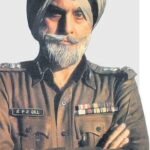
The economics decided the politics. The Sikh peasantry that had extended the militancy its early shelter, out of conviction after 1984 or out of fear soon after, discovered by the early 1990s that the liberation was a landlord. Scholars who have studied the insurgency’s collapse consistently rank the extortion and the predation on village women, the forced hospitality, the levies, the abductions of daughters that the movement’s codes forbade and its gunmen committed, above any police tactic in explaining the population’s decisive turn. When the village stopped feeding the movement and started informing on it, the endgame this series will chronicle became possible; Gill’s campaign harvested a field the militancy’s own conduct had ploughed. It is the era’s plainest verdict, and it was delivered not by Delhi but by the taxed.
The Uncounted Cost
Punjab’s insurgency accounting has always been kept in lives, and this series keeps it so. But the parallel ledger deserves its entry: a decade of capital flight and mortgaged land, of businesses relocated to Delhi and Ludhiana money moved abroad, of the emigration industry that boomed on fear and never afterwards shrank, and of a generation’s savings passed under table tops in both directions. Economists date a portion of Punjab’s long relative decline, from India’s richest large state toward the middle of the tables, to exactly this drainage. The dead were the war’s price; the extraction was its rent, and Punjab paid both. Any romance of the era, separatist or statist, must first get past this ledger, which is why this series has set it down.
The Machinery of Violence
Part 7 of 10 in this chapter.

