
 In 30 Seconds




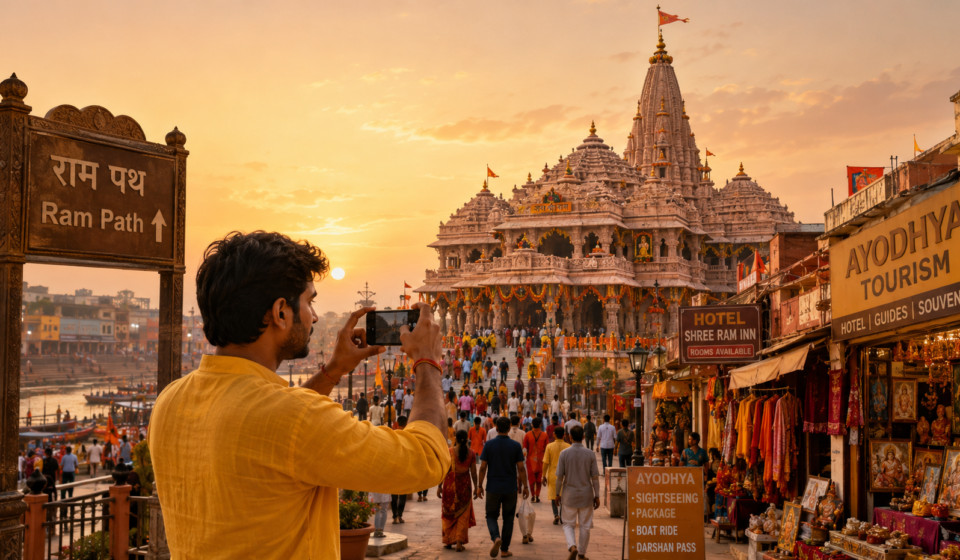
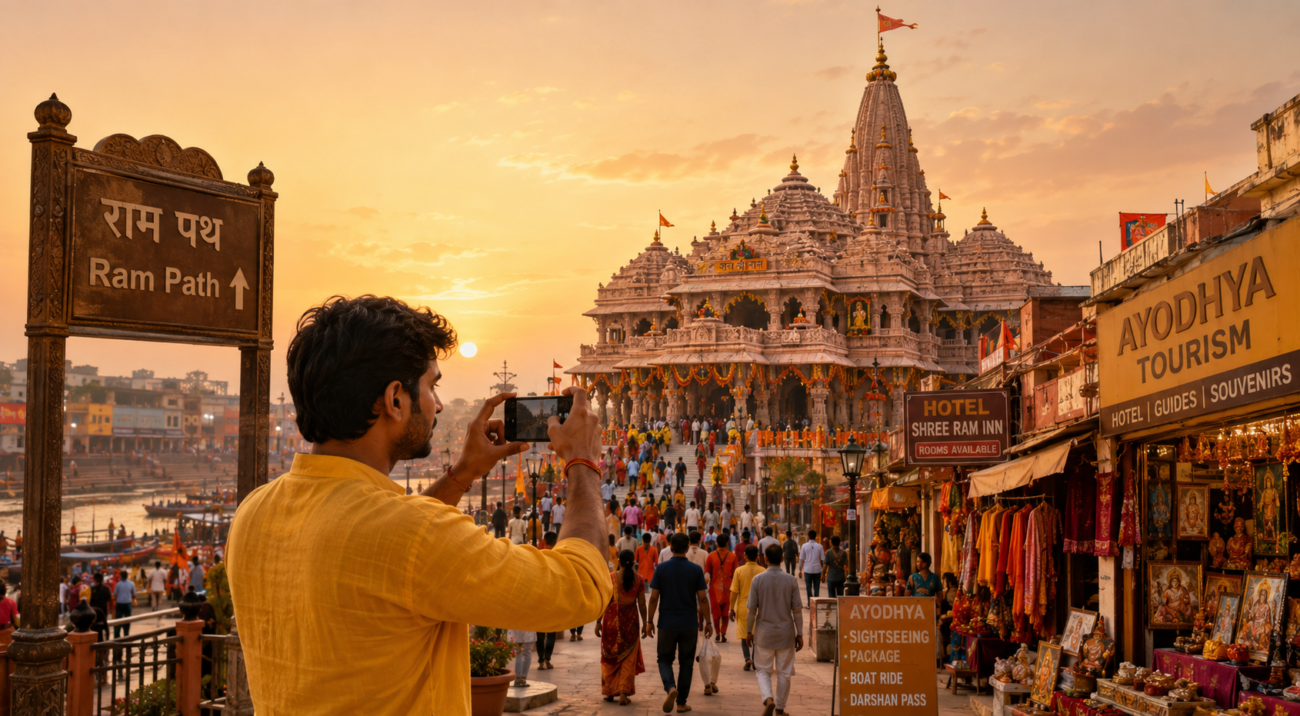
Ayodhya today bears little resemblance to the small, sleepy temple town many older visitors remember from a decade ago. The scale of Ram Mandir Ayodhya tourism since the temple’s consecration has turned what was once a modest pilgrimage stop into one of the fastest growing urban economies in Uttar Pradesh, and the transformation has reached far beyond the temple complex itself.
Pilgrim numbers have remained consistently high since the temple opened, with daily footfall regularly running into the tens of thousands and spiking well beyond that during festivals and significant dates on the religious calendar. For a town that previously depended on a comparatively modest, seasonal flow of visitors, this kind of sustained volume represents a fundamentally different economic reality.
The Infrastructure Built Around Ram Mandir Ayodhya Tourism
None of this growth happened by accident. The Uttar Pradesh government, working alongside central government agencies, has poured substantial investment into the infrastructure required to support a city receiving visitor numbers more typical of a major metropolitan attraction than a town of Ayodhya’s traditional size. A new airport, an upgraded railway station designed with temple inspired architecture, widened roads and a significantly expanded hospitality sector have all been part of the build out.
Hotel construction in Ayodhya has accelerated sharply, with both budget accommodation and premium hospitality brands entering a market that barely existed at this scale before the temple’s consecration. Real estate prices in the town have risen accordingly, a pattern familiar from other pilgrimage economies around the world where a single religious site becomes the anchor for an entire local economy.
What the Numbers Say About Ayodhya’s Economic Shift
Economists who track religious tourism in India point to Ayodhya as a particularly clean example of how a single development can alter a regional economy’s structure. Small businesses tied directly to pilgrim spending, from prasad shops to lodging to transport services, have multiplied. Local employment patterns have shifted accordingly, with a noticeable movement of workers from agricultural and informal sector roles toward tourism and hospitality adjacent work.
The broader Uttar Pradesh tourism sector has cited Ayodhya as a meaningful contributor to the state’s overall visitor economy, alongside other major draws such as Varanasi and the Taj Mahal circuit. State government officials have repeatedly framed Ram Mandir Ayodhya tourism not just as a religious or cultural achievement but as a deliberate piece of economic strategy, one designed to demonstrate that faith based tourism can function as a genuine engine of regional development rather than a peripheral activity.
The Strain That Comes With Rapid Growth
Rapid growth of this kind rarely arrives without complications, and Ayodhya is not an exception. Local residents and urban planners have raised concerns about whether the town’s underlying civic infrastructure, water supply, waste management and traffic management among them, has kept pace with the visitor surge. Festival periods in particular have tested the limits of crowd management, with reports of severe congestion around the temple complex during peak pilgrimage dates.
There are also questions about how evenly the economic benefits of this growth are being distributed. While businesses directly serving pilgrims have generally thrived, some longtime residents have voiced concern that rising property values and the commercialisation of central Ayodhya are altering the character of neighbourhoods that existed long before the temple’s reconstruction became a national priority.
Looking Ahead for Ram Mandir Ayodhya Tourism
The town’s trajectory over the coming years will likely depend on whether the current pace of visitor growth proves sustainable or whether it plateaus once the initial wave of pilgrims motivated by the temple’s reconsecration has largely completed their visits. Religious tourism destinations elsewhere in India offer mixed precedents, some maintaining steady, high volume traffic for decades, others experiencing a sharper initial surge followed by a more modest, stable baseline.
What seems clear already is that Ram Mandir Ayodhya tourism has permanently altered the town’s economic profile. Ayodhya is no longer simply a religious destination occasionally mentioned in national conversation. It has become a case study that policymakers across India are likely to study closely as they consider how faith based tourism might be used to drive development in other historically significant but economically underdeveloped towns.
Comparing Ayodhya to Other Major Pilgrimage Economies
Ayodhya’s rapid transformation invites natural comparison with Varanasi, another Uttar Pradesh pilgrimage town that underwent a significant infrastructure overhaul in the years before Ayodhya’s own surge began. Varanasi’s experience offers a useful precedent, since it demonstrates that a sustained government commitment to ghat renovation, transport links and hospitality investment can produce tourism growth that persists for years rather than fading after an initial wave of curiosity driven visits.
The comparison also highlights where Ayodhya’s trajectory might diverge. Varanasi draws a more varied visitor base, blending religious pilgrims with international tourists, students of classical music and culture, and travellers drawn to the Ganga itself as much as to any single temple. Ayodhya’s draw remains far more concentrated around the Ram Mandir specifically, which makes its tourism economy somewhat more exposed to shifts in religious sentiment or to the natural decline in novelty driven visits that tends to follow any major consecration event once the initial years pass.
Officials in Uttar Pradesh appear aware of this risk and have begun discussing complementary attractions within Ayodhya itself, including other temples and sites connected to the Ramayana tradition, as a way of diversifying the visitor experience and encouraging longer stays rather than single day pilgrimage visits centred entirely on the main temple.
The Investment Pouring in Beyond Hospitality
Tourism statistics alone understate the scale of change underway in Ayodhya, since a meaningful share of recent investment has flowed into sectors adjacent to tourism rather than tourism itself. Logistics and warehousing firms have shown interest in the town given its improved rail and air connectivity, viewing Ayodhya’s upgraded infrastructure as an opportunity to serve a wider catchment area across eastern Uttar Pradesh rather than the town alone.
Educational institutions, too, have begun establishing a presence in Ayodhya, partly to serve the growing resident population that hospitality and service sector jobs have drawn into the town, and partly because land values, while rising, remain considerably lower than in more established Uttar Pradesh cities such as Lucknow. This kind of secondary investment, arriving on the back of a primarily religious tourism boom, is often what determines whether a town’s growth proves durable once the initial pilgrimage driven excitement settles into a steadier, long term pattern.
What Local Voices Say About the Changes
Conversations with longtime Ayodhya residents reveal a more layered picture than the headline tourism statistics suggest. Many shopkeepers and small hoteliers describe genuine prosperity that would have seemed unimaginable a decade ago, with family businesses expanding and a new generation choosing to remain in the town rather than migrating for work elsewhere in Uttar Pradesh, a reversal of a pattern that had defined Ayodhya for years.
At the same time, residents living in neighbourhoods further from the temple complex describe feeling somewhat bypassed by the boom, noting that investment and infrastructure upgrades have concentrated heavily around the immediate pilgrimage corridor while older residential areas have seen comparatively little change. Bridging that gap, ensuring that Ram Mandir Ayodhya tourism benefits the town as a whole rather than a narrow commercial strip around the temple, is likely to be the central governance challenge for Ayodhya’s local administration over the next several years.
Related Reading
- Centre Intensifies Scrutiny on Social Media Applications
- India’s Passport Ranking Dips to 125th in 2026 Global Index
- India Orders Removal of Battery Apps After E-Rickshaw Stalling
Official context: Readers can compare this story with public information from India.gov.in.