 In 30 Seconds




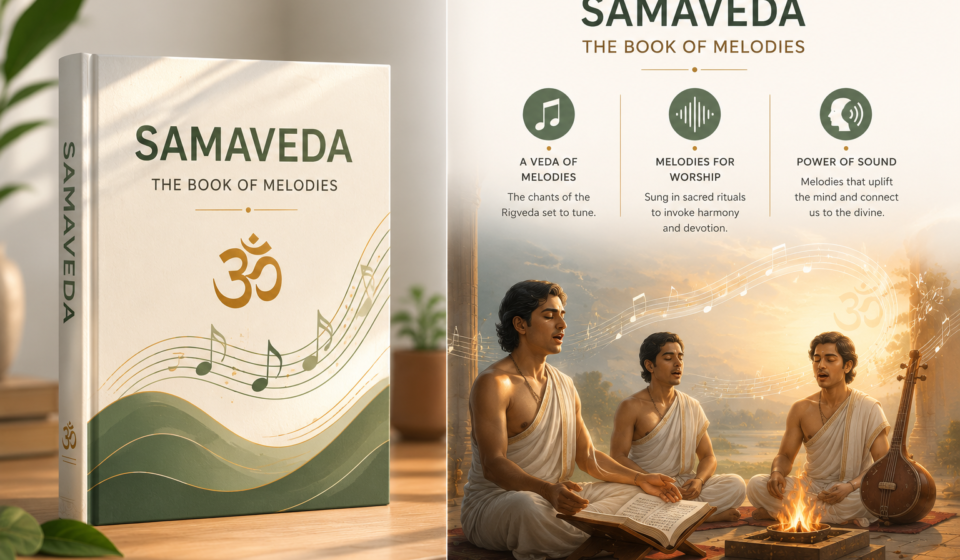
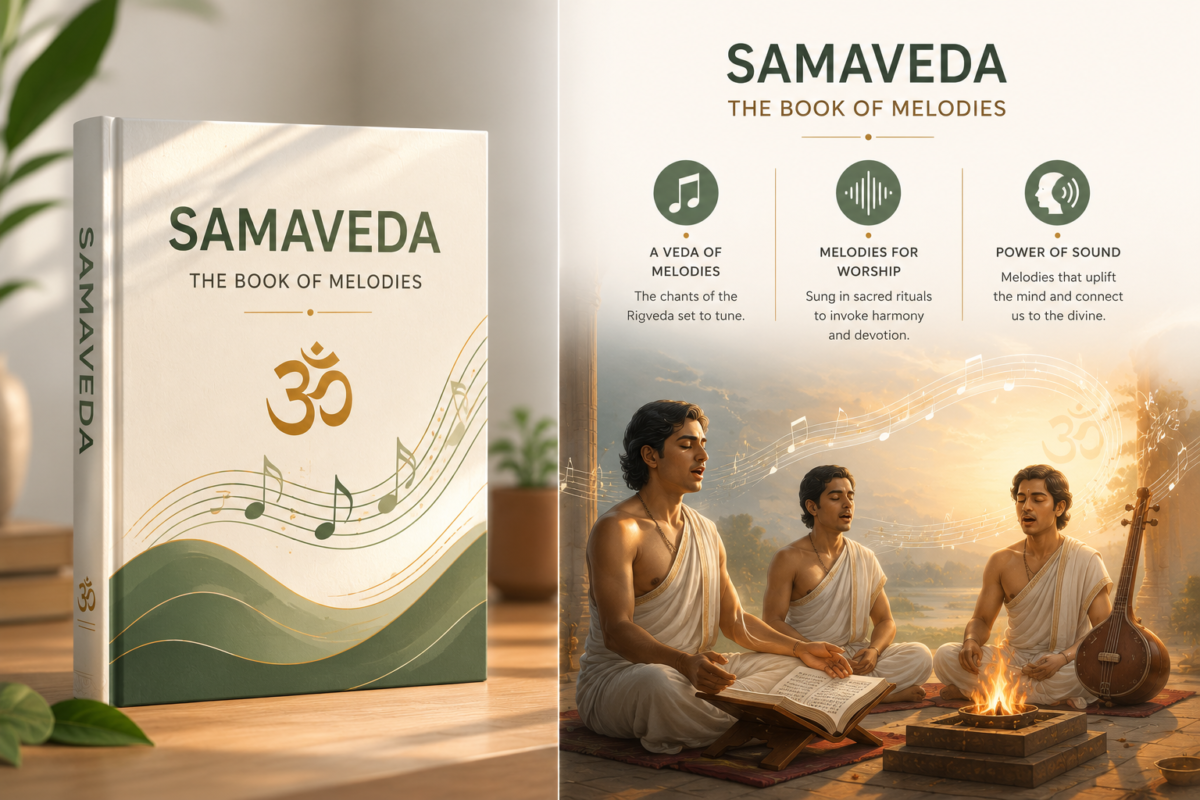
In the Bhagavad Gita, when Krishna declares his supreme forms among all things, he says of the Vedas, among the Vedas I am the Samaveda. It is a striking choice. The Samaveda is the shortest of the four collections and borrows almost all of its words from the Rigveda. What it adds is not text but transformation, for the Samaveda is the Veda of melody, the book in which the hymns of the rishis became song, and in that transformation lies the beginning of the entire musical tradition of India.
The word saman means a melody, a chant. The Samaveda Samhita contains 1,875 verses, and all but seventy five of them are taken from the Rigveda, chiefly from its eighth and ninth mandalas, the hymns of Soma. But the printed verse is only the skeleton. In performance, the udgatri priest and his companions stretched, broke and adorned the words almost beyond recognition, splitting syllables, inserting flourishes and adding the mysterious interjections called stobhas, syllables such as hau, hoyi and hum that carry no dictionary meaning and exist purely as music. A single Rigvedic verse could blossom into several distinct samans, and the tradition counted its melodies in the thousands.
The songbook of the soma sacrifice
The Samaveda existed for one great purpose: the soma sacrifice. When the pressed juice of the soma plant was offered to the gods, the udgatri and his assistants, the prastotri and pratihartri, sang the stotras, the sung praises around which the whole liturgy turned. The Samhita is arranged for exactly this work. Its first part, the Purvarchika, is the training collection on which students learned the basic melodies; the second, the Uttararchika, arranges verses in the order of the great rituals. Two further songbooks, the ganas, recorded the melodies themselves: the grama geya gana, songs to be sung in the village, and the aranya geya gana, songs so charged with power that they could be practised only in the forest.
Because melody cannot be written in words, the Samaveda schools invented notation. Manuscripts of the Samaveda mark the movement of the chant with numerals or syllables above the text, indicating the levels through which the voice must pass. The chanters recognised a scale of seven notes, and the ancient treatises on music state plainly that the seven svaras of Indian music descend from the singing of the samans. The Naradiya Shiksha, an early text on Vedic phonetics and song, maps the saman notes onto the notes of the flute. When later India built the edifice of raga music, the classical theorists looked back to the Samaveda as their fountainhead, and the claim, for once, is not pious exaggeration. The unbroken practice of Samavedic chanting, preserved today in a handful of family lineages in Kerala, Tamil Nadu, Andhra and Gujarat, is the oldest documented music on earth.
Sound as sacrament
The theology of the Samaveda is a theology of sound. The Brahmanas of this Veda, above all the Panchavimsha and the Jaiminiya, meditate endlessly on the power of the sung syllable, and the Chandogya Upanishad, which belongs to the Samaveda, opens with instructions to meditate on the syllable Om as the udgitha, the high chant. It is in the Chandogya that some of the most famous scenes of Indian thought unfold: the boy Satyakama sent to a teacher with only his mother’s name, Uddalaka teaching his son Shvetaketu through the salt dissolved in water, and the ninefold refrain that would echo through all later Vedanta, tat tvam asi, that thou art. The Veda of song thus produced the philosophy of identity, as if the experience of many voices merging in one melody had taught its singers that all selves merge in one Self.
The Samaveda asks to be heard rather than read, and hearing it remains an uncanny experience. The chant moves slowly, sliding through its notes, dissolving familiar words into pure sonority, closer to the Gregorian traditions of Europe than to anything else in India, yet older than Rome itself. In those long curved phrases one hears what the Gita perhaps meant. The other Vedas say the sacred; the Samaveda sounds it.
Recordings of the surviving traditions are now available to anyone, and they make the best possible introduction to this Veda. Listen to a Kauthuma stotra or a Jaiminiya chant from Kerala and the abstractions of this article become audible: the stretched vowels, the strange bright stobhas, the sense of a melody older than every nation on the map. It is the sound India made before it had a name.
The Four Vedas
Part 6 of 10 in this chapter.