 In 30 Seconds




BRICS is an intergovernmental grouping built around major emerging economies. The name originally referred to Brazil, Russia, India and China, with South Africa joining later. It is not a military alliance and it is not a single market. It is a political and economic forum where large non Western and Global South powers discuss development finance, trade, currency questions, technology, energy, climate and global governance reform.
The Indic Journal approach is simple: explain the subject like a serious columnist would, with enough history for context, enough structure for clarity and enough caution to avoid turning a complex issue into a slogan.
30 Second Summary
- BRICS began as a label for fast growing emerging economies and became a diplomatic forum for global governance reform.
- Its purpose is to give major non Western and Global South countries more voice in finance, development and world affairs.
- For India, BRICS is a platform for strategic autonomy, development finance and Global South leadership, even as tensions with China remain.
The 5W View
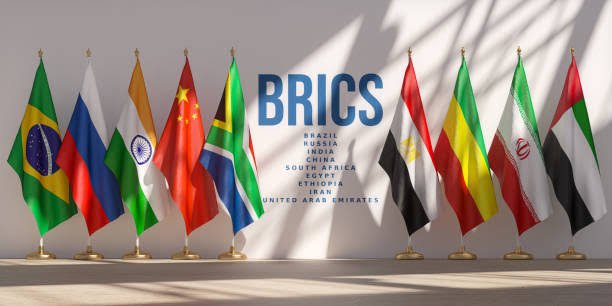
- Who: The original members were Brazil, Russia, India and China. South Africa joined in 2010. The grouping has since expanded, bringing in additional members from West Asia and Africa, while other countries seek association through membership or partner formats.
- What: BRICS is a forum for coordination among emerging powers. Its most visible institution is the New Development Bank, created to finance infrastructure and sustainable development projects.
- When: The idea began as an investment term in 2001, moved into diplomacy when BRIC foreign ministers met in 2006, and became a summit level platform with the first BRIC summit in Yekaterinburg, Russia, in 2009.
- Where: BRICS works through annual summits, ministerial meetings, working groups and the New Development Bank, whose headquarters are in Shanghai. Its diplomacy moves across Asia, Africa, Latin America and Eurasia.
- Why: It was formed because large emerging economies wanted a stronger voice in institutions shaped after the Second World War and the Cold War. The deeper complaint was that global finance, trade rules and security institutions did not fully reflect the weight of newer powers.
What Is BRICS?
BRICS is an intergovernmental grouping built around major emerging economies. The name originally referred to Brazil, Russia, India and China, with South Africa joining later. It is not a military alliance and it is not a single market. It is a political and economic forum where large non Western and Global South powers discuss development finance, trade, currency questions, technology, energy, climate and global governance reform.
The important point is that BRICS should not be reduced to a label. Every serious explanation needs three layers. The first is the formal meaning. The second is the political, economic or social purpose behind it. The third is the effect it has on people, institutions and national choices.
Why Was It Created?
BRICS tries to solve a representation problem. It gives emerging economies a platform to speak about development finance, infrastructure, debt, climate responsibility, trade in local currencies and reform of institutions such as the United Nations, World Bank and International Monetary Fund.
Most enduring public institutions are born from a practical failure. A state cannot coordinate action, a market cannot supply patient capital, citizens cannot get fair access, courts need a remedy, or countries need a forum where power can be negotiated. That is the deeper way to read BRICS: not only as a topic, but as an answer to a pressure point.
How It Works
BRICS works by consensus, not by binding law. It issues summit declarations, coordinates positions, creates working groups and uses the New Development Bank for finance. Its influence comes less from formal enforcement and more from the combined economic and diplomatic weight of its members.
The working mechanism matters because it separates symbolism from substance. A subject can be widely discussed and still be weak in practice if it has no clear rules, no money, no enforcement, no institutional habit or no public trust. A strong explainer therefore asks who decides, who pays, who benefits, who can object and what happens when the system fails.
Background and Evolution
The history of BRICS is important because public ideas rarely appear suddenly. They normally pass through stages: first as a problem, then as a proposal, then as an institution or rule, and finally as a subject of political debate.
The idea began as an investment term in 2001, moved into diplomacy when BRIC foreign ministers met in 2006, and became a summit level platform with the first BRIC summit in Yekaterinburg, Russia, in 2009. BRICS works through annual summits, ministerial meetings, working groups and the New Development Bank, whose headquarters are in Shanghai. Its diplomacy moves across Asia, Africa, Latin America and Eurasia.
What Problem Does It Try to Solve?
BRICS tries to solve a representation problem. It gives emerging economies a platform to speak about development finance, infrastructure, debt, climate responsibility, trade in local currencies and reform of institutions such as the United Nations, World Bank and International Monetary Fund.
Whether it succeeds depends on design and execution. The best systems clarify responsibility and reduce friction. The weakest ones create new paperwork, new disputes or new inequalities while claiming to solve the old problem.
What It Means for India
For India, BRICS is useful because it offers a Global South platform without forcing India to abandon ties with the United States, Europe, Japan or Australia. New Delhi uses BRICS to push development finance and global governance reform, while also managing friction with China and keeping strategic autonomy intact.
India adds scale to every debate. A policy question can become a welfare question. A technology question can become a privacy question. A diplomatic question can become a question of strategic autonomy. That is why Indian readers need more than a definition; they need to know how the subject changes choices for citizens, states, businesses and the Union government.
Global and Western Perspective
For the West, BRICS is a signal that the world is no longer organised around one centre of power. It does not mean every member shares the same worldview. India, China, Russia, Brazil and South Africa have different interests. The importance of BRICS is that those differences are still being negotiated inside a platform that asks for a more multipolar order.
For readers outside India, the value of this explainer is perspective. India is not simply following older Western models, nor is it always rejecting them. Often it is adapting institutions to its own scale, politics, demography and development needs.
Limits, Criticism and What to Watch
The weakness of BRICS is that its members do not always agree. India and China have serious border and strategic tensions. Russia faces Western sanctions. Brazil and South Africa have different economic priorities. Expansion gives the group more weight, but it also makes agreement harder.
The question to watch is not only whether leaders praise the idea. The real test is whether it produces measurable results, survives scrutiny, respects rights, manages costs and earns trust beyond its immediate supporters.
Key Facts to Remember
- The first BRIC summit was held in Russia in 2009.
- South Africa joined in 2010, turning BRIC into BRICS.
- The New Development Bank is the grouping’s most concrete institution.
- BRICS is not a military alliance and does not work like NATO or the European Union.
- The group matters because it reflects the demand for a more representative world order.
Timeline
- 2001: BRIC entered global finance vocabulary as a shorthand for large emerging economies.
- 2006: BRIC foreign ministers began meeting as a diplomatic group.
- 2009: The first BRIC summit took place in Yekaterinburg, Russia.
- 2010: South Africa joined and the group became BRICS.
- 2014 onward: The New Development Bank became the main institutional expression of BRICS cooperation.
- 2024 onward: Expansion turned BRICS into a wider Global South platform.
Related Reading from The Indic Journal
- How Do General Elections Work in India? A Complete Explainer
- What Is a No Confidence Motion? How It Can Bring Down a Government
- What Is a Money Bill? Why It Gives the Lok Sabha Final Say
- What Is an Ordinance? How India’s Governments Bypass Parliament Temporarily
FAQ
What is BRICS in simple words?
BRICS is a group of major emerging economies that coordinates on development, finance, trade and reform of global institutions.
Why should Indian readers care about it?
India cares about BRICS because it helps New Delhi speak for the Global South, seek development finance and maintain strategic autonomy without joining a fixed bloc.
What happens next?
The next thing to watch is whether BRICS expansion produces real economic cooperation or only larger summit declarations.
Where can readers verify more information?
Readers should use official websites, laws, parliamentary documents, regulator notes, court records, data releases and credible institutional reports. For a fast moving issue, they should also check whether a newer update has changed the facts.