 In 30 Seconds




Before Bofors, before the fodder scam, before the two thousand crore headlines of the liberalised era, there was a consignment of army jeeps that never quite arrived. The jeep scandal of 1948 is barely remembered today, yet it holds a peculiar distinction. It was the first time the government of free India stood accused of corruption in a defence purchase, and the first time the political class demonstrated the instinct that would define so many later scandals: the instinct to close the file.
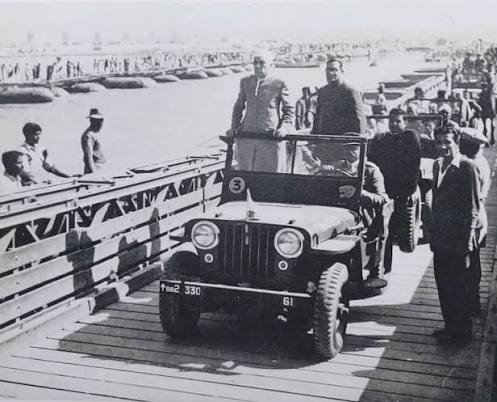
The story begins with the war in Kashmir. In the winter of 1947 and 1948, with Indian troops fighting tribal raiders across difficult terrain, the army urgently needed vehicles. V K Krishna Menon, then India’s High Commissioner in London and one of Jawaharlal Nehru’s closest confidants, signed a contract on behalf of the government with a foreign firm for the supply of around two thousand reconditioned jeeps, at a cost of roughly eighty lakh rupees, an enormous sum for the young republic.
The procedure was irregular from the start. The contract bypassed established purchase protocols, the firm involved had little standing, and a substantial advance was paid against limited guarantees. When the first shipment finally reached India, it contained only a fraction of the promised vehicles, and many of those that arrived were found to be in poor condition, of limited use to an army at war. Further deliveries never materialised in any meaningful way.
The matter reached Parliament, where opposition members demanded accountability. A committee under Ananthasayanam Ayyangar examined the transaction, and its findings were uncomfortable enough that opposition leaders pressed for a judicial inquiry. The government resisted. In 1955, the matter was formally closed, with the announcement that the government had decided to treat the case as concluded. Union Minister G B Pant declared that as far as the government was concerned, the book was shut. The opposition protested that a book shut by the party in power was not the same as a case answered, but the numbers in Parliament settled the argument.
What happened next gave the episode its lasting sting. Far from facing censure, Krishna Menon entered the Union Cabinet shortly afterwards and rose to become Defence Minister in 1957, holding the portfolio until the war with China in 1962 ended his ministerial career. For critics of the Nehru government, the sequence became a template of how loyalty could outweigh accountability. For the young Indian state, the jeep scandal established a precedent whose shadow would lengthen over the decades: that a purchase for soldiers at the front could go wrong, that questions could be asked, and that the asking could simply be outlasted.
No court ever ruled on the jeep purchase, no commission ever fixed responsibility, and historians still debate how much of the failure was corruption and how much was wartime haste and administrative inexperience. That very inconclusiveness is why the case matters. The first entry in the ledger of independent India’s scandals ends not with a verdict but with a shrug, and the ledger has been growing ever since.
Related Reading
- What Is Cybercrime? Common Threats and How India Responds
- The Kilvenmani Massacre: Forty Four Lives and the Price of a Wage Dispute
- The Assassination of Lalit Narayan Mishra: A Minister Dies, Questions Remain
Official context: Readers can compare this story with public information from National Crime Records Bureau.
The Foundational Era - Batch 1
Part 2 of 10 in this chapter.