 In 30 Seconds




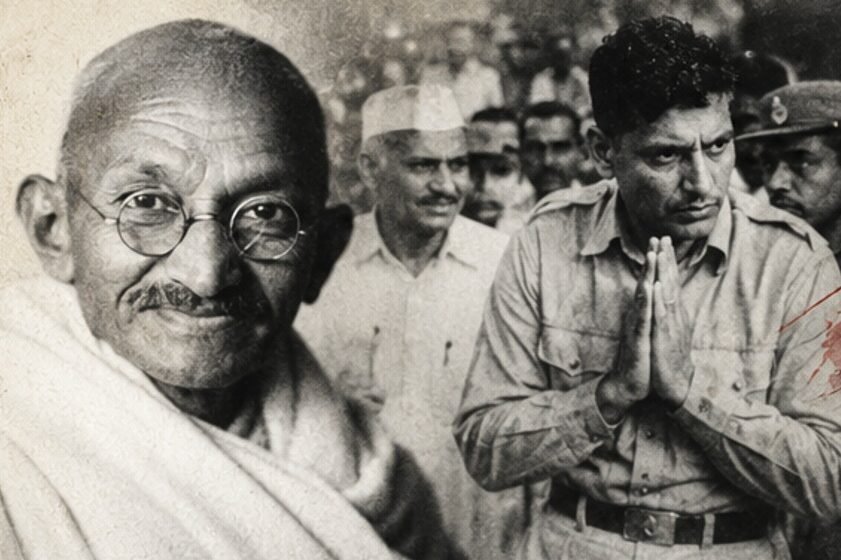
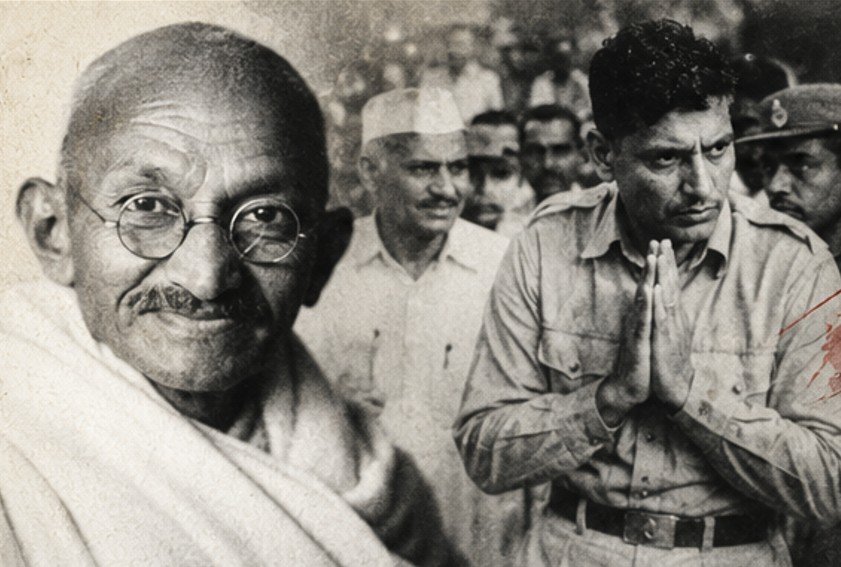
At a few minutes past five in the evening on 30 January 1948, Mohandas Karamchand Gandhi walked through the garden of Birla House in New Delhi towards his daily prayer meeting. He was late, leaning on the shoulders of his grandnieces, when a man in a khaki tunic stepped out of the small crowd, folded his hands as if in greeting, and fired three shots from a Beretta pistol at point blank range. Gandhi fell. Within half an hour, the man who had led India to freedom was dead, and the new republic, not yet six months old, faced its first and most consequential murder investigation.
The assassin made no attempt to escape. Nathuram Vinayak Godse, a thirty seven year old editor of a Marathi newspaper from Pune, stood still as the crowd seized him. What the police uncovered over the following weeks was not the act of a lone fanatic but a conspiracy that had been building for months. Ten days before the assassination, on 20 January, a bomb had exploded at the same prayer ground. The man arrested that day, Madanlal Pahwa, had told interrogators that others would come again to finish the work. The warning was not acted upon with the urgency it demanded, a failure that would haunt the Delhi and Bombay police for decades and eventually become the subject of the Kapur Commission of Inquiry in the 1960s.
The investigation traced a network centred on Pune and Bombay. Godse and his associate Narayan Apte had travelled to Delhi under false names, procured the pistol in Gwalior through Dr Dattatraya Parchure, and coordinated with Vishnu Karkare, Gopal Godse, Madanlal Pahwa and Shankar Kistaiya. Digambar Badge, an arms supplier from Pune, turned approver and became the prosecution’s central witness. Also arrested was Vinayak Damodar Savarkar, the most prominent ideologue of Hindutva, whom the prosecution accused of blessing the plot.
The trial opened in May 1948 inside the Red Fort, the same complex where the British had tried the officers of the Indian National Army three years earlier. Special Judge Atma Charan presided over proceedings that ran for over eight months. Godse did not deny the act. Instead he read a long statement justifying the murder as a response to what he called Gandhi’s appeasement of Pakistan, a text the court allowed on record but the government suppressed from publication for years. On 10 February 1949 the court convicted Godse and Apte and sentenced them to death, gave life terms to five others, and acquitted Savarkar for want of corroboration of the approver’s testimony.
The appeals were heard by the Punjab High Court, then sitting at Peterhoff in Shimla. The court upheld the death sentences of Godse and Apte and acquitted Parchure and Kistaiya. On 15 November 1949, Godse and Apte were hanged at Ambala Central Jail. Both of Gandhi’s sons had asked that the sentence be commuted, arguing that their father would not have wished for the gallows. The new state, seeking to demonstrate the authority of law in a country still bleeding from Partition, disagreed.
The case did not end with the hangings. In 1965, after revelations in a book suggested prior knowledge of the plot in political circles, the government appointed Justice Jeevan Lal Kapur to re examine the conspiracy. The commission’s 1969 report concluded that the intelligence failures had been grave and that the information available before 30 January, if properly collated, pointed clearly towards the danger to Gandhi’s life. The first murder case of independent India thus remains a study not only of fanaticism and law, but of how a state learns, too late, to protect what it most values.
Related Reading
- What Is Cybercrime? Common Threats and How India Responds
- The Kilvenmani Massacre: Forty Four Lives and the Price of a Wage Dispute
- The Assassination of Lalit Narayan Mishra: A Minister Dies, Questions Remain
Official context: Readers can compare this story with public information from National Crime Records Bureau.
The Foundational Era - Batch 1
Part 1 of 10 in this chapter.