
 In 30 Seconds




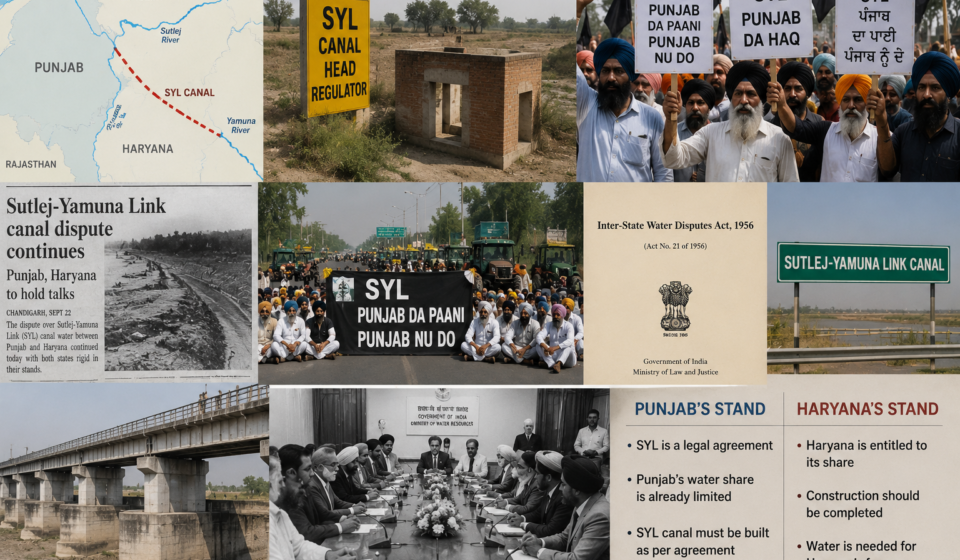
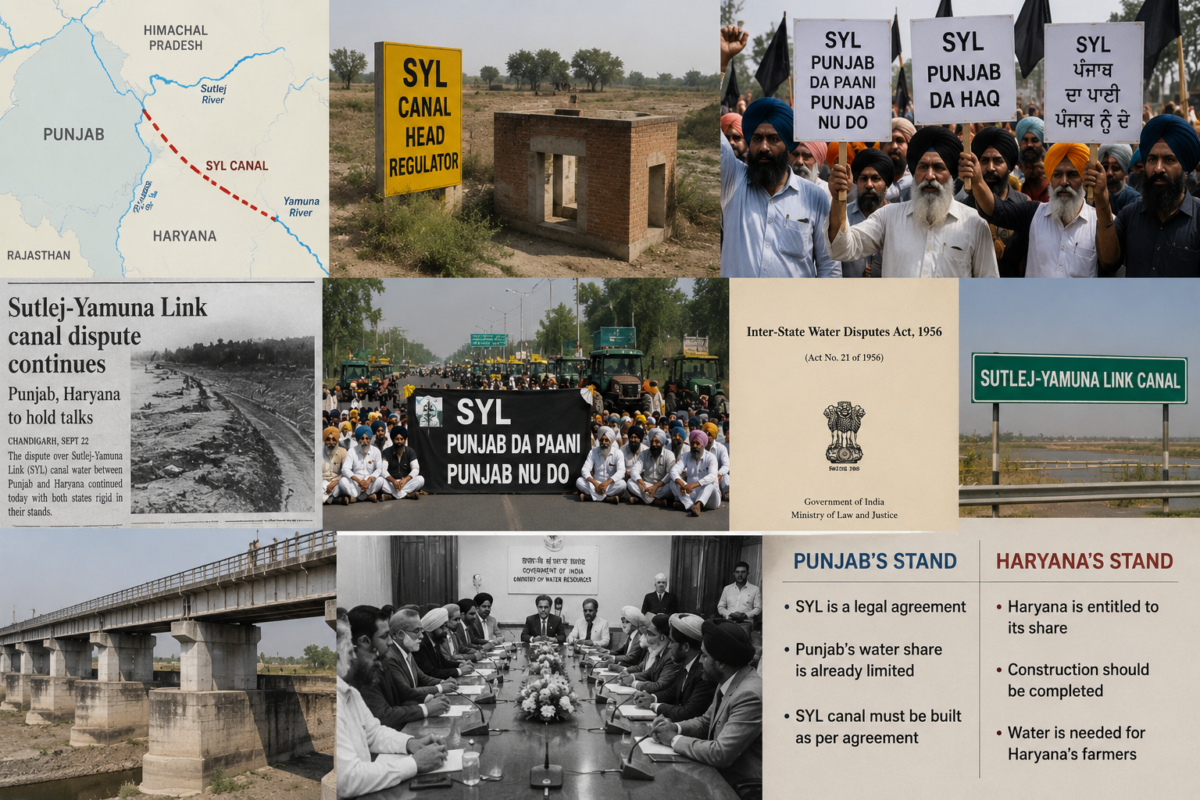
Of all the grievances that fed Punjab’s descent into violence, none was more material than water. Ideology moves preachers and pamphleteers; water moves farmers, and Punjab is a state of farmers. The dispute over the rivers, and over the unfinished channel called the Sutlej Yamuna Link canal, ran beneath the entire insurgency like groundwater beneath a field, and it remains unresolved to this day, the longest running open wound in Punjab’s relationship with the Indian union.
How the Dispute Was Born
Punjab’s three rivers, the Ravi, the Beas, and the Sutlej, were allocated to India under the Indus Waters Treaty of 1960. Within India, their waters were then divided among Punjab, Rajasthan, and later Haryana in a series of decisions Punjab has contested ever since. Punjab’s argument rests on the riparian principle, common in water law worldwide, that a river’s waters belong first to the territories through which it flows. Rajasthan, through which none of the three rivers runs, received the largest single share in the allocations of the 1950s, and when Haryana was carved out of Punjab in 1966, the Centre in 1976 apportioned it a substantial share of Punjab’s waters as a successor state.
Punjab’s counterargument was and remains that Haryana lies in the Yamuna basin, not the Indus basin, and that a state which surrendered its river waters while its own farmers faced a falling water table was being asked to subsidise its neighbours with its future. Haryana replies that it was born from Punjab, irrigated by canals designed as one system, and is entitled to its inheritance. Both states can cite documents, tribunals, and decades of political promises. That is precisely the problem: every institution of the republic has ruled on the waters, and no ruling has ever been accepted as final.
The Canal That Became a Battlefield
The Sutlej Yamuna Link canal was to be the physical instrument of the 1976 allocation, a channel of over two hundred kilometres carrying Haryana’s share eastward. In 1981 Indira Gandhi brokered a fresh agreement among the states, and in April 1982 she ceremonially launched the canal’s construction in Patiala district. The timing could hardly have been worse. The Akali Dal, needing a cause with rural resonance, folded the waters issue into what became the Dharam Yudh Morcha later that year, and the canal became the emblem of everything Punjab believed was being taken from it.
As the insurgency deepened, the canal turned literally into a killing ground. Labourers and engineers working on the Punjab stretch were attacked, and in 1990 two senior engineers were assassinated, after which construction in Punjab effectively ceased, never to resume. A project designed to move water had succeeded only in moving blood.
Accord, Tribunal, and Betrayal Narratives
The Rajiv Longowal Accord of 1985 promised a tribunal to verify the states’ claims, and the Eradi Tribunal delivered findings that satisfied no one. The Supreme Court has since ordered the canal completed more than once, and Punjab’s assembly responded in 2004 by passing legislation annulling its water agreements outright, an act whose validity the courts have questioned. Every few years the dispute returns to the headlines, with the court urging negotiation and both states’ politicians, of every party, treating compromise as electoral suicide.
Water as the Insurgency’s Quiet Engine
It is easy to narrate Punjab’s tragedy as a story of religion and separatism, and this series records those threads fully. But the waters dispute explains something those threads cannot: why the language of dispossession found such ready ears among a prosperous peasantry. A farmer who believed his rivers were being piped away to states that gave nothing back did not need theology to feel wronged. The militancy harvested that feeling, and the state’s failure to settle a solvable resource dispute for seventy years kept the feeling alive long after the guns fell silent.
Punjab today pumps its groundwater at ruinous rates, its water table falling year on year, while the canal meant to carry away its rivers lies half dug and weed grown, guarded by court orders and resentments. There are few better monuments to the era this series chronicles: an unfinished channel, built at the cost of assassinated engineers, carrying nothing but grievance in both directions.
Related Reading
- The Killing Fields of Majha: Tarn Taran and Amritsar in the Late 1980s
- The Bus Massacres: When the Militancy Turned Its Guns on Passengers
- The Air India Kanishka Bombing: Terror Crosses the Ocean
Official context: Readers can compare this story with public information from India.gov.in.
Origins and Escalation
Part 7 of 10 in this chapter.