 In 30 Seconds




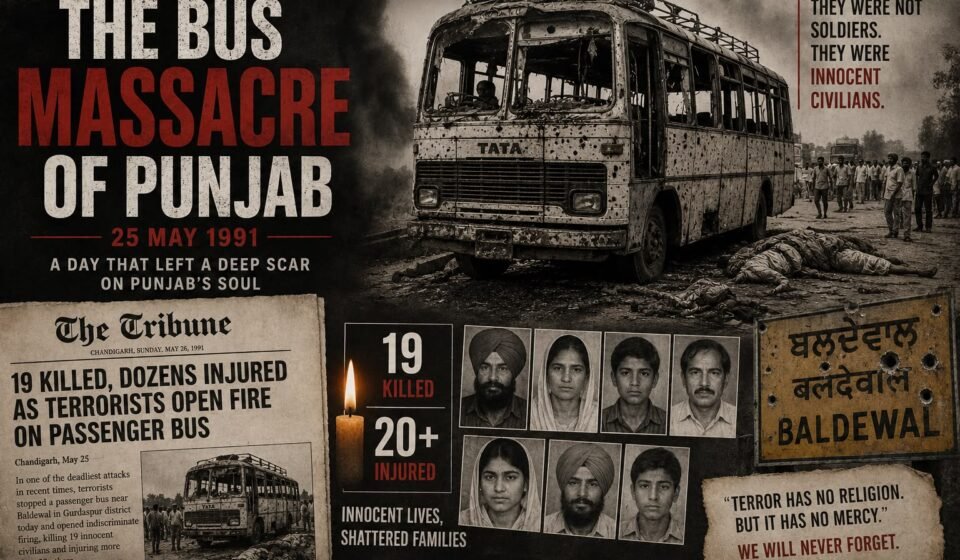
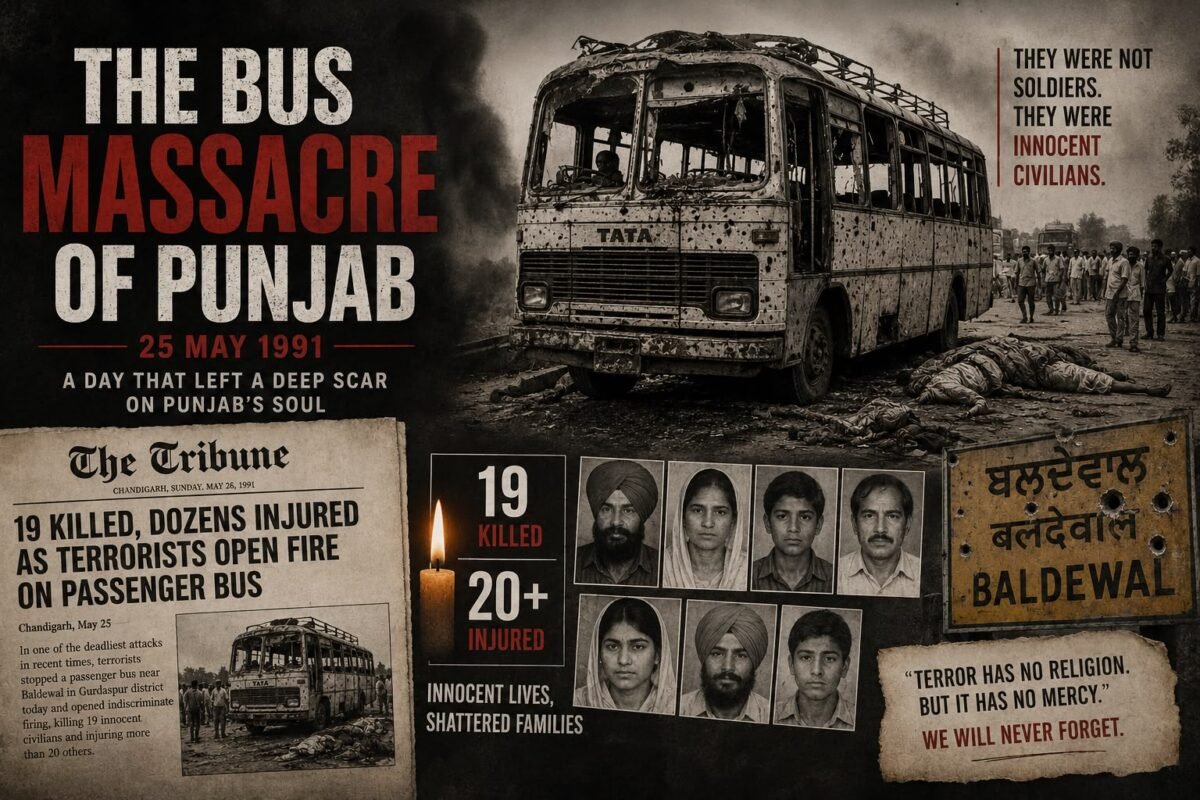
Among all the categories of killing that this series records, none strips the Punjab militancy’s claims barer than the bus massacres. Between 1986 and 1991, gunmen repeatedly stopped ordinary passenger buses on Punjab’s roads, separated travellers by religion, and shot the Hindus by the roadside or in their seats. The victims were labourers, traders, women, students, people whose only act was to board a bus in their own state. These massacres, more than any battle or assassination, defined the era for the rest of India, and they were designed to.
The Pattern Established
The template appeared in the summer of 1986. In July of that year, gunmen halted a bus near Muktsar in the Malwa region and shot Hindu passengers, killing more than a dozen, an attack that followed the massacre of Sikh passengers pulled from buses and killed by rioters in Hoshiarpur district’s aftermath narratives and, in the reverse direction, presaged worse to come. In November 1986 near Khuda in Hoshiarpur district, and again the pattern repeated: passengers lined up, identities checked, Hindus killed. The single deadliest early instance came at Fatehabad in July 1987, when militants stopped buses in Haryana’s Hisar region travelling from Punjab and massacred Hindu passengers, with the combined toll of the coordinated attacks that month exceeding seventy dead across incidents at Fatehabad and near Lalru, where another busload was slaughtered days apart. Reports of the period, compiled by the press and later by scholars, count hundreds of civilians killed in bus and roadside selection massacres across the peak years.
The Logic of Atrocity
The massacres were not lapses of discipline; they were strategy, and their authors explained the strategy in communiques. The aims, as analysts of the period have reconstructed them, were three. First, to drive Punjab’s Hindus out of the state and thereby manufacture, by terror, the demographic homogeneity that the Khalistan demand presumed and that Punjab’s actual population, nearly two fifths Hindu, refuted. Second, to provoke retaliatory violence against Sikhs elsewhere in India, which would in turn drive Sikh opinion toward the militants as protectors, a cycle November 1984 had shown to be horrifyingly available. Third, to demonstrate to Delhi that the state’s writ did not run on its own highways. That ordinary Sikh passengers on the same buses frequently risked and sometimes gave their lives to shield Hindu neighbours, and the record of the era preserves such accounts, is a truth the communiques never mentioned.
Mass Killing Beyond the Buses
The roadside selections belonged to a wider campaign against soft targets. Markets and bazaars in Punjab, Haryana, and Delhi were bombed through 1987 and 1988. In March 1988, militants attacked Holi celebrants; in June 1991, in one of the era’s worst atrocities, gunmen boarded two trains near Ludhiana at Baddowal and massacred passengers, with the toll placed around eighty, days before scheduled elections. Migrant labourers from Bihar and Uttar Pradesh, the men who harvested Punjab’s fields, were repeatedly massacred in their camps in the early 1990s, killings intended to strangle the state’s economy and expel its workforce. Each atrocity was footnoted with justification; together they compose the militancy’s actual legacy more truthfully than any manifesto.
What the Massacres Achieved
The intended Hindu exodus partially occurred, with families migrating from the border districts and from terror struck towns, though most of Punjab’s Hindus stayed, a subject treated fully in a later article. The intended communal conflagration did not occur, a failure owed to restraint in both communities that the era’s historians rightly treat as remarkable. What the massacres unambiguously achieved was the destruction of the movement’s moral standing among the very Sikh peasantry it claimed. Village Punjab, whatever its grievances against Delhi, had not signed up for the murder of bus passengers, and the revulsion these killings generated, compounded by the extortion and predation of the militancy’s later years, prepared the ground for the population’s decisive turn against the gunmen in the early 1990s, without which no police campaign could have ended the insurgency.
The dead of the buses received no commissions of inquiry and few memorials; their names survive in yellowed news reports and district records. This series records their category of suffering deliberately and at length, because any telling of Punjab’s dark years that passes quickly over them, en route to the state’s crimes or the movement’s grievances, is not a truthful telling. They were killed for their religion, in their own country, by men claiming to fight oppression. That sentence must stand complete in the ledger.
Related Reading
- The Killing Fields of Majha: Tarn Taran and Amritsar in the Late 1980s
- The Air India Kanishka Bombing: Terror Crosses the Ocean
- Operation Black Thunder: The Siege That Went Differently
Official context: Readers can compare this story with public information from India.gov.in.
The Descent
Part 9 of 10 in this chapter.