


Dadabhai Naoroji and the Drain of Wealth
With the government's own figures, Dadabhai Naoroji proved the drain of wealth and gave Indian nationalism its arithmetic, its patriarch and its first cry of swaraj.
Read More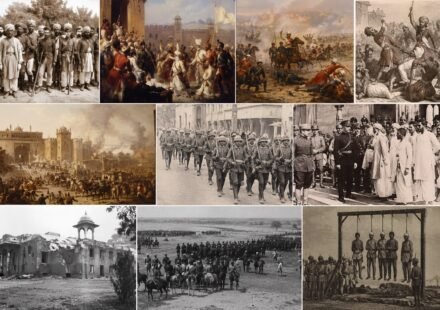
The Revolt of 1857: The Uprising That Shook an Empire
What began as a soldiers' mutiny at Meerut in May 1857 swelled into the greatest armed challenge the British Empire faced in the nineteenth century.
Read More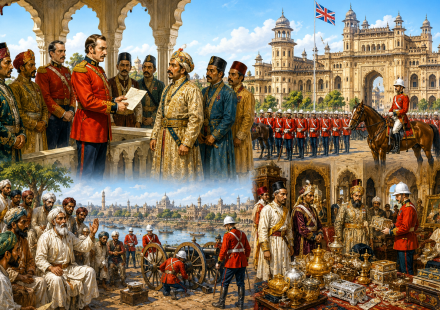
Awadh 1856: The Annexation That Lit the Fuse
The Company deposed its most faithful ally without a battle in February 1856. Within fifteen months Awadh answered, and the empire nearly fell with it.
Read More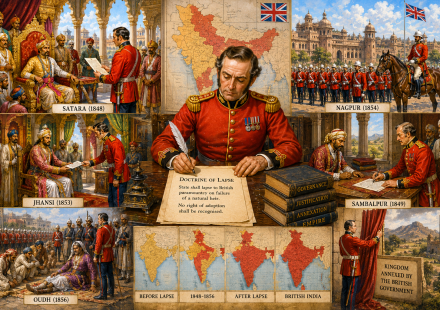
The Doctrine of Lapse: How Kingdoms Were Swallowed
Satara, Jhansi, Nagpur: the Doctrine of Lapse erased dynasties by refusing adopted heirs, and the bill for the confiscations was presented in 1857.
Read More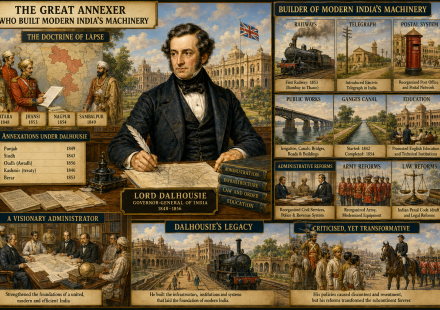
Dalhousie: The Great Annexer Who Built Modern India’s Machinery
Railways, telegraph, post and canals with one hand, Satara, Jhansi, Nagpur and Awadh with the other. Dalhousie built modern India's machinery and lit the fuse of 1857.
Read More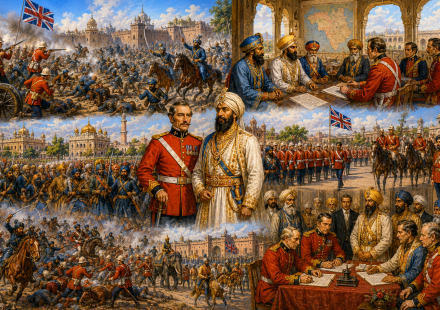
The Anglo Sikh Wars and the Annexation of Punjab
The Khalsa was the one army the Company truly feared. Court treachery, two savage wars and a sold Kashmir ended the kingdom of Ranjit Singh within a decade of his death.
Read More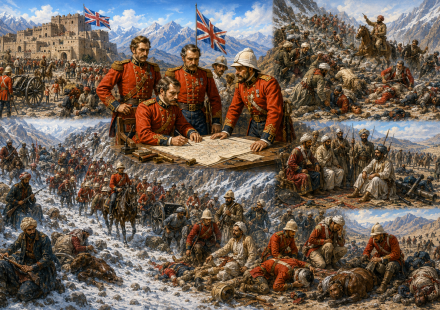
The First Anglo Afghan War: Disaster Beyond the Khyber
Sixteen thousand marched from Kabul and one rider reached Jalalabad. The First Afghan War restored the king it was fought to remove and broke a spell in India.
Read More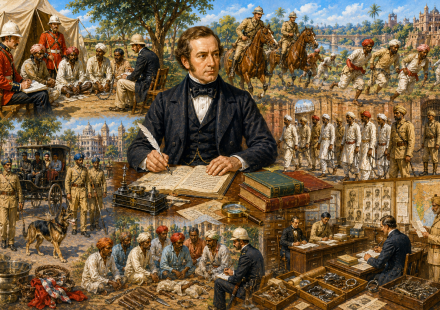
Thuggee, Sleeman and the Machinery of Colonial Policing
The campaign against thuggee made Sleeman famous and the roads safer, and built a machinery of surveillance and hereditary criminality that long outlived the thugs.
Read More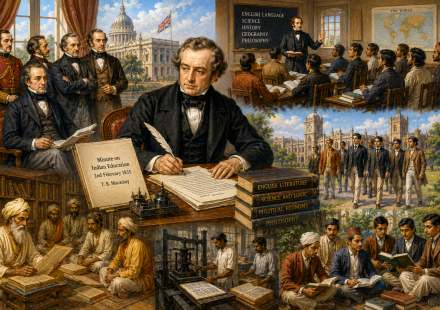
Macaulay’s Minute: English Education and Its Long Shadow
Written to settle a budget quarrel, Macaulay's Minute of 1835 fixed the linguistic destiny of modern India and created the class that would end British rule.
Read More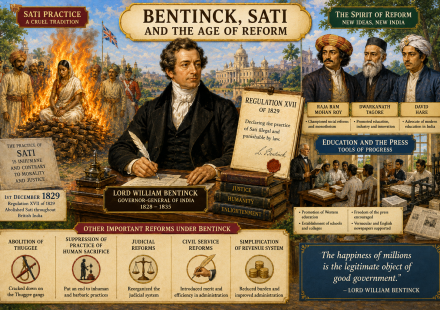
Bentinck, Sati and the Age of Reform
The abolition of sati in 1829 was a deliverance first demanded by Indians themselves, and the founding act of a style of rule that claimed guardianship over India.
Read More