

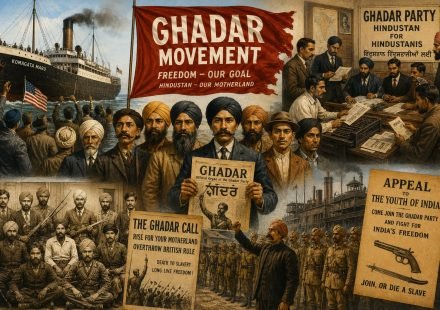
The Ghadar Movement: Revolution from the Pacific Coast
Punjabi emigrants on America's Pacific coast printed a paper called Mutiny, sailed home in wartime to raise the army, and left the Punjab a revolutionary inheritance.
Read More
The Delhi Durbar of 1911 and the Undoing of Partition
The grandest pageant the Raj ever staged announced its first great retreat: Bengal reunited, the capital moved to Delhi, and the immovable shown to move.
Read More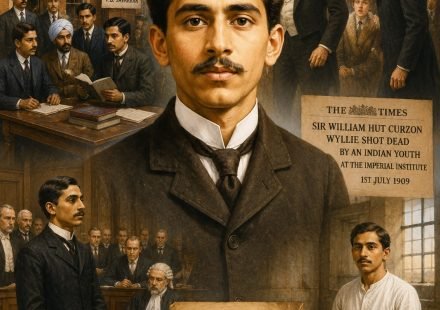
Madan Lal Dhingra and the Shot at the Imperial Institute
Five shots at a Kensington reception, a one day trial refused in jurisdiction, and a scaffold statement that entered the anthology of Indian martyrdom.
Read More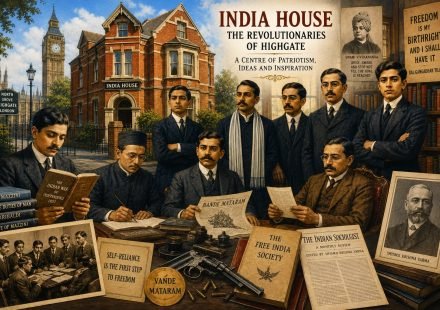
India House: The Revolutionaries of Highgate
A Highgate hostel funded by a Sanskritist admirer of Spencer became the empire's most watched address, printing banned history, smuggling pistols and schooling revolution.
Read More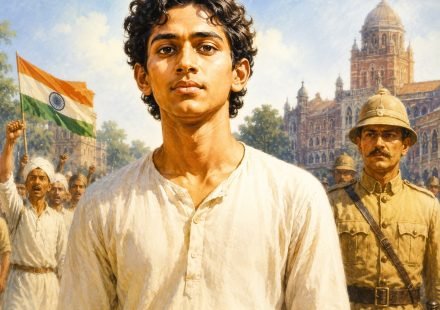
Khudiram Bose and the Alipore Bomb Case
A bomb meant for a magistrate, a boy of eighteen on the gallows singing into legend, and the Alipore case that exposed Bengal's underground and made its martyrs.
Read More
Aurobindo Ghosh: From Revolution to the Ashram
He named complete independence before the Congress dared, theorised non cooperation, heard Vasudeva in an Alipore cell, and walked out of history into the ashram.
Read More
The Morley Minto Reforms and the Fateful Gift of Separate Electorates
The 1909 reforms brought real elections, the first Indian in government, and separate Muslim electorates, opening two doors through which the century walked.
Read More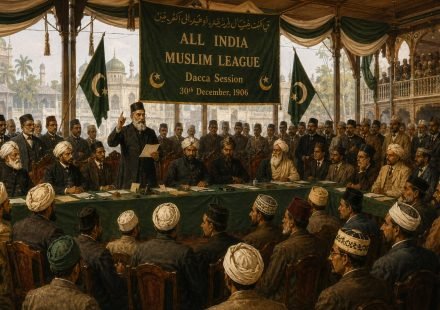
Dacca 1906: The Founding of the Muslim League
Born at Dacca in 1906 out of the Simla deputation and partition politics, the Muslim League lived one life as a loyal lobby and another as the maker of Pakistan.
Read More
Surat 1907: The Day the Congress Broke
A flying shoe, a broken pandal and a decade's divorce: the Surat split of 1907 gave the Moderates the Congress, the Extremists the country, and the Raj its respite.
Read More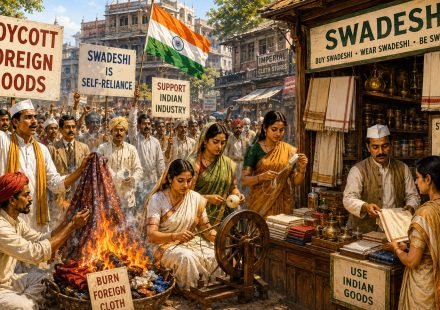
Swadeshi and Boycott: India’s First Mass Movement
Boycott, national schools, swadeshi mills, volunteer samitis and songs: between 1905 and 1908 Bengal rehearsed every method the freedom struggle would later use.
Read More