
 In 30 Seconds




Few documents in modern Indian history have been argued about more and read less than the Anandpur Sahib Resolution. Adopted by the Akali Dal in 1973 and reaffirmed in amended form in 1978, it became, in the rhetoric of the 1980s, either the founding charter of Sikh separatism or a routine demand for federal autonomy, depending entirely on who was speaking. The truth, as so often, lives in the text itself and in the political uses to which it was put.
What the Resolution Actually Said
The resolution emerged from an Akali Dal smarting from electoral defeats and searching for a platform that could unite the Sikh peasantry. Its core political demand was a radical rebalancing of the Indian federation. It asked that the Centre’s role be limited to defence, foreign affairs, currency, and communications, with all other powers vesting in the states. It demanded the transfer of Chandigarh to Punjab, the return of Punjabi speaking areas left outside the state in 1966, a greater share of river waters, and recognition of the distinct identity of the Sikhs as a community.
The phrase that generated the most controversy declared the Akali Dal’s goal to be an environment in which the Sikh community could experience, in the language of the document, the glow of freedom, and asserted that the Sikhs were a distinct nation. Critics read nationhood as a demand for a separate state. Defenders replied that the word panth and the concept of quom carried religious and cultural meanings that did not map neatly onto the vocabulary of secession, and that the operative demands of the document were all framed within the Indian Constitution.
A Federalist Document in a Unitary Moment
Read today, much of the resolution resembles the standard federalist wish list that many Indian states, from Tamil Nadu to West Bengal, have pressed at various times. Demands for greater state autonomy, control over resources, and limits on central intervention were common currency in the politics of the 1970s and 1980s, an era in which the Centre dismissed elected state governments with regularity. Scholars have noted that had the resolution been treated as an opening bid in a federal negotiation, it might today be remembered as a footnote.
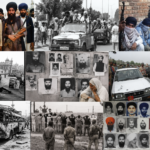
It was not treated that way. Indira Gandhi’s Congress, particularly in the climate following the Emergency and her 1980 return to power, portrayed the resolution as a secessionist document. Akali leaders, needing to outflank rivals who accused them of moderation, declined to soften its language. And as militancy grew, men with guns began invoking the resolution as their own, which allowed the government to conflate the Akali negotiating platform with the demand for Khalistan, a demand the resolution never made.
The Resolution in the Dharam Yudh Morcha
In 1982 the Akali Dal launched the Dharam Yudh Morcha, a mass agitation to press the resolution’s demands, in alliance with Jarnail Singh Bhindranwale. Tens of thousands of volunteers courted arrest. The agitation gave the resolution its widest audience and also sealed its fate, because the Morcha’s alliance with Bhindranwale meant that every demand it carried was now, in the government’s telling, tainted by association with violence. Multiple rounds of negotiation between the Akalis and the Centre between 1982 and 1984 are reported to have come close to settlement on Chandigarh, water, and territorial issues, and to have collapsed each time, with participants on both sides later trading accusations about who scuttled which draft and why.
The Long Shadow
After Operation Blue Star, the resolution acquired a new life as a symbol. For the militancy it became proof that peaceful demands had been met with tanks. For the government it remained shorthand for separatism. The Rajiv Longowal Accord of 1985 promised to refer the resolution’s federal demands to the Sarkaria Commission on Centre state relations, a quiet acknowledgment that they belonged to the constitutional mainstream after all. The accord’s collapse is a story for a later article in this series.
The Anandpur Sahib Resolution matters today because it poses a question India has never fully answered: whether the demands of a minority community expressed through constitutional politics will be negotiated in good faith, or repainted as treason for electoral convenience. In Punjab in the 1980s the second path was chosen often enough that the first became impossible, and the price was paid by everyone.
Related Reading
- The Killing Fields of Majha: Tarn Taran and Amritsar in the Late 1980s
- The Bus Massacres: When the Militancy Turned Its Guns on Passengers
- The Air India Kanishka Bombing: Terror Crosses the Ocean
Official context: Readers can compare this story with public information from India.gov.in.
Origins and Escalation
Part 2 of 10 in this chapter.