 In 30 Seconds




Between the summer of 1982 and the summer of 1984, the holiest place in the Sikh world was transformed, in stages that each seemed small at the time, into a fortified military position. How the Darbar Sahib complex at Amritsar came to hold armed men, sandbagged emplacements, and a former major general directing its defence is a story of drift, calculation, and failure on every side, and it is the indispensable prelude to the catastrophe of June 1984.
Sanctuary and Politics
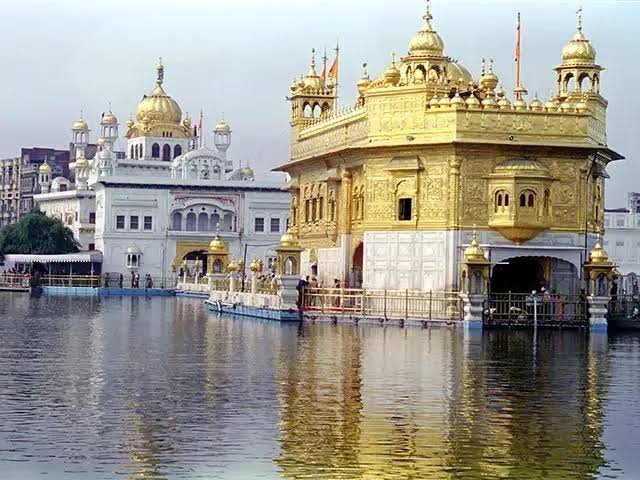
The Golden Temple complex is not only the sanctum of the Harmandir Sahib. It is a city within a city: the Akal Takht, the seat of temporal authority; hostels and serais for pilgrims; offices of the SGPC, the elected body managing Sikh shrines; kitchens feeding tens of thousands. Political activity within the complex was nothing new; the Akali Dal had launched agitations from its precincts for decades, and the tradition of sanctuary ran deep. When the Dharam Yudh Morcha began in August 1982, the complex naturally became its headquarters, with tens of thousands of volunteers passing through to court arrest.
Bhindranwale had moved into the Guru Nanak Niwas hostel within the complex in mid 1982, following the arrest of his aide Amrik Singh. From there his armed following grew. Police, wary of the political cost of entering the shrine, established a perimeter posture that hardened over two years into a strange siege in which wanted men lived openly inside while warrants gathered dust outside.
The Guns Move In
Weapons accumulated steadily through 1983. Contemporary reporting and later official accounts describe arms arriving in grain trucks and pilgrim baggage, and training conducted within the sarais. The killings across Punjab attributed to men operating from the complex mounted, and in April 1983 came a demonstration of impunity that stunned the country: Deputy Inspector General A. S. Atwal, a senior Sikh police officer, was shot dead on the steps of the complex as he left after prayers, and his body is reported to have lain where it fell for hours because no policeman would enter to retrieve it without permission. No moment better captured the inversion of authority that had taken place.
In December 1983, under pressure from rival factions within the complex, Bhindranwale shifted from the hostel into the Akal Takht itself, an occupation of the temporal throne that many devout Sikhs regarded as a sacrilege in its own right. With him came Shabeg Singh, the cashiered major general who had trained Bangladesh’s Mukti Bahini, and who now applied a professional’s eye to the complex’s defence, siting positions in the Takht, the towers, and the buildings commanding the approaches. By the spring of 1984 the fortification was, in military terms, serious.
The Failures That Made June Possible
Every institution that could have prevented what followed declined its moment. The SGPC, which controlled the complex, proved unwilling or unable to expel the armed men. The Akali leadership, locked in rivalry with Bhindranwale for the Sikh street, would not break with him publicly. The central government alternated between secret negotiations, which are reported to have neared settlement several times, and preparations for force, all while allowing the militarisation of the shrine to proceed for two full years in plain sight. Police officers who proposed early, limited action were overruled. Politicians who might have paid the price of compromise preferred to wait, and the price compounded.
By May 1984 killings in Punjab were accelerating, and intelligence assessments, later described in memoirs and official accounts, warned that the complex had become the command centre of the violence. The government of Indira Gandhi decided on a military solution. What that decision unleashed, the assault the army called Operation Blue Star, is the subject of the next article in this series.
The fortification of the Golden Temple was not a single act but a two year accumulation of choices, each defensible to its maker, together indefensible. Sanctity was used as a shield by men of violence, and the state’s answer to a shield of sanctity was, in the end, artillery. Punjab has been living with the consequences ever since.
Related Reading
- The Killing Fields of Majha: Tarn Taran and Amritsar in the Late 1980s
- The Bus Massacres: When the Militancy Turned Its Guns on Passengers
- The Air India Kanishka Bombing: Terror Crosses the Ocean
Official context: Readers can compare this story with public information from India.gov.in.
Origins and Escalation
Part 8 of 10 in this chapter.