 In 30 Seconds




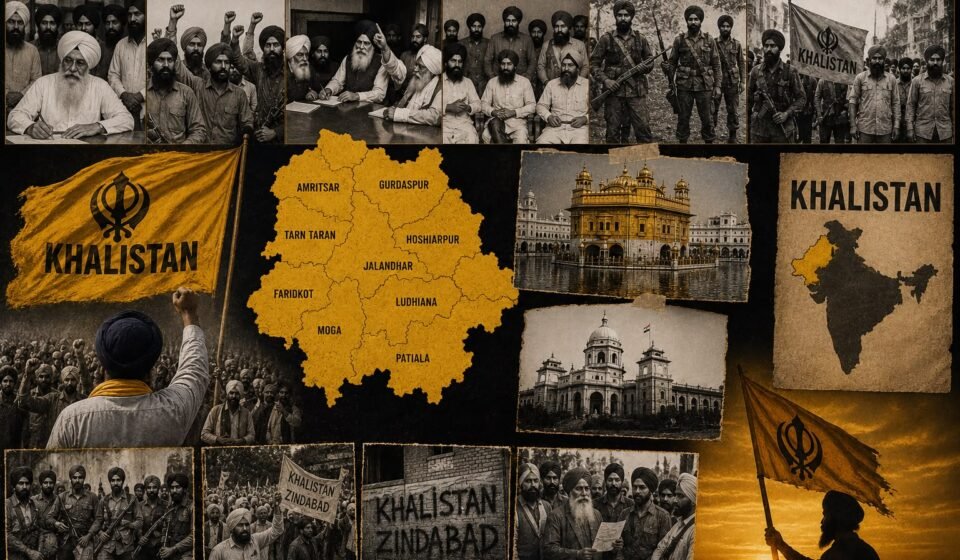
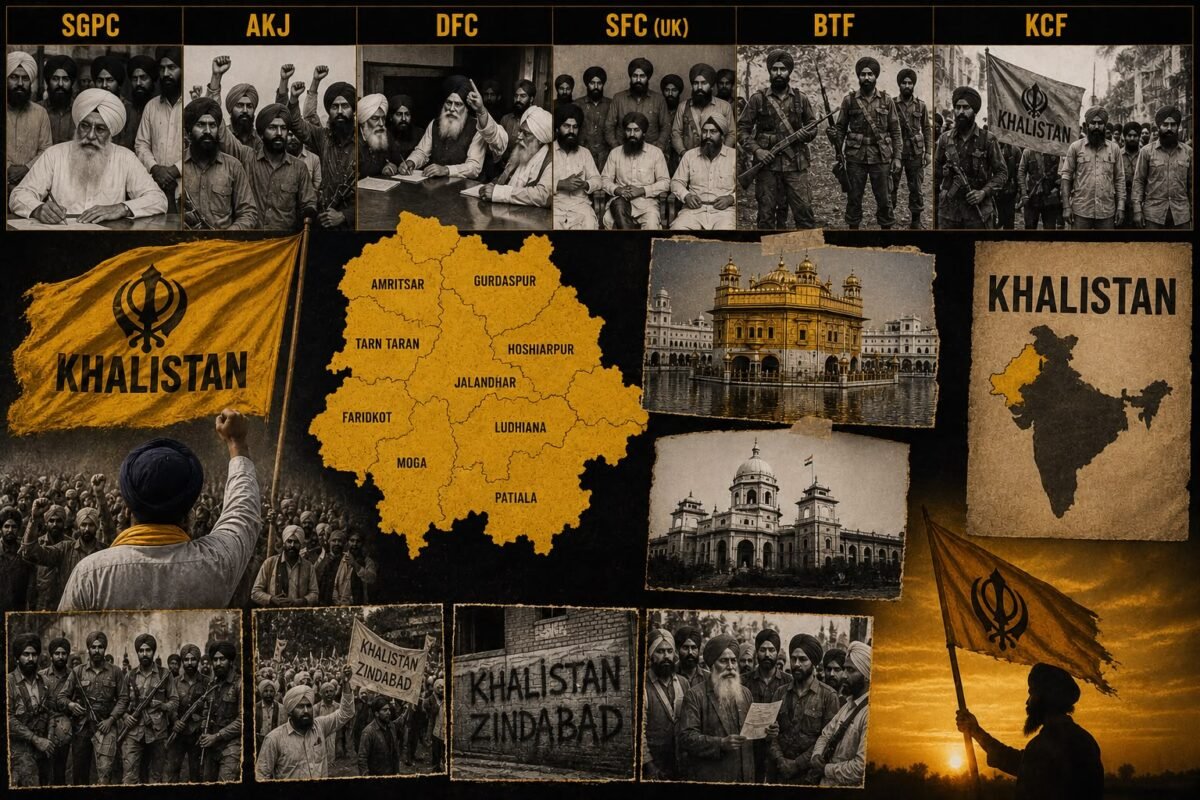
On April 29, 1986, from the precincts of the Akal Takht, still scarred by the shellfire of June 1984 and freshly the site of a vast Sarbat Khalsa assembly, a five member Panthic Committee proclaimed the establishment of Khalistan and announced a force to fight for it. The declaration made real what had until then been rhetoric and emigre pamphleteering: a named demand, a claimed authority, and an armed instrument. It also marked the moment the militancy stopped speaking through Sikh institutions and began speaking as if it were one.
The Road to the Sarbat Khalsa
The context was the wreckage of the accord era. Longowal was dead, the Barnala government’s authority was draining, and the question of who would rebuild the Akal Takht had become a war for legitimacy. The government sponsored reconstruction was denounced as kar seva by unclean hands, and in early 1986 militant aligned groups convened a Sarbat Khalsa, the traditional assembly of the whole community last invoked in moments of historic crisis, which resolved to demolish the government rebuilt Takht and raise it anew by the Panth’s own labour. The assembly appointed the Panthic Committee, five men led by Aroor Singh and including Wassan Singh Zaffarwal and Gurbachan Singh Manochahal, names that would dominate the militancy’s next phase, and vested it with the authority the guns had already been exercising.
The Declaration and the KCF
The April 29 document declared that the Sikhs constituted a nation entitled to a sovereign state, and announced the Khalistan Commando Force as the movement’s army. Manochahal and later a succession of commanders, most famously Labh Singh and then the engineering student turned general Kanwarpal Singh Bittu and others, led the KCF through the peak years of violence. The declaration’s authors understood the power of place: proclaimed from the Akal Takht, the demand borrowed the authority of the institution even as the institution’s actual custodians, the SGPC and the high priests, were bypassed or coerced. In the years that followed, the militancy would repeatedly install, remove, and dictate to jathedars, and directives issued from the Takht under the gun, including the excommunications and codes of conduct of the late 1980s, blurred the line between the faith’s voice and the militants’ ventriloquism, a confusion whose costs Sikh institutions are still auditing.
Barnala’s Fateful Response
The Barnala government answered the declaration the very next day by sending police into the Golden Temple complex, an action that captured no significant leaders but shattered the Akali government’s religious standing. Ministers resigned, the party split, and the Akal Takht’s clergy moved against Barnala himself. The episode compressed the era’s central trap into forty eight hours: an elected Sikh government could not tolerate a parallel state proclaimed from the shrine, and could not survive acting against it. President’s rule followed within a year, and with it the fully militarised phase of the conflict.
Committees, Splits and the Currency of Authority
The original Panthic Committee soon multiplied by fission. Rival committees, each claiming the Sarbat Khalsa’s mandate, sponsored rival forces, the KCF factions, the Khalistan Liberation Force, the Bhindranwale Tiger Force, alongside the older Babbar Khalsa, a fragmentation mapped in the next article of this series. Each faction’s claim to speak for the Panth rested on force, and the currency of authority became the willingness to kill, first the state’s men, then rivals, then any civilian whose death served a communique. The declaration of 1986, intended to found a state, in practice founded a franchise.
Four decades on, the April 1986 declaration survives mainly as an anniversary observed by radical groups and a document cited in diaspora referendum campaigns. Within Punjab its chief legacy is cautionary: it demonstrated how a community’s most sacred institutions can be captured as instruments of a war the community never voted for, and how quickly proclaimed liberation becomes internal tyranny. The articles that follow, on the militant groups and the massacres, record what the state proclaimed that day actually delivered to the people in whose name it was announced.
Related Reading
- The Killing Fields of Majha: Tarn Taran and Amritsar in the Late 1980s
- The Bus Massacres: When the Militancy Turned Its Guns on Passengers
- The Air India Kanishka Bombing: Terror Crosses the Ocean
Official context: Readers can compare this story with public information from India.gov.in.
The Descent
Part 5 of 10 in this chapter.